![]() |
|
![]() |
|
Exhibit interprets life at Lower Sioux Agency
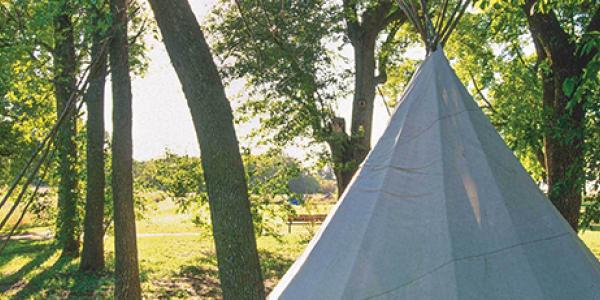
In the summer of 1862, Minnesota was shattered by civil war not only the national epic that made distant places like Bull Run, Missionary Ridge, and Gettysburg famous but also a fight on Minnesota soil at places with more familiar names New Ulm, Fort Ridgely, and the Lower Sioux Agency. The agency, headquarters for the government's program to "civilize" the Dakota people by turning them into Christianized farmers, was the first place the Dakota attacked when they struck out against the settlers who had moved onto their homeland. A new exhibit at the Lower Sioux Agency Historic Site near Redwood Falls puts this tragic episode into a larger context one that, according to the exhibit's curator Marx Swanholm, "explains why many Dakota felt they had no choice but to take up arms." The conflict lasted little more than a month, only a sliver of time when measured against the long history of the Dakota people. Long before people from Europe arrived on this continent, the Dakota developed a way of life that answered their physical needs and provided a sense of connection with one another and the world around them. The arrival of explorers and traders, and particularly, the later flood of settlers and townspeople, ruptured that way of life and threatened the Dakota's survival. The exhibit tells the story of the Dakota's struggle to retain their traditions and identity while adapting to a rapidly changing world. The exhibit offers a variety of experiences. A reproduction of a bark lodge will be the
centerpiece of an exhibit on traditional Dakota life. Other exhibits will trace the changes
brought about by the fur trade, explain treaties by which the Dakota were pressured into selling
their land, and describe life on the reservation where the government was trying to turn the
Dakota
into European-style farmers.
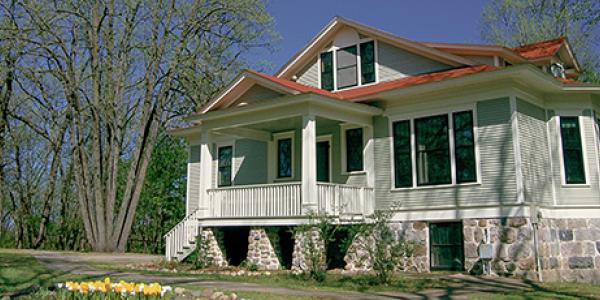
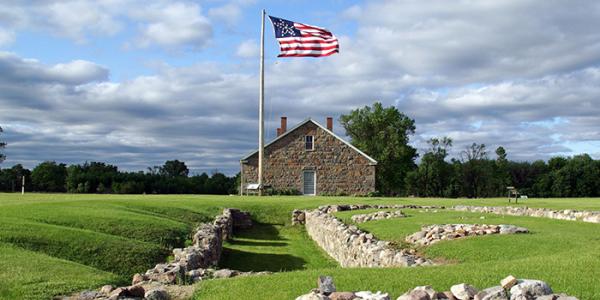
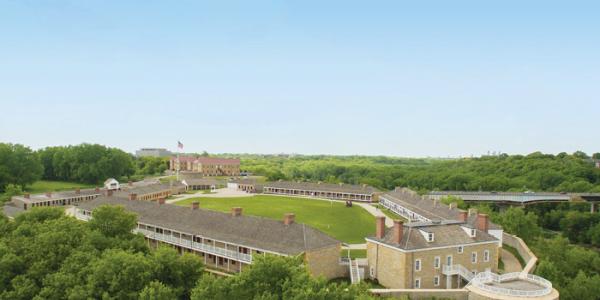
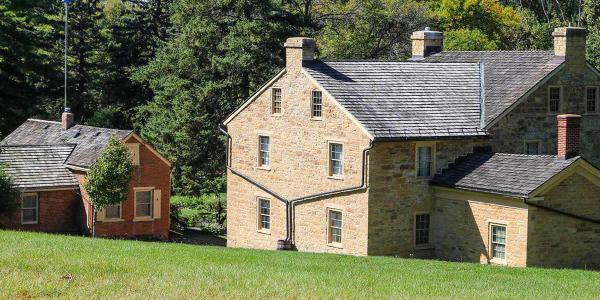
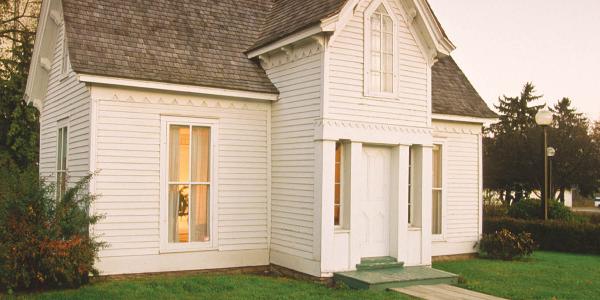
A media show set in a house like those built for Dakota farmers will tell in the words of Big Eagle, a Dakota leader, the grievances that led to the fighting. A vital part of the contemporary story will be a video by Dakota filmmaker Mona Smith. "The interviews with Minnesota's Dakota people give a vivid picture of the strength and continuity of their culture," said site manager Tim Talbott. Adjacent to the exhibit area is a new activity room for meetings, special events and activities for school children and adults. Changing displays will provide visitors with a look at Minnesota's Dakota communities today. Outside of the visitor center, walking trails tell the history of the agency at the places where major events happened. The stone warehouse, the only remaining original building at the site, has been restored to its 1861 appearance, and new markers interpret its construction and uses and its significance as a symbol of one of the most dramatic chapters in Minnesota history.
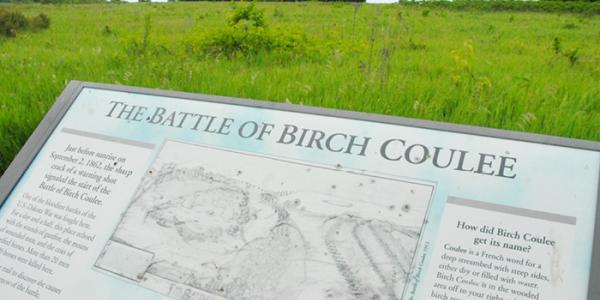
Across the Minnesota River at Birch Coulee, the site of one of the most intense battles of
the U.S.Dakota War, visitors will now see interpretive signs and landscape restoration that
illustrate the stories here.
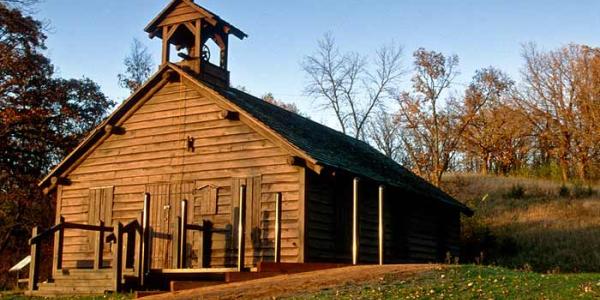
On Sept. 2, 1862, U.S. soldiers camping on the open prairie were attacked by Indian soldiers. The siege lasted for a day and a half and 13 U.S. soldiers were killed and 44 wounded. The number of Dakota losses is still unknown. Additions to the site include a small shelter, new access roads, self-guided trails and landscape that resembles the topography at the time of the battle. Prairie plants native to the area will be seeded on about 50 acres. "The new exhibits and trails at both sites bring a lot of exciting and dynamic changes for us changes in what visitors will experience and also changes in how our staff can interact with visitors and involve them in discovering the stories each site has to tell," Talbott said. Lower Sioux Agency is located on Redwood County Hwy. 2, nine miles east of Redwood Falls and 1.5 miles east of Jackpot Junction Casino and Hotel. Birch Coulee is north of Morton on Highway 2, 1.5 miles east of U.S. Hwy. 71. |
Lower Sioux Agency home page and Birch Coulee Battlefield home page |
|
|
Minnesota Historical Society· 345 W. Kellogg Blvd., St. Paul, MN 55102-1906· 651-259-3000 Copyright © 2000 |