|
In 1849, Minnesota Territory was established with a population of
fewer than 6,000 settlers. With few towns and a widely scattered
population, farmers raised the food and most of the supplies for their
own families, providing little for trade to stores or markets. As the
territory grew, improved transportation routes and better farming
techniques allowed farmers to supply food for new settlers and growing cities.
|
Although he knew little about farming in 1850, Oliver H. Kelley staked
a claim at the new town of Itasca on the Mississippi River near present-day
Elk River. He became a "book farmer," learning the latest farming
techniques from agricultural journals and by corresponding with other
"scientific-oriented" farmers. In a short time, he became an expert on
farming in Minnesota. He learned firsthand the impact that debt,
weather, insects and crop failures can have on a farmer, and his farm
life was one of struggle and hardship.
|
Kelley moved away from farming and Minnesota in the late 1860s, and in
his later years he was known for founding the National Grange, a fraternal
organization of farm families. Two of his daughters returned to the farm
in 1876 and managed it during the summers until 1885. The Kelleys owned
the farm until 1901.
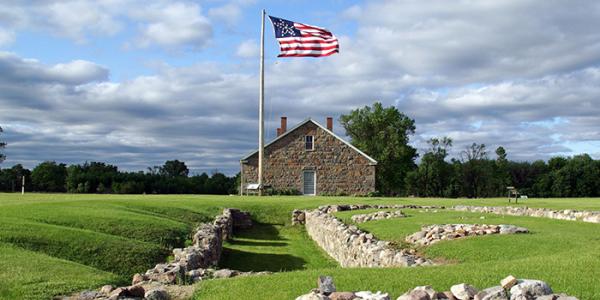
The National Grange purchased the farm in 1935 and donated it to the Minnesota Historical
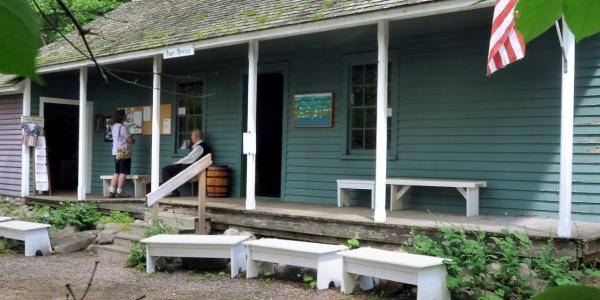
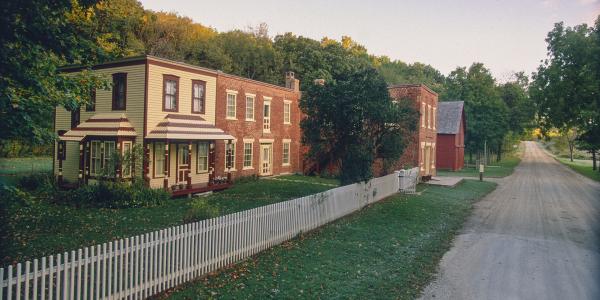
Society in 1961. At this National Historic Landmark, visitors become involved in
living history demonstrations of the work and play of daily life for Oliver H.
Kelley's family and other farmers in mid-19th-century Minnesota. Join us at the
farm and explore the following pages to learn more about Kelley, farm life and our
tour programs.
|