
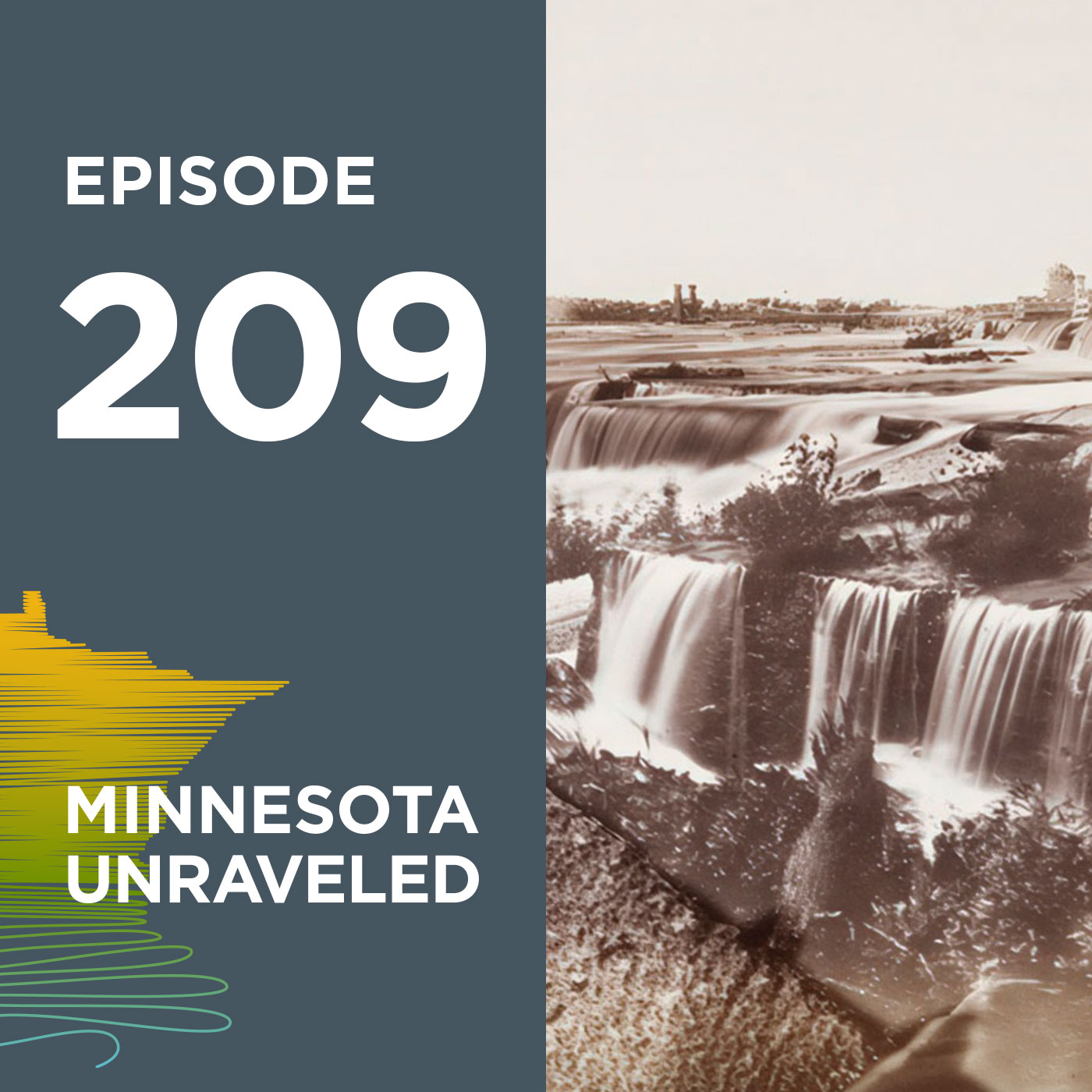
The Power of a Waterfall: A History of Owámniyomni and Fuji-Ya Restaurant (episode 209)
Between 1880 and 1930, St. Anthony Falls helped establish Minneapolis as the flour milling capital of the world. But the story of the falls is about more than the economy and hydropower. People from many backgrounds have also been drawn to the falls for its cultural and spiritual power. To the Dakota people, it is known as Owámniyomni, a place of spirit, story, and connection. To Reiko Weston, founder of Fuji-Ya Restaurant, it became a way to bridge cultural divides between Japan and Minnesota.
In this episode of Minnesota Unraveled, Dr. Chantel Rodríguez and her guests–Deacon DeBoer, Carol Weston Hanson, and Shelley Buck–pull on the threads of two seemingly unrelated stories that are, in fact, deeply woven together in the rich tapestry of St. Anthony Falls’ history as a site of cultural, spiritual, and economic power.
Subscribe on



Transcripts
English Transcript PDF (426KB)
Guests
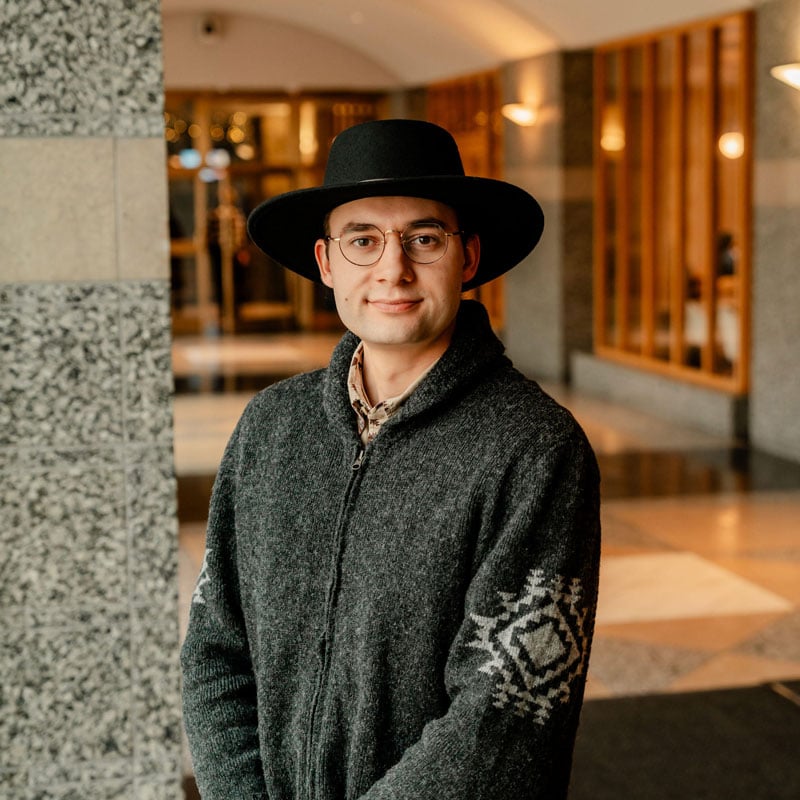
Deacon DeBoer
Deacon DeBoer currently serves as a cultural resource steward within the Native American Initiatives department at the Minnesota Historical Society. DeBoer is a Mdewáḳaƞtuƞwaƞ ga Waḣpétuƞwaƞ Daḳóta from the Rouillard Tioṡpáye and a lineal descendant to Santee and Pezihutazizi Kapi. He is a recent graduate from the Heritage Studies and Public History Masters program at the University of Minnesota and continues to be a student in his approach to learning from knowledge givers and elders - and hope to pass those teachings to the next seven generations.

Carol Weston Hanson
Carol Weston Hanson is the daughter of Reiko Weston, owner of the Minneapolis restaurant Fuji-Ya. As the daughter of a restauranteur, Carol Hanson grew up in the business — spending her childhood having push-cart races through the aisle of dining tables and inventing the popular Reiko Lunch Special — chicken and skewers with a teriyaki sauce, tempura and fried rice. Hanson would eventually take on every role in the business from bussing tables, to prep cook, bartender and even cooking. After Reiko’s passing, the restaurant would close. In 1997, Hanson decided to revive the business and reopen Fuji-Ya restaurants in Minneapolis and St. Paul. Hanson, along with her husband Tom, continued her mother’s legacy of connecting diners to Japanese culture until 2020.
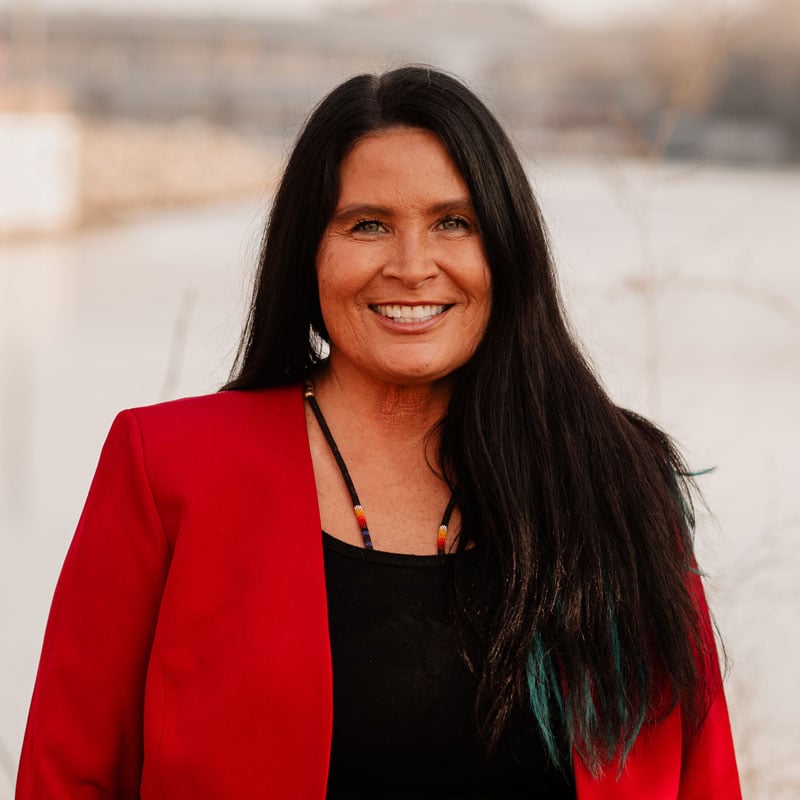
Shelley Buck
Shelley Buck is president of the Dakota-led nonprofit Owámniyomni Okhódayapi and represents District 47A in the Minnesota House of Representatives. Buck is an enrolled member of the Prairie Island Indian Community and served 12 years on the Prairie Island Tribal Council, including six years as president. Owámniyomni Okhódayapi is a Dakota-led nonprofit creating a future where Dakota culture has a vital presence and Dakota values – such as mni wičóni, or water is life – are embedded into our communal existence. The organization is currently working to transform five acres of land at Owámniyomni (St. Anthony Falls) into a place of restoration, education, healing and connection. Buck currently serves as vice chair of the board at Wakan Tipi Awanyankapi and is a member of the Augsburg University Board of Regents. She holds a Bachelor of Science degree in business accounting, a Masters of Art in sports management, and a Masters of Jurisprudence in tribal Indian law.
Primary Sources
John S. Pillsbury and Family Papers. Manuscripts Collection. Minnesota Historical Society. https://storage.googleapis.com/mnhs-finding-aids-public/library/findaids/01044.html
Richard Ferrell Flour Milling Industry History Collection. Manuscripts Collection. Minnesota Historical Society. https://storage.googleapis.com/mnhs-finding-aids-public/library/findaids/00699.html
St. Anthony Falls. Primary Source Set. Minnesota Digital Library. https://mndigital.org/projects/primary-source-sets/st-anthony-falls
Upton, Benjamin Franklin. “St. Anthony Falls,” 1863. Photograph. Collections Online. Minnesota Historical Society. https://www.mnhs.org/collection-record?uuid=fd8393ec-15bd-4d66-99f1-181661eb2659
Secondary Sources
Anfinson, John O. “Spiritual Power to Industrial Might: 12,000 Years at St. Anthony Falls.” Minnesota History 58, no. 5–6 (Spring/Summer 2003): 252–269.
https://storage.googleapis.com/mnhs-org-support/mn_history_articles/58/v58i05-06p252-269.pdf
Atkins, Annette. “At Home in the Heart of the City.” Minnesota History 58, nos. 5–6 (Spring/Summer 2003): 286–304. https://storage.googleapis.com/mnhs-org-support/mn_history_articles/58/v58i05-06p286-304.pdf
Carrol, Jean Lamm. “Engineering the Falls: The Corps of Engineers' Role at St. Anthony Falls.” US Army Corps of Engineers, 2015. https://www.mvp.usace.army.mil/DesktopModules/ArticleCS/Print.aspx?PortalId=57&ModuleId=55874&Article=626089
Danbom, David B. “Flour Power: The Significance of Flour Milling at the Falls.” Minnesota History 58, no. 5-6 (Spring/Summer 2003): 270-285. https://www.mnhs.org/hubfs/v58i05-06p270-285.pdf
Dennison, Jean. “Beyond #LandBack: The Osage Nation’s Strategic Relations.” American
Indian Culture and Research Journal 47, no. 2 (2024): 117-137.
Hamline University's Center for Global Environmental Education (CGEE). “Waterfall on the Move: The Extraordinary Journey of St. Anthony Falls.” March 1, 2021. https://youtu.be/P6p8f_64hb0?si=tEmRRQb4tAAGbqgj
Huber, Molly. “St. Anthony Falls Tunnel Collapse, October 5, 1869.” MNopedia. May 10, 2011. https://www.mnhs.org/mnopedia/search/index/event/st-anthony-falls-tunnel-collapse-october-5-1869
Kane, Lucile. The Waterfall that Built a City: The Falls of St. Anthony in Minneapolis. Minnesota
Historical Society, 1966.
Kolnick, Jeff. “Washburn A Mill.” MNopedia. April 25, 2025. https://www.mnhs.org/mnopedia/search/index/structure/washburn-mill
Mill City Museum. “Learn History.” Minnesota Historical Society. https://www.mnhs.org/millcity/learn/history
Owámniyomni Okódayapi. “About.” Owámniyomni Okhódayapi, https://owamniyomni.org/about/
Pieratos, Nikki A, Sarah S. Manning and Nick Tilsen. “Land Back: A Meta Narrative to Help
Indigenous People Show up as Movement Leaders.” Leadership 17, no. 1 (February 2021): 47-61.
Smith, Mona M. “Owámniyomni, a Dakota Name for ‘St. Anthony Falls’” Open Rivers:
Rethinking The Mississippi, no. 4 (2016). https://doi.org/10.24926/2471190X.2107
St. Anthony Falls Heritage Board. “Changing Relationships to the Power of the Falls: An Interpretive Vision for the West Bank of St. Anthony Falls.” December 2014. https://www.mnhs.org/hubfs/west_bank_vision_final_2014.pdf
Summers, Joy. “Opened Over 60 Years Ago, A Twin Cities Restaurant Icon Has Quietly Closed.” Eater, June 22, 2020.https://twincities.eater.com/2020/6/22/21298948/fuji-ya-minneapolis-japanese-restaurant-riverfront-lake-street-closed
Tanaka, Kimmy and Jonathan Moore. “Fuji-Ya, Second to None, Reiko Weston’s Role in
Reconnecting Minneapolis and the Mississippi.” Minnesota History 66, no. 3 (Fall 2018): 98-111.
Yeager, Kachina, Shelley Buck, and Sage Yeager. “Owámniyomni: Still We Gather,” Open
Rivers: Rethinking Water, Place & Community, no. 27. (2024):
https://openrivers.lib.umn.edu/article/owamniyomni-still-we-gather/
 MNHS Podcast