Mataafa Storm, 1905

Creator:
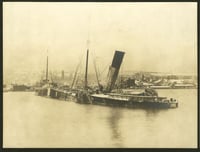
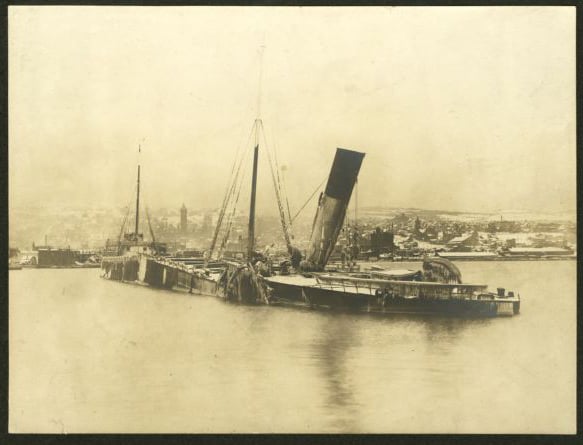
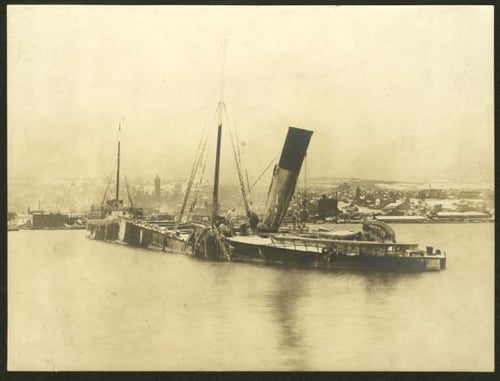
A wrecked steamship sits partially submerged in water, with its bow facing the shore of a lake, with buildings behind it.
The wrecked and ice-coated Mataafa outside Duluth harbor on November 30, 1905. The split in the ship’s hull is visible at center right.

On November 27, 1905, sailors on Lake Superior faced heavy snowfall, sustained winds up to seventy miles per hour, massive waves, and subzero wind chill temperatures. The Mataafa storm, named after a steamship wrecked near Duluth, was one of the most costly in Lake Superior’s history, and resulted in new navigational aids and safety practices on the lake.

A large storm delayed fifteen loaded vessels in Duluth harbor on Friday, November 24. Winds at sixty miles per hour swept the lake, and the few boats that ventured out were severely damaged. Three days later, when Duluth weather forecaster Herbert Richardson ordered storm flags raised in the harbor again, many captains ignored the warning, arguing from experience that a large storm on Lake Superior was always followed by a week or more of calm weather. US Steel’s 430-foot freighter Mataafa, along with several other boats, left port on the afternoon of Monday, November 27.

At 6:00 p.m. that evening, heavy, wet snow began to fall in Duluth and continued overnight and throughout the following day. The wind picked up to forty miles per hour on the evening of November 27, and by early morning on Tuesday, November 28, sustained gales had reached sixty-eight miles per hour. Late in the evening on Tuesday, the wind shifted to the northwest. This caused temperatures to plummet, resulting in subzero windchill temperatures overnight. Although the winds remained strong, the shift in direction slowed the storm, and by the afternoon of November 29, the gale had abated.

The storm’s intense snowfall hampered transportation both on the lake and on land. The Duluth Street Railway Company reported that streetcars were inoperable by 11:00 p.m. on Monday. Fast snow accumulation and downed electric lines made it nearly impossible to run the streetcars on Tuesday, except for a few in West Duluth. Railroad traffic was paralyzed by the storm. Freight trains were impossible to move after a few hours of heavy snow, and most passenger trains got stuck on the tracks. Winds blew down telegraph and telephone wires in Duluth, making it impossible for station operators to locate trains outside of town. Near the harbor, flooding submerged railway tracks in as much as three feet of water.

On Lake Superior, all of the boats that left Duluth on the evening of November 27 were forced to turn around or find shelter just a few hours into the storm. From late morning to early afternoon on November 28, five vessels made it back to the head of the lake and attempted to enter Duluth harbor. The Arizona, the Isaac B. Ellwood, and the E. C. Pope all suffered serious damage but managed to enter the relative safety of the harbor. At noon, the R. W. England missed the entrance canal and beached at Park Point. The single lighthouse on the south pier was an insufficient guide in the low visibility caused by the blowing snow.

Two hours later, the Mataafa attempted to enter. It struck the north pier, damaging seams amidships, and was pushed north of the entrance canal. The vessel grounded just 150 yards from shore, where the constant pounding of waves eventually broke the ship in half, dividing the crew between the bow and the stern. Spectators watched from the beach as crew members attempted to cross the break in the boat from stern to bow. Only three succeeded. Life-saving personnel made several attempts to rescue the crew late in the day, but falling darkness and rough seas made the endeavor impossible until the morning of November 29. Fifteen men were rescued from the bow of the ship, but nine stuck at the stern perished from exposure during the night. The horrific wreck was witnessed by thousands of Duluthians and became the namesake of the storm.

Overall, twenty-nine vessels were damaged or destroyed on Lake Superior during the Mataafa storm. The storm claimed thirty-six lives and caused $3.1 million of damage on the lake. These heavy losses prompted decisive action to bolster safe shipping. Two lighthouses were built in 1910 as a direct result of the storm—one at Split Rock and one on the north pier of the Duluth harbor entrance. Additionally, both piers at the Duluth shipping canal were stocked with life boats and flotation devices to improve accessibility to life-saving devices. Freighters installed cables from bow to stern on deck to aid sailors in the event of a ship splitting in two, as the Mataafa had done.


Editor’s note: Definitions of “boat” and “ship” vary by location and naming authority. In line with the most common definition of "ship" (a watercraft intended for travel across deep water, especially seas) and "boat" (a smaller, open vessel without decks, intended for use in sheltered water), this article refers to the Mataafa as a ship. On the Great Lakes, however, "ship" or “salty” usually refers to a vessel that can sail on both the lakes and the ocean. "Boat" or “laker,” meanwhile, refers to a vessel that is lake-locked, or not fit for ocean voyaging. Freight vessels like the Mataafa and modern thousand-footers that can't leave the Great Lakes are therefore referred to as “boats" within the trade.

First Published: August 19, 2026
Last Modified: August 19, 2026

Bibliography

“110 Years Ago, Massive Storm Led to Dramatic Duluth Shipwreck, Split Rock Lighthouse.” St. Paul Pioneer Press, November 26, 2015.

“Boat Spun Like A Top.” Duluth Evening Herald, November 28, 1905.

Brown, Curt. So Terrible a Storm: A Tale of Fury on Lake Superior. Voyageur Press, 2008.

“Capt. Humble Tells Tale of Mataafa’s Fatal Trip.” Duluth News Tribune, December 2, 1905.

“Coulby Is in the City.” Duluth Evening Herald, November 30, 1905.

“Crew on Steamer Mataafa, Pounded by Waves at Entrance of Harbor, is Facing Awful Death.” Duluth News Tribune, November 29, 1905.

Digital Collections from St. Kate’s, St. Catherine University. Mataafa Storm (1905).
https://omeka.reclaim.stkate.edu/exhibits/show/lake-superior-shipwrecks/mataafastorm

Digital Collections from St Kate's, St. Catherine University. Pennsylvania/Mataafa, Record.
https://omeka.reclaim.stkate.edu/items/show/4968

“Disastrous Storms Sweeps Duluth.” Duluth Evening Herald, November 28, 1905.

“Duluth Finds Itself in Grasp of Fierce Storm.” Duluth News Tribune, November 28, 1905.

Lemay, Konnie. “The Mataafa Blow: The Stormy Horror of 1905.” Lake Superior Magazine, October 1, 2005.

“Nine Drowned; Fifteen Saved.” Duluth Evening Herald, November 29, 1905.

“Three Wrecks Strew Beach Near Duluth.” Duluth Evening Herald, November 28, 1905.

United States Coast Guard, US Department of Homeland Security. Historic Light Station Information and Photography: Minnesota.
https://web.archive.org/web/20170501202509/http://www.uscg.mil/history/weblighthouses/LHMN.asp

US Department of Agriculture. Report for November, 1905: Michigan Section of the Climate and Crop Service of the Weather Bureau. Weather Bureau Office, 1905.
https://books.google.com/books?id=DWjpAAAAMAAJ

Related Resources

Primary

“Lighthouse Goes Out.” Duluth Evening Herald, November 28, 1905.

“W. E. Corey Is Missing.” Duluth Evening Herald, November 30, 1905.

“The Worst in History.” Duluth Evening Herald, November 29, 1905.

Secondary

Abrahamson, Robert M. Luck of the Draw: The Mataafa Story. R. M. Abrahamson, 2014.

Wolff, Julius F. Lake Superior Shipwrecks. Lake Superior Port Cities, 1990.

Related Images

A wrecked steamship sits partially submerged in water, with its bow facing the shore of a lake, with buildings behind it.
The wrecked and ice-coated Mataafa outside Duluth harbor on November 30, 1905. The split in the ship’s hull is visible at center right.
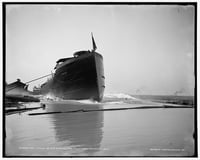
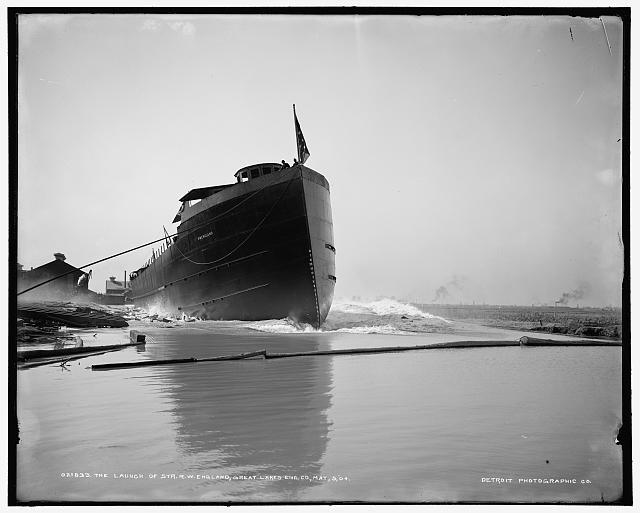
The prow of a steamship cuts through shallow water.
The steamer R. W. England slides into the water for the first time on May 5, 1904. LC-D4-21833 [P&P] in the Detroit Publishing Company photograph collection, Library of Congress Prints and Photographs Division.
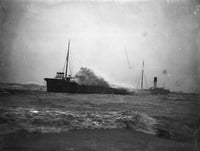
A wave meets a sandy shore, while behind it a ship moves through choppy waves.
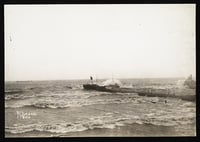
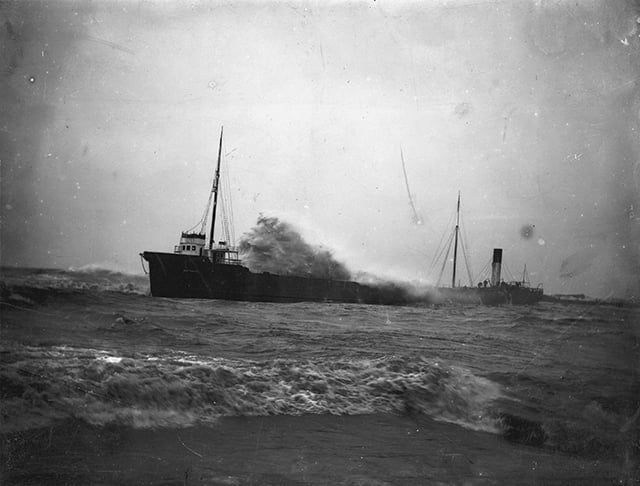
The steamship Mataafa at the height of its namesake storm on November 28, 1905. Photograph by Hugh McKenzie. Great Lakes Maritime History Project, State of Wisconsin Collection, University of Wisconsin, Superior.
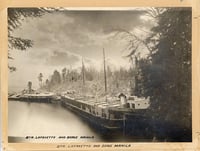
A damaged ship sits in water close to a shoreline wrecked by wind, with a second boat behind it.
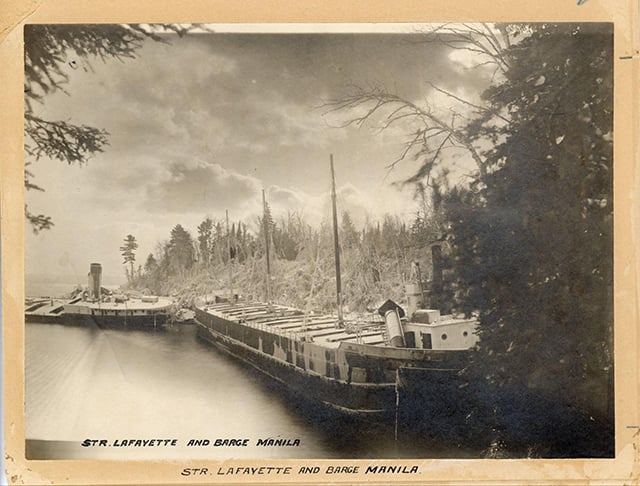
The barge Manila (right) and the stern of the freighter Lafayette (left) after being driven ashore by the Mataafa Storm on November 28, 1905. Lake Superior Maritime Collection, Special Collections, University of Wisconsin, Superior. Used with permission.
Waves crash toward a beach on two sides of a pier, with a block of white sky above.
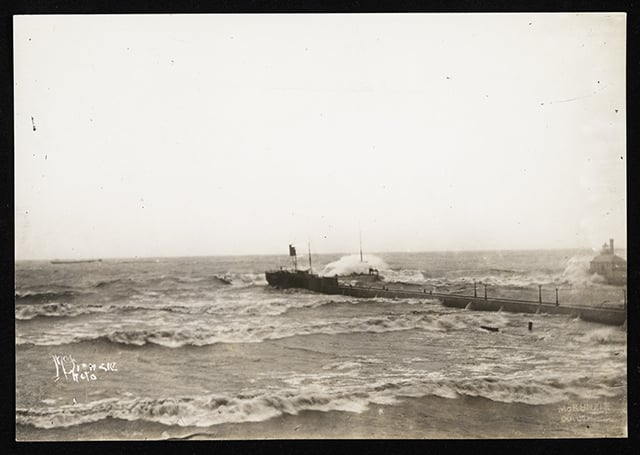
The Mataafa turned broadside against the north pier of Duluth harbor, November 29, 1905. Lake Superior Maritime Collection, Special Collections, University of Wisconsin, Superior. Used with permission.
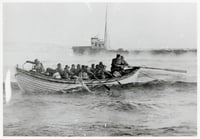
A rowboat full of people navigates with outstretches oars towards a ship in the background.
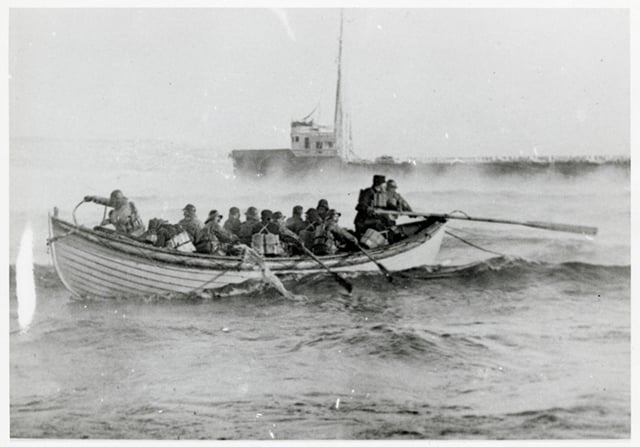
A US Lifesaving Service crew rows out to rescue survivors from the wreck of the Mataafa on November 29, 1905. Lake Superior Maritime Collection, Special Collections, University of Wisconsin, Superior. Used with permission.
A wrecked steamship sits partially submerged in water, with its bow facing the shore of a lake, with buildings behind it.

The wreck of the Mataafa

The wrecked and ice-coated Mataafa outside Duluth harbor on November 30, 1905. The split in the ship’s hull is visible at center right.

Holding Location

University of Minnesota Duluth

Source

Minnesota Digital Library
The prow of a steamship cuts through shallow water.

Launch of the steamer R. W. England

The steamer R. W. England slides into the water for the first time on May 5, 1904. LC-D4-21833 [P&P] in the Detroit Publishing Company photograph collection, Library of Congress Prints and Photographs Division.

Holding Location

Library of Congress
A wave meets a sandy shore, while behind it a ship moves through choppy waves.

The Mataafa at the height of the storm

The steamship Mataafa at the height of its namesake storm on November 28, 1905. Photograph by Hugh McKenzie. Great Lakes Maritime History Project, State of Wisconsin Collection, University of Wisconsin, Superior.

Holding Location

University of Wisconsin, Superior
A damaged ship sits in water close to a shoreline wrecked by wind, with a second boat behind it.

The steamer Lafayette with the barge Manila

The barge Manila (right) and the stern of the freighter Lafayette (left) after being driven ashore by the Mataafa Storm on November 28, 1905. Lake Superior Maritime Collection, Special Collections, University of Wisconsin, Superior. Used with permission.

Holding Location

University of Wisconsin, Superior
Waves crash toward a beach on two sides of a pier, with a block of white sky above.

The Matatafa striking a pier

The Mataafa turned broadside against the north pier of Duluth harbor, November 29, 1905. Lake Superior Maritime Collection, Special Collections, University of Wisconsin, Superior. Used with permission.

More Information

University of Wisconsin, Superior
A rowboat full of people navigates with outstretches oars towards a ship in the background.

Rescue boat headed for the wreck of the Mataafa

A US Lifesaving Service crew rows out to rescue survivors from the wreck of the Mataafa on November 29, 1905. Lake Superior Maritime Collection, Special Collections, University of Wisconsin, Superior. Used with permission.

Holding Location

University of Wisconsin, Superior

Turning Point

At 2:00 p.m., the captain of the Mataafa attempts to enter the Duluth shipping canal. A large wave pushes the nose of the vessel under water. It strikes the bottom of the lake before bobbing back to the surface, colliding with the north pier as it emerges. Attempts to bring the ship around fail. Rough seas push the ship north of the harbor entrance, where it is grounded just a few hundred feet from shore.

Chronology

November 24, 1905
Fifteen loaded boats in Duluth harbor delay launching due to a storm. Sixty-mile-an-hour winds sweep the lake.
November 27
In the morning, weather forecaster Herbert Richardson orders storm flags hoisted in the harbor. At 6:00 p.m., snow begins to fall.
November 27
At 3:30 p.m., Captain R. F. Humble guides the Mataafa out onto the lake.
November 28
At 5:40 a.m., Richardson records sustained winds of seventy miles per hour for ten minutes. At 6:00 a.m., Captain Humble turns the Mataafa around and heads back toward Duluth.
November 28
The Mataafa attempts to enter the Duluth harbor at 2:00 p.m. The vessel is pushed north of the pier and grounds on the concrete remains of the old pier. Life-saving crews do not arrive until 5:00 p.m.
November 28
Overnight, the wind shifts and the storm begins to weaken.
November 29
At 7:30 a.m., the first rescue boat reaches the Mataafa and takes seven men back to shore. The boat returns at 9:30 a.m. to retrieve the remaining eight living crew members.
November 29
By early afternoon, the storm abates.
November 29
At 11:00 p.m., Howard Coulby, the president and general manager of US Steel’s Pittsburgh Steam Company, arrives in Duluth to survey damage and meet with vessel masters in the city. General Marine Superintendent W. W. Smith accompanies him.
1910
Split Rock Lighthouse is completed in July. The new light fills in a gap in navigational aids between Two Harbors and Grand Marais, where seven vessels had been caught during the Mataafa Storm.
1910
The North Pier Lighthouse at the entrance to Duluth harbor is completed. As a complement to the light on the south pier, the new lighthouse eases the difficulty of approaching and entering the Duluth shipping canal, especially during low visibility.

Bibliography

“110 Years Ago, Massive Storm Led to Dramatic Duluth Shipwreck, Split Rock Lighthouse.” St. Paul Pioneer Press, November 26, 2015.

“Boat Spun Like A Top.” Duluth Evening Herald, November 28, 1905.

Brown, Curt. So Terrible a Storm: A Tale of Fury on Lake Superior. Voyageur Press, 2008.

“Capt. Humble Tells Tale of Mataafa’s Fatal Trip.” Duluth News Tribune, December 2, 1905.

“Coulby Is in the City.” Duluth Evening Herald, November 30, 1905.

“Crew on Steamer Mataafa, Pounded by Waves at Entrance of Harbor, is Facing Awful Death.” Duluth News Tribune, November 29, 1905.

Digital Collections from St. Kate’s, St. Catherine University. Mataafa Storm (1905).
https://omeka.reclaim.stkate.edu/exhibits/show/lake-superior-shipwrecks/mataafastorm

Digital Collections from St Kate's, St. Catherine University. Pennsylvania/Mataafa, Record.
https://omeka.reclaim.stkate.edu/items/show/4968

“Disastrous Storms Sweeps Duluth.” Duluth Evening Herald, November 28, 1905.

“Duluth Finds Itself in Grasp of Fierce Storm.” Duluth News Tribune, November 28, 1905.

Lemay, Konnie. “The Mataafa Blow: The Stormy Horror of 1905.” Lake Superior Magazine, October 1, 2005.

“Nine Drowned; Fifteen Saved.” Duluth Evening Herald, November 29, 1905.

“Three Wrecks Strew Beach Near Duluth.” Duluth Evening Herald, November 28, 1905.

United States Coast Guard, US Department of Homeland Security. Historic Light Station Information and Photography: Minnesota.
https://web.archive.org/web/20170501202509/http://www.uscg.mil/history/weblighthouses/LHMN.asp

US Department of Agriculture. Report for November, 1905: Michigan Section of the Climate and Crop Service of the Weather Bureau. Weather Bureau Office, 1905.
https://books.google.com/books?id=DWjpAAAAMAAJ

Related Resources

Primary

“Lighthouse Goes Out.” Duluth Evening Herald, November 28, 1905.

“W. E. Corey Is Missing.” Duluth Evening Herald, November 30, 1905.

“The Worst in History.” Duluth Evening Herald, November 29, 1905.

Secondary

Abrahamson, Robert M. Luck of the Draw: The Mataafa Story. R. M. Abrahamson, 2014.

Wolff, Julius F. Lake Superior Shipwrecks. Lake Superior Port Cities, 1990.