

See & Be Seen
November 7, 2026 – June 13, 2027
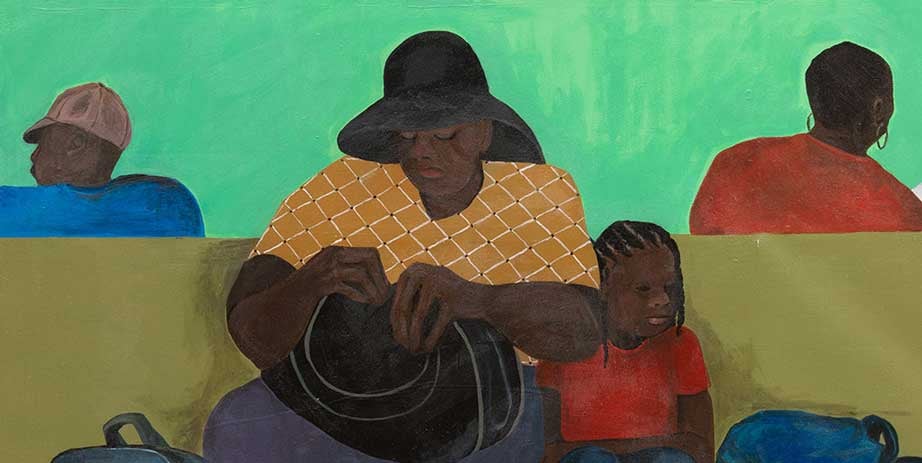
Whether it’s displayed in a frame, tucked in an album, or stored on a phone, every portrait tells a story. Together, these stories demonstrate the power in being seen, and being seen on your own terms.
Coming soon to the Minnesota History Center—portraits from the Minnesota Historical Society’s collections that span nearly 170 years, painting a picture of our state and how it has changed. We invite you to look, learn, and reflect on the Minnesota experience through the lens of our portraits.
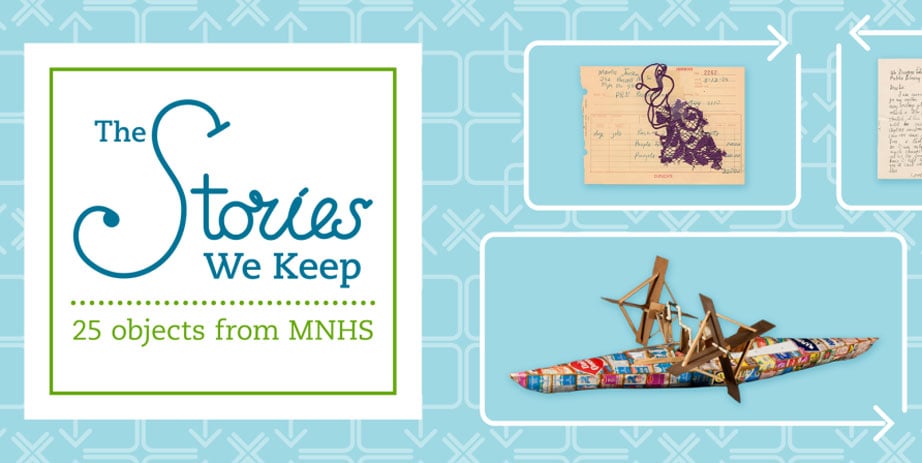
The Stories We Keep: 25 Objects from MNHS
This exhibit features 25 objects from MNHS collections—a rich trove built on the generosity and foresight of thousands of people who have entrusted us with their belongings and their stories.
Reframing Our Stories
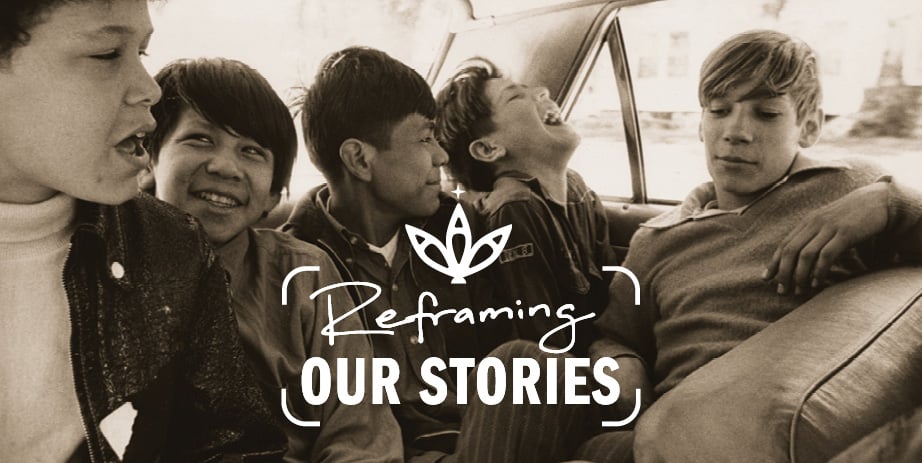
From a decades-old box of photographs simply labeled "Indians," came the idea for a powerful new exhibit. Inside the box were dozens of pictures of Native community members, organizations, activities, and events that are relevant today. Now in the hands of Indigenous community members, those photos have new meaning.
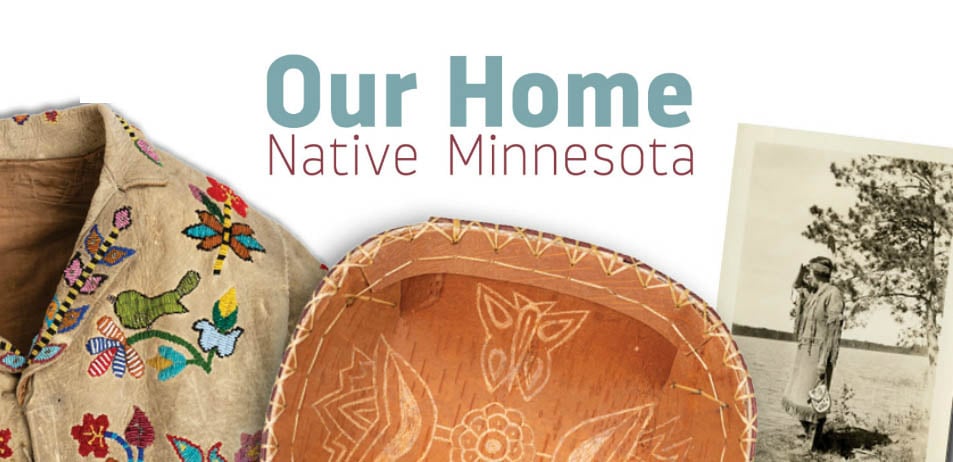
Our Home: Native Minnesota
View historic and contemporary photographs, maps, and artifacts and learn how Minnesota's Native communities have retained cultural practices, teachings and values, and an essential connection to home.
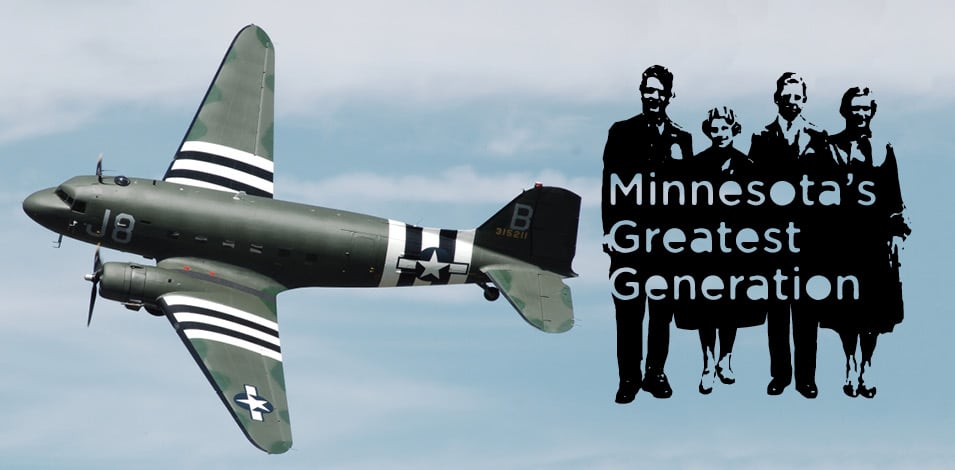
Minnesota's Greatest Generation
Board a C-47 and join a combat flight on D-Day, get behind the counter of a 1930s soda fountain, view classic film clips in a vaudeville theater, pack WWII ammunition shells, and step into the stories of an inspiring generation.
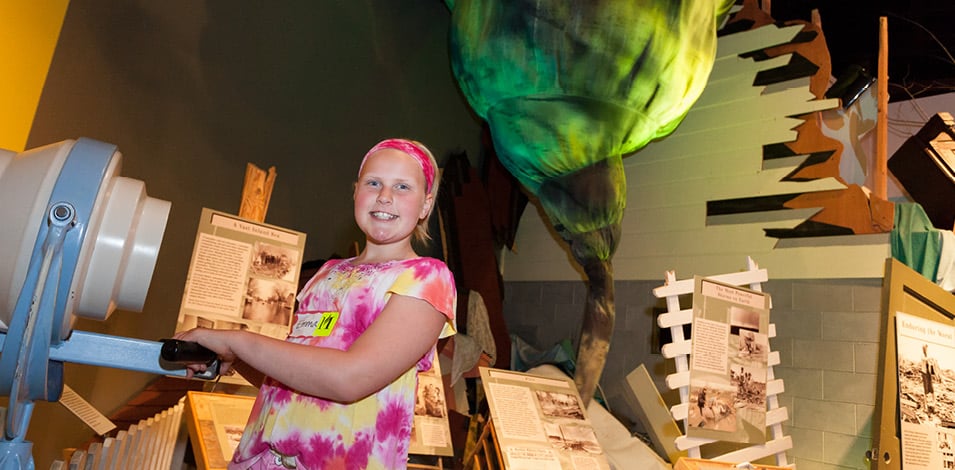
Weather Permitting
Ride out the 1965 Fridley tornado in a basement, learn about the Minneapolis Weatherball, play with the power of wind, and discover how Minnesotans have coped with the weather’s highs and lows.
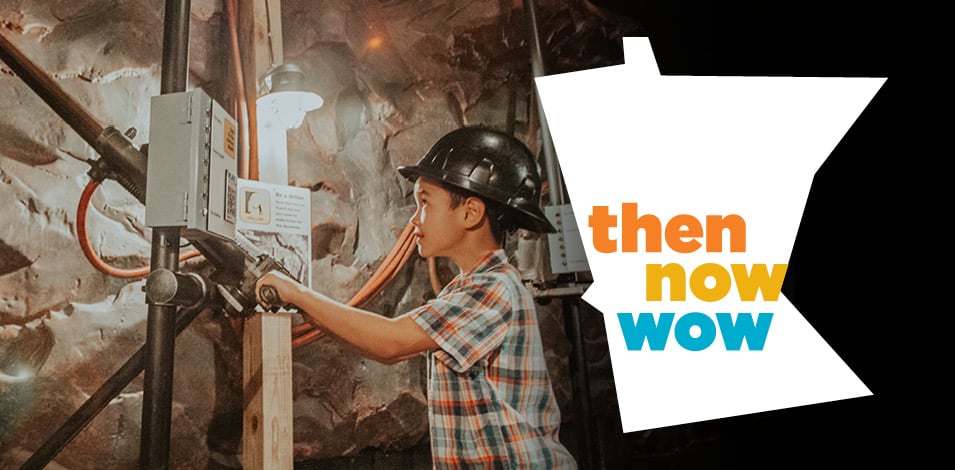
Then Now Wow
Blast for iron ore, crawl into a tipi, plow a field, visit a sod home, board a street car, trade at the fur post, sing in a box car, discover all the parts of a buffalo, and so much more in this action-packed exhibit. Fun for kids of all ages!

