


Farming - Little Town on the Prairie
Little Town on the Prairie
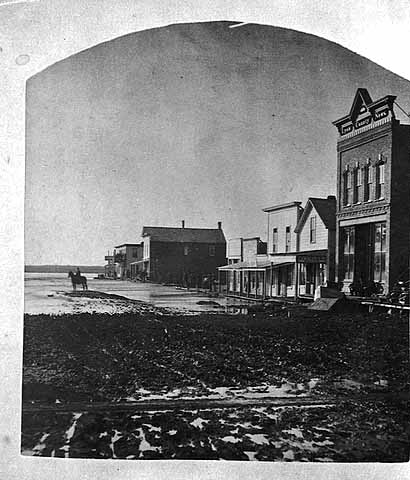
Minnesota Historical Society Photograph Collection, ML9.9 MR2 r3
"In every direction was a seemingly endless prairie ... utterly houseless and without trees....
I found a man sitting on a timber smoking a cigar.... He pointed in every direction to the oceans of untilled land, which he maintained was as fertile as it was fair; he looked a few years into the future and drew a picture of solid townships of No. 1 wheat and herds of sheep and cattle; prophetically he saw about him a thriving city with paved streets, palatial residences and metropolitan stores; he could hear the rumbling of ponderous machinery in the manufacturing plants and see the towering chimneys emitting copious volumes of smoke, which formed black mountains against the sky; he could see glistening church spires and hear the babbling of myriads of children at play about different school buildings.... It was a picture no artist could paint."
Quote from Arthur P. Rose, An Illustrated History of Lyon County, Minnesota (Marshall: Northern History Publishing Company, 1912).
What Did the Railroad Do for the Town?
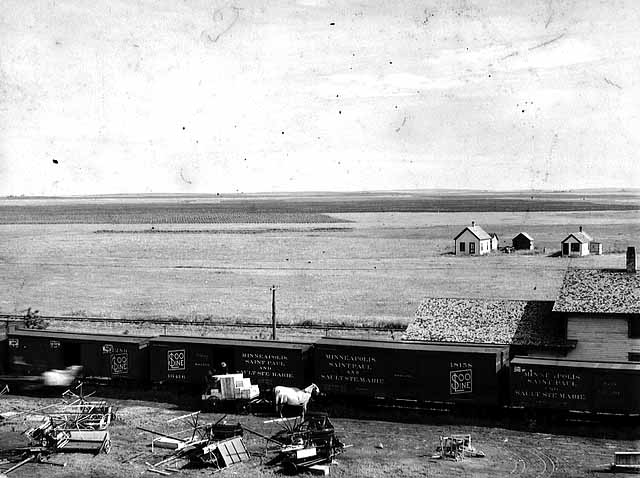
For the most part, settlers didn't build towns or houses on the prairie until the railroad tracks came through. The train brought in the lumber to build the town and the goods to stock it. It took the wheat the farmers grew to market in Minneapolis, leaving them with cash. Without this ability to transport goods, very few families would have moved so far from a settled community.
How Did They Build Houses out Here Where There Are No Trees?
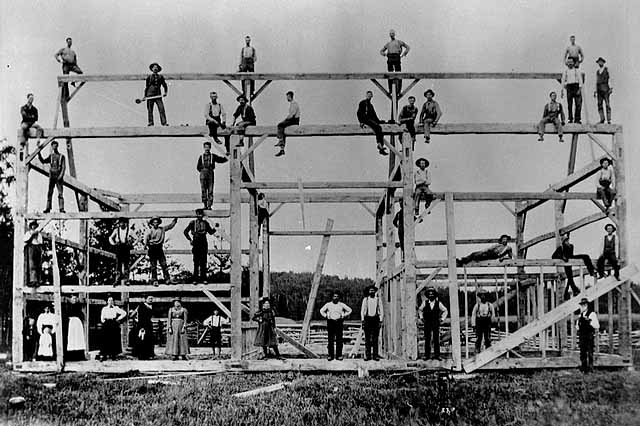
A barn raising in the Rainy River district, 1900.
Minnesota Historical Society Photograph Collection, SA4.9 r33"...the states of Minnesota, Iowa, the Dakota and Nebraska are consuming large and increasing amounts of lumber.... The demand is from country yards and is general, while the purchasers at the country yards are chiefly farmers."
—"The Mississippi Valley Lumberman," 1892
To Buy Lumber...
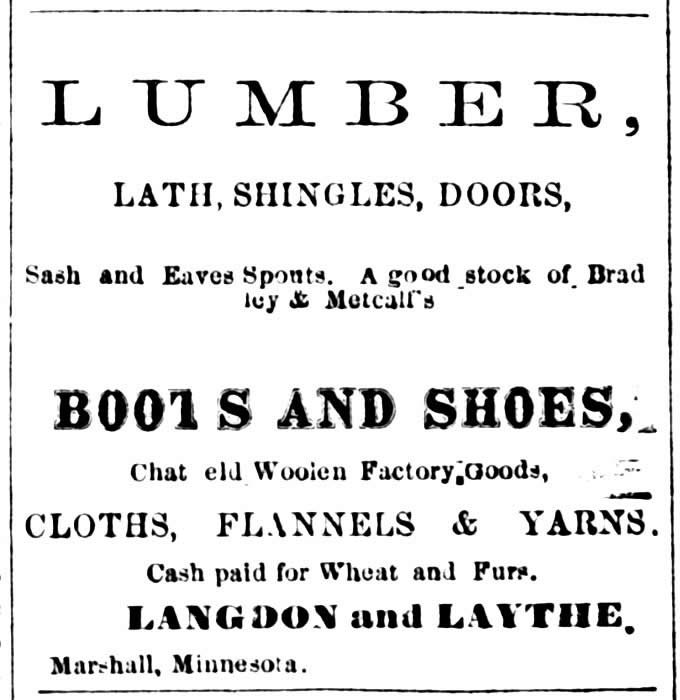
"Langdon and Laythe," newspaper advertisement.
Minnesota Historical Society Newspaper Collection. Marshall Prairie Schooner, September 6, 1873, p. 4.
"A great amount of land was broken out and new buildings made their appearance in all parts of the county. To make these improvements the new residents swamped the local lumber dealers with orders. Day after day lumber-laden wagon trains could be seen wending their way across the prairies from the villages of Tracy, Marshall and Minnesota to the new-found homes."
Arthur P. Rose, An Illustrated History of Lyon County, Minnesota (Marshall, MN: 1912).