Arthur and Edith Lee House, Minneapolis
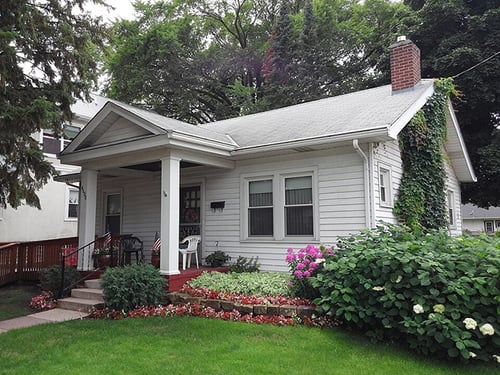
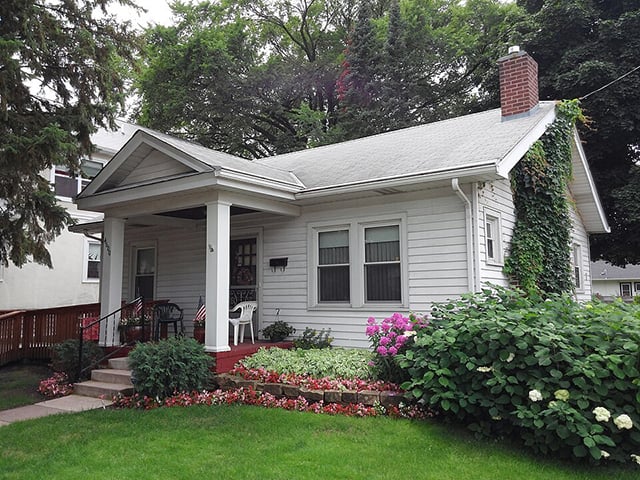
A one-and-a-half-story bungalgow with two two columns supporting a front porch. The house and its columns are painted white.
The Arthur and Edith Lee House, 4600 Columbus Avenue, Minneapolis. Photo by Collin Knopp-Schwyn, July 25, 2014. CC BY 4.0

In 1931, an unassuming house at 4600 Columbus Avenue South in Minneapolis was the site of racial violence directed at the Lees, an African American family who had recently purchased the property. Over a period of several days, angry white mobs swarmed the neighborhood to harass and intimidate the family. With the help of community leaders, family, friends, and NAACP attorney Lena Olive Smith, the Lees persevered and remained in their house for another two years before moving in 1933.  

Constructed in 1923, the Lee House is a modest bungalow at the southwest corner of Columbus Avenue South and East 46th Street in South Minneapolis. In June 1931, African Americans Arthur and Edith Lee purchased and moved into the nondescript house in the all-white Field neighborhood, along with their daughter, Mary. Arthur was a United States Postal Service employee and World War I veteran.  

The Lees’ move infuriated their new white neighbors, who wanted the area to stay segregated. The house’s deed did not include a racial covenant—a statement barring people of color from ownership. Four years earlier, however, about 400 members of the Eugene Field Neighborhood Association had signed non-legally-binding “contracts” aimed at preventing non-white groups from renting or purchasing houses in the neighborhood. 

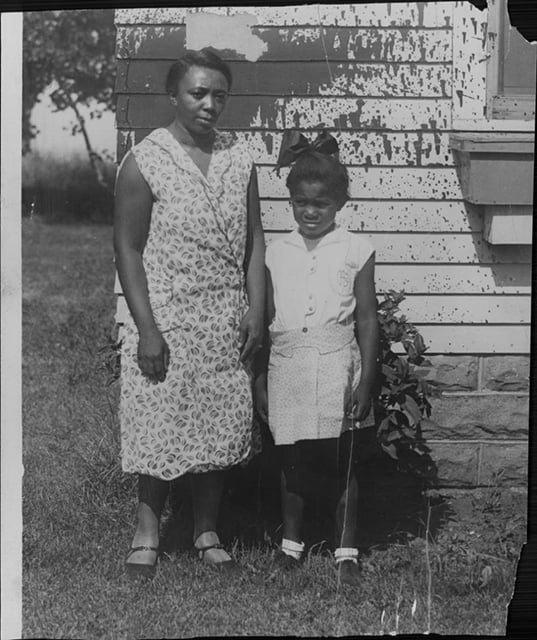
The association offered to purchase the house from the Lees for $5,000, about 6 percent more than what the Lees had paid for the property. After the Lees declined the offer, they were threatened and taunted, their house was vandalized, and neighbors hurled racial epithets at the family. Police did not respond when the Lees contacted them after continued intimidation, so the property was guarded by the Lees; family friends; Arthur’s brother, Edward; and fellow postal workers and World War I veterans. 

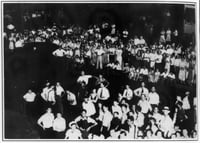
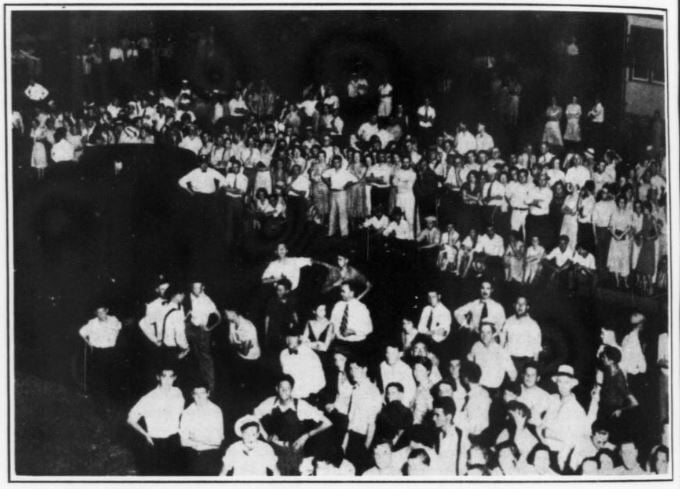
Between July 11 and July 16, angry white neighbors besieged the house. So many people joined in that police officers formed a circle around the bungalow, and reinforcements arrived to control the growing crowd. Onlookers continued to vandalize the property, throw stones, and shout at the Lees; eventually, the family’s dog was poisoned. On the night of July 16, more than four thousand people gathered a block away from the house but were held back by police.

Minneapolis Mayor William A. Anderson asked residents to avoid the property but did not immediately aid the Lees or intervene. Civic leaders urged local newspapers to curtail their coverage of the unrest, and a group of Minneapolis ministers signed a resolution that protested the demonstrations. The July 18 issue of the Minneapolis Tribune reported on initial mediation sessions. The Lees’ white attorney, H. E. Maag, claimed that the Lees were considering selling their house.

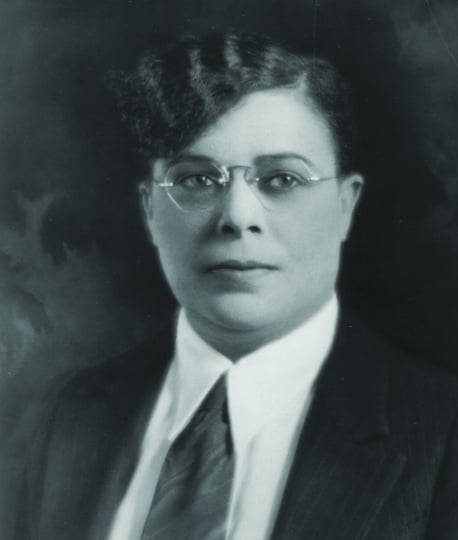
On July 18, the Lees dismissed Maag and retained Lena Olive Smith, an African American attorney with the Minneapolis chapter of the National Association for the Advancement of Colored People (NAACP). They hired Smith after Maag, representatives from Mayor Anderson’s office, and community leaders encouraged the couple to sell their house to the neighborhood association and vacate the area. 

Smith was vehement about the Lees remaining in their house. She was quoted in the July 20 issue of the Minneapolis Journal saying that “there will be no further negotiations with any committee of citizens.” Smith also released a statement in all three major Minneapolis newspapers informing the public that the Lee family would not be selling its house. While people feared that Smith’s resolute message would lead to further violence, the unrest subsided after its release.

Smith’s statement, along with mediation and the large police presence on the block, helped to quell further intimidation by white neighbors after July 20. Seventy-five white residents, however, protested the Lees on August 4. Police presence persisted through September 1932, and officers escorted Mary to her kindergarten class throughout the school year. The intimidation was so great that the Lees slept in their basement for as long as they lived in the house. Seeking a less hostile neighborhood with more Black residents, they sold their house in late 1933.

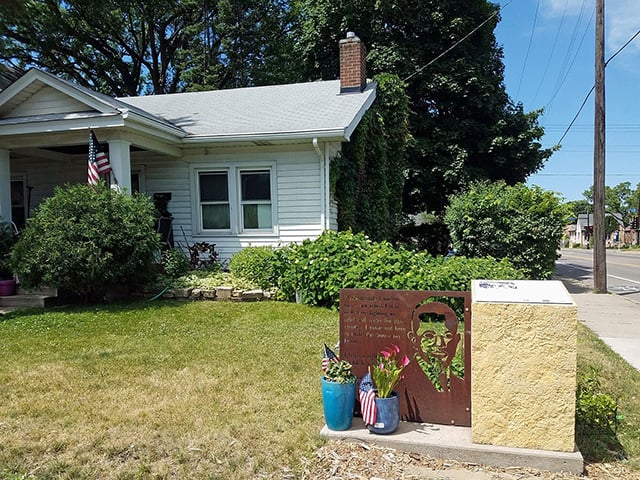
On July 16, 2011, a sculpture created by the Chicago Avenue Fire Arts Center and dedicated to the Lee family was installed on the northeast corner of the property. In 2014, the property was listed in the National Register of Historic Places. In 2016, it was designated as a local historic landmark.

.
Cite
Hankin-Redmon, Eric. "Arthur and Edith Lee House, Minneapolis." MNopedia, Minnesota Historical Society. https://www.mnhs.org/mnopedia/search/index/structure/arthur-and-edith-lee-house-minneapolis
Print This Page
First Published: December 18, 2025
Last Modified: December 19, 2025

Bibliography

106 Group. “Minneapolis African American Historic and Cultural Context Study.” February 2025.
https://lims.minneapolismn.gov/download/Agenda/7094/5112/2025-02-10_MinneapolisAAContextStudy.pdf

"4,000 Assemble Near Negro' s Home." Minneapolis Tribune, July 17, 1931. 

Adelsman, H. Lynn. "Desegregating South Minneapolis Housing TilsenBilt Homes of 1954." Hennepin History 64, no. 2 (Spring 2005): 24–33.
https://hennepinhistory.org/tilsenbilt

Fritz, Laurel, and Greg Donofrio. “Arthur and Edith Lee House.” National Register of Historic Places nomination file, May 21, 2014. State Historic Preservation Office, St. Paul.
https://ncshpo.org/wp-content/uploads/2020/07/Arthur-and-Edith-Lee-House-NRHP-NominationLR.pdf

South Minneapolis History: The Arthur and Edith Lee Family (Arthur and Edith Lee House marker). Historical Marker Database.
https://www.hmdb.org/m.asp?m=205392

City of Minneapolis. “Lee House.”
https://www.minneapolismn.gov/resident-services/property-housing/preservation/landmarks-districts/landmarks/arthur-and-edith-lee-house

"Crowd of 3,000 Renews Attack on Negro' s Home." Minneapolis Tribune, July 16, 1931.

"Home Stoned in Race Row: Sale of House to Negro Stirs Neighborhood." Minneapolis Tribune, July 15, 1931. 

Jim Crow of the North: Redlining and Racism in Minnesota. Directed by Daniel Pierce Bergin. Twin Cities PBS, 2019. 
https://www.youtube.com/watch?v=XWQfDbbQv9E

“Lee to Keep Home, Attorney Avows.” Minneapolis Journal, July 20, 1931.

Sluss, Jacquelin. “Lena O. Smith House.” National Register of Historic Places nomination file, July 16, 1990. Minnesota State Historic Preservation Office, St. Paul.
https://npgallery.nps.gov/AssetDetail/NRIS/91001472

"Throng Still Perils Negro in Mill City." St. Paul Pioneer Press, July 17, 1931.
https://newspaperhub.mnhs.org/?a=d&d=sppp19310717

Related Resources

Secondary


Freedman, Samuel G. Into the Bright Sunshine: Young Hubert Humphrey and the Fight for Civil Rights. Oxford University Press, 2023.

Legal Information Institute. “Shelley v. Kraemer (1948).”
https://www.law.cornell.edu/wex/shelley_v_kraemer_(1948)


Hall, Chatwood. “A Roman Holiday in Minneapolis.” The Crisis 38, no. 10 (October 1931): 337–339.
https://archive.org/details/sim_crisis_1931-10_38_10/page/336/mode/2up
 
Montrie, Chad. Whiteness in Plain View: A History of Racial Exclusion in Minnesota. Minnesota Historical Society Press, 2022. 

Spangler, Earl. The Negro In Minnesota. Minneapolis. T. S. Denison and Company, 1961.

Taylor, David Vassar. African Americans in Minnesota. Minnesota Historical Society Press, 2002.

———. "The Blacks." In They Chose Minnesota: A Survey of the State's Ethnic Groups, 73–91. Minnesota Historical Society Press, 1981.

Web


Jackson Family Project. 
https://jacksonfamilyproject.org

Mapping Inequality. University of Richmond. 
https://dsl.richmond.edu/panorama/redlining 

Mapping Prejudice. University of Minnesota. 
https://mappingprejudice.umn.edu

Related Images

A one-and-a-half-story bungalgow with two two columns supporting a front porch. The house and its columns are painted white.
The Arthur and Edith Lee House, 4600 Columbus Avenue, Minneapolis. Photo by Collin Knopp-Schwyn, July 25, 2014. CC BY 4.0
An African American woman and her young daughter stand in front of a house splattered with paint.
Edith Lee (left) with her daughter, Mary Edyth Lee (right) outside their vandalized home (4600 Columbus Avenue, Minneapolis) on July 15, 1931. Photo by the Minneapolis Tribune.
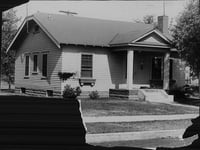
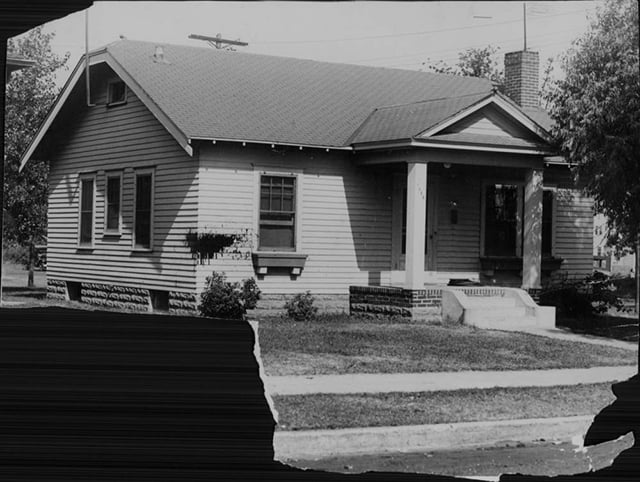
Torn black-and-white photograph of a white bungalow with columns supporting a front porch.
The Arthur and Edith Lee House (4600 Columbus Avenue, Minneapolis) vandalized with paint, July 16, 1931. Photo by the Minneapolis Tribune.
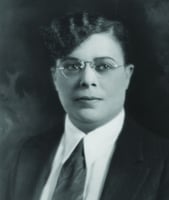
The head and shoulders of a woman with permed, side-swept bangs, wearing a suit and tie.
Lena Olive Smith, ca. 1920s.
Black-and-white image of two crows of people, one sitting and standing in rows, the other standing in front of the first. White shirts stand out against a black background
A crowd outside the Arthur and Edith Lee House. Published in The Crisis 38, no. 10 (October 1931), page 338.
White bungalow and lawn with a historic marker at the bottom right.
A historical marker with the Arthur and Edith Lee House in the background, June 23, 2022. Photo by McGhiever.
A one-and-a-half-story bungalgow with two two columns supporting a front porch. The house and its columns are painted white.

Arthur and Edith Lee House

The Arthur and Edith Lee House, 4600 Columbus Avenue, Minneapolis. Photo by Collin Knopp-Schwyn, July 25, 2014. CC BY 4.0
An African American woman and her young daughter stand in front of a house splattered with paint.

Edith Lee and Mary Edyth Lee

Edith Lee (left) with her daughter, Mary Edyth Lee (right) outside their vandalized home (4600 Columbus Avenue, Minneapolis) on July 15, 1931. Photo by the Minneapolis Tribune.
Torn black-and-white photograph of a white bungalow with columns supporting a front porch.

Arthur and Edith Lee House vandalized with paint

The Arthur and Edith Lee House (4600 Columbus Avenue, Minneapolis) vandalized with paint, July 16, 1931. Photo by the Minneapolis Tribune.
The head and shoulders of a woman with permed, side-swept bangs, wearing a suit and tie.

Lena Olive Smith

Lena Olive Smith, ca. 1920s.
Black-and-white image of two crows of people, one sitting and standing in rows, the other standing in front of the first. White shirts stand out against a black background

Crowd outside the Arthur and Edith Lee House

A crowd outside the Arthur and Edith Lee House. Published in The Crisis 38, no. 10 (October 1931), page 338.
White bungalow and lawn with a historic marker at the bottom right.

Historical marker with the Lee House in the background

A historical marker with the Arthur and Edith Lee House in the background, June 23, 2022. Photo by McGhiever.

Chronology

1923
A modest bungalow is constructed at 4600 Columbus Avenue South, in the Field neighborhood of South Minneapolis.
1927
Members of the Field Neighborhood Association sign “contracts” to prevent non-white people from moving into the all-white neighborhood.
late June 1931
Arthur Lee purchases the Columbus Avenue house and moves in with his wife, Edith, and his daughter, Mary.
July 1931
The neighborhood association offers to purchase the Lees’ house. The Lees decline the offer.
July 11
150 people assemble at the Lees’ house to threaten and harass the family.
July 14
Hundreds of people gather at the house to yell and throw stones.
July 15
The Minneapolis Tribune begins reporting on the situation, leading to further protests by angry white residents.
July 16
Over 4,000 white protesters and spectators swarm an intersection one block away from the Lees’ property.
July 18
Local newspapers report that the Lees have begun mediation with the neighborhood association.
July 20
The Lees’ new NAACP lawyer, Lena Olive Smith, issues statements in three Minneapolis papers insisting that the family will not sell the house.
late 1933
The Lees sell their house and move to a nearby neighborhood with more African Americans.
2011
On July 16, a sculpture commemorating the eightieth anniversary of the unrest is unveiled.
2014
The Arthur and Edith Lee House is listed in the National Register of Historic Places.
2016
The Arthur and Edith Lee House is designated as a local Minneapolis landmark.

Bibliography

106 Group. “Minneapolis African American Historic and Cultural Context Study.” February 2025.
https://lims.minneapolismn.gov/download/Agenda/7094/5112/2025-02-10_MinneapolisAAContextStudy.pdf

"4,000 Assemble Near Negro' s Home." Minneapolis Tribune, July 17, 1931. 

Adelsman, H. Lynn. "Desegregating South Minneapolis Housing TilsenBilt Homes of 1954." Hennepin History 64, no. 2 (Spring 2005): 24–33.
https://hennepinhistory.org/tilsenbilt

Fritz, Laurel, and Greg Donofrio. “Arthur and Edith Lee House.” National Register of Historic Places nomination file, May 21, 2014. State Historic Preservation Office, St. Paul.
https://ncshpo.org/wp-content/uploads/2020/07/Arthur-and-Edith-Lee-House-NRHP-NominationLR.pdf

South Minneapolis History: The Arthur and Edith Lee Family (Arthur and Edith Lee House marker). Historical Marker Database.
https://www.hmdb.org/m.asp?m=205392

City of Minneapolis. “Lee House.”
https://www.minneapolismn.gov/resident-services/property-housing/preservation/landmarks-districts/landmarks/arthur-and-edith-lee-house

"Crowd of 3,000 Renews Attack on Negro' s Home." Minneapolis Tribune, July 16, 1931.

"Home Stoned in Race Row: Sale of House to Negro Stirs Neighborhood." Minneapolis Tribune, July 15, 1931. 

Jim Crow of the North: Redlining and Racism in Minnesota. Directed by Daniel Pierce Bergin. Twin Cities PBS, 2019. 
https://www.youtube.com/watch?v=XWQfDbbQv9E

“Lee to Keep Home, Attorney Avows.” Minneapolis Journal, July 20, 1931.

Sluss, Jacquelin. “Lena O. Smith House.” National Register of Historic Places nomination file, July 16, 1990. Minnesota State Historic Preservation Office, St. Paul.
https://npgallery.nps.gov/AssetDetail/NRIS/91001472

"Throng Still Perils Negro in Mill City." St. Paul Pioneer Press, July 17, 1931.
https://newspaperhub.mnhs.org/?a=d&d=sppp19310717

Related Resources

Secondary


Freedman, Samuel G. Into the Bright Sunshine: Young Hubert Humphrey and the Fight for Civil Rights. Oxford University Press, 2023.

Legal Information Institute. “Shelley v. Kraemer (1948).”
https://www.law.cornell.edu/wex/shelley_v_kraemer_(1948)


Hall, Chatwood. “A Roman Holiday in Minneapolis.” The Crisis 38, no. 10 (October 1931): 337–339.
https://archive.org/details/sim_crisis_1931-10_38_10/page/336/mode/2up
 
Montrie, Chad. Whiteness in Plain View: A History of Racial Exclusion in Minnesota. Minnesota Historical Society Press, 2022. 

Spangler, Earl. The Negro In Minnesota. Minneapolis. T. S. Denison and Company, 1961.

Taylor, David Vassar. African Americans in Minnesota. Minnesota Historical Society Press, 2002.

———. "The Blacks." In They Chose Minnesota: A Survey of the State's Ethnic Groups, 73–91. Minnesota Historical Society Press, 1981.

Web


Jackson Family Project. 
https://jacksonfamilyproject.org

Mapping Inequality. University of Richmond. 
https://dsl.richmond.edu/panorama/redlining 

Mapping Prejudice. University of Minnesota. 
https://mappingprejudice.umn.edu