Line 3 Oil Spill, Grand Rapids

Creator:
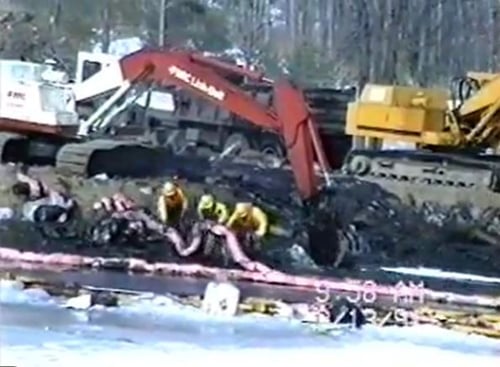
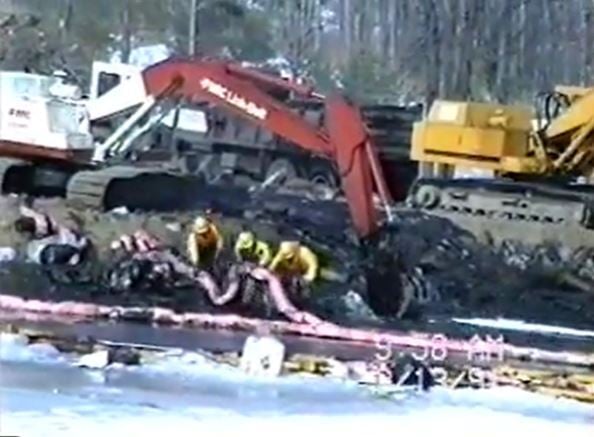
Workers in yellow protective gear handle a pink pipeline in front of construction vehicles, with a frozen stretch of water in the foreground.
A work crew on the Prairie River near Grand Rapids after the Line 3 oil spill, March 10, 1991. Still image from video captured by Harry Hutchins. 

On March 3, 1991, Line 3 of the Lakehead Pipeline Company burst near Grand Rapids, Minnesota. An estimated 1.7 million gallons of oil spilled into the nearby Prairie River and surrounding wetlands, making it the largest inland oil spill in US history. 

Line 3 was built in the 1960s by the Lakehead Pipeline Company to transport oil from Canada to the Midwest. It passed east of Grand Rapids, Minnesota, near the Prairie River. On March 3, 1991, the thirty-four-inch pipeline ruptured along a small crack, resulting in a five-foot-long gash in the pipe. The pressurized oil shot into the air, immediately covering the surrounding trees and spilling into the Prairie River and the nearby wetlands.

At 12:40 p.m. a local resident reported a strong oil odor to the fire department, which immediately notified Lakehead. The company turned off the line at 1:30 p.m. Between two and three hundred residents who lived near the spill site were evacuated for the remainder of the day, and Highway 169 was closed east of Grand Rapids for several hours due to proximity to the spill.

Lakehead initially estimated that about 630,000 gallons of oil had spilled as a result of the ruptured pipe, but they nearly tripled the estimate later to 1.7 million gallons of oil. Marshes and vegetated riverbanks were the primary environment affected by the spill, and samples were taken of river water, groundwater, and well water to determine the extent of the damage. Several fish died where oil first entered the water stream, but there were few other wildlife impacts.

Because the Prairie River is a tributary of the Mississippi River, the repercussions could have been far-reaching, but several factors limited the harm. Cold air temperatures made the oil viscous, so it moved more slowly than it would have in warmer months. Additionally, the Prairie River was covered by eighteen inches of ice, which barred much of the oil from entering the water stream. The frozen ground limited the amount of oil absorbed into the soil, and the absence of migratory birds prevented extensive wildlife impact.

The cleanup effort took several months and cost millions of dollars. Steve Wuori managed the onsite cleanup for Lakehead, supervising about ninety people from several Midwest states. Crews worked around the clock in twelve-hour shifts, except when temperatures were too cold to safely operate machinery, and employed several methods of stopping and recovering the spilled oil.

Downriver from the spill, personnel cut large slots in the ice with chainsaws to install booms in the water, preventing oil from spreading to the Mississippi River. Large berms of absorbent material were built on top of the ice to absorb any oil still sliding downstream on the surface. Personnel pushed the oil across the ice with squeegees to designated collection points, where vacuums removed it. Oil-permeated ice was cut into moveable blocks and taken to an unaffected part of the river. Crews sprayed the blocks with warm water, releasing the oil and recovering it with skimmers. Ice that was only slightly contaminated was removed from the river and set to thaw in lined holding ponds. Once the ice had melted, the oil was recovered from the ponds. Governor Arne Carlson visited the spill site during the cleanup and commended Lakehead on its efforts and cooperation with state officials.

After the initial cleanup was complete, Lakehead built a pond near the spill site to collect runoff as the ground thawed and released more oil. By June, Lakehead had spent seven million dollars on cleanup, and they petitioned for a permit to release the water from the holding pond into the Prairie River.

Twenty-five locals who lived near the spill site unsuccessfully opposed granting the permit, arguing that doing so would release the company of responsibility for the damage, as well as increase the amount of environmental harm. The Minnesota Pollution Control Agency countered that additional damage to the ecosystem was unlikely at that point, and maintained that the water met state quality standards. The board granted the permit to release the water once all of the petroleum compounds had sunk to the bottom of the pond and the volatile compounds had evaporated. The draining of the pond was the final step in Lakehead’s cleanup process after the Line 3 spill.

.
First Published: April 10, 2026
Last Modified: April 10, 2026

Bibliography

Boyko, John. “Enbridge.” Canadian Encyclopedia, Historica Canada, February 2, 2019.
https://thecanadianencyclopedia.ca/en/article/enbridge

Brunswick, Mark. “Oil Runs into Prairie River from Grand Rapids Spill.” Minneapolis Star Tribune, March 4, 1991.

Final Environmental Impact Statement: Enbridge Sandpiper Pipeline and Line 3 Replacement Projects. Douglas County, Wisconsin Department of Natural Resources, 2016.
https://web.archive.org/web/20161116020502/http://ua.dnr.wi.gov/files/PDF/pubs/ea/EA0229.pdf

Incident News. Lakehead Pipeline Company; Grand Rapids, Minnesota.
https://incidentnews.noaa.gov/incident/6793

Kraker, Dan, and Kirsti Marohn. “30 Years Later, Echoes of Largest Inland Oil Spill Remain in Line 3 Fight.” MPR News, March 3, 2021.
https://www.mprnews.org/story/2021/03/03/30-years-ago-grand-rapids-oil-spill

“Lawsuit Calls Oil Spill Cleanup Inadequate.” St. Paul Pioneer Press, June 13, 1991.

Oakes, Larry, and Betty Wilson. “Carlson Urges a New System to Handle Oil Spills.” Minneapolis Star Tribune, March 15, 1991.

“Oil Spill Revised Upward to 1.7 Million Gallons.” St. Paul Pioneer Press, March 13, 1991.

“Tiny Crack in Pipe Cited as Cause of Spill.” St. Paul Pioneer Press, May 11, 1991.

Von Sternberg, Bob. “Remnants of Oil Spill Can Be Pumped into River.” Minneapolis Star Tribune, June 26, 1991.
Related Resources

Primary

Chin, Richard. “Carlson Tours Site of Oil Spill, Proposes Clean-Up Legislation.” St. Paul Pioneer Press, March 15, 1991. 

Web

Kelley, Alexandra. “Pipeline Foes Double Down on Efforts to Halt Line 3 Construction.” The Hill, June 8, 2021.
https://thehill.com/changing-america/sustainability/environment/557410-pipeline-foes-double-down-on-efforts-to-halt-line Secondary

MN350. An Anniversary Minnesotans Shouldn’t Forget.
https://mn350.org/2021/10/an-anniversary-minnesotans-shouldnt-forget

MPR News. Oil and Water: The Line 3 Debate.
https://www.mprnews.org/environment/pipeline

Siple, Julie, Bill Wareham, Dan Kraker, and Cody Nelson. “Rivers of Oil, Episode 2: The Largest Inland Spill.” MPR News, June 20, 2018.
https://www.mprnews.org/story/2018/06/20/rivers-of-oil-podcast-line3-pipeline-ep2-spill

Related Video

oil_spill_video_screen_cap

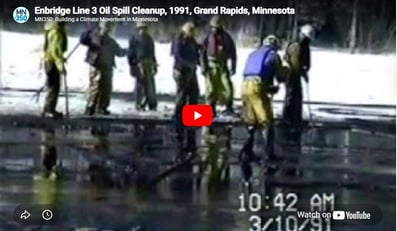
Line 3 Oil Spill Cleanup, 1991

Video of the Line 3 oil spill at Grand Rapids, Minnesota, recorded by Harry Hutchins on March 10, 1991.

Related Images

Workers in yellow protective gear handle a pink pipeline in front of construction vehicles, with a frozen stretch of water in the foreground.
A work crew on the Prairie River near Grand Rapids after the Line 3 oil spill, March 10, 1991. Still image from video captured by Harry Hutchins. 
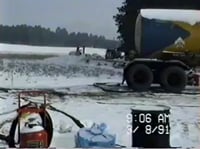
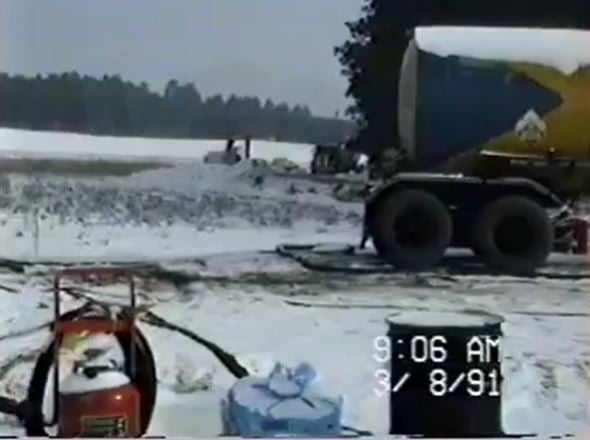
Part of an oil tanker is visible on the right side of the image, with hoses snaking around it. Snow covers the foreground to the background, with a tree line behind that.
The scene of the Lakehead Pipeline Line 3 oil spill on the Prairie River, March 8, 1991. Still image from video recorded by Harry Hutchins. 
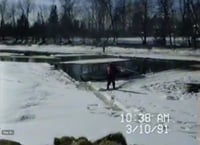
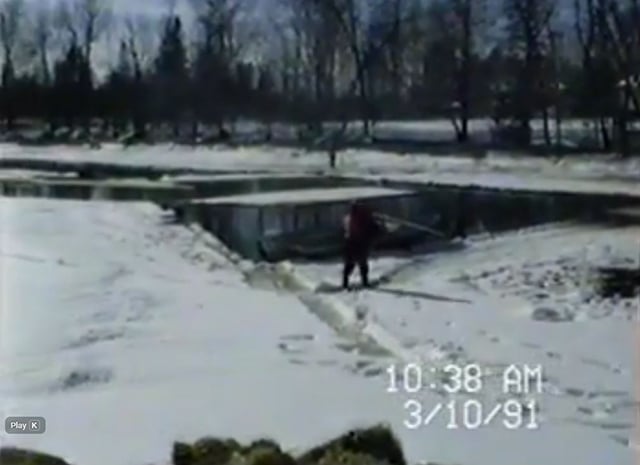
Water covered with ice and snow on top of it, with oil-filled water in the middle ground, and trees in the background.
Snow, ice, and oil on the Prairie River after the Line 3 Oil Spill outside of Grand Rapids, March 10, 1991. Still image from video recorded by Harry Hutchins. 
Workers in yellow protective gear handle a pink pipeline in front of construction vehicles, with a frozen stretch of water in the foreground.

Work crew on the Prairie River after the Lakehead Pipeline Line 3 oil spill

A work crew on the Prairie River near Grand Rapids after the Line 3 oil spill, March 10, 1991. Still image from video captured by Harry Hutchins. 
Part of an oil tanker is visible on the right side of the image, with hoses snaking around it. Snow covers the foreground to the background, with a tree line behind that.

Scene of the Line 3 oil spill

The scene of the Lakehead Pipeline Line 3 oil spill on the Prairie River, March 8, 1991. Still image from video recorded by Harry Hutchins. 
Water covered with ice and snow on top of it, with oil-filled water in the middle ground, and trees in the background.

Snow, ice, and oil on the Prairie River

Snow, ice, and oil on the Prairie River after the Line 3 Oil Spill outside of Grand Rapids, March 10, 1991. Still image from video recorded by Harry Hutchins. 

Turning Point

On March 14, Governor Arne Carlson travels to Grand Rapids to observe some of the cleanup and announces a plan to address the state’s lack of preparedness for an environmental disaster. His ideas include requiring companies that handle oil and other hazardous materials to file a cleanup plan with the state and starting a twenty-four-hour spill hotline and communications network to notify local and state authorities in the event of a spill.

Chronology

1968
Lakehead Pipeline Company installs Line 3 from Edmonton, Alberta, to Superior, Wisconsin. The thirty-four-inch pipe is 1,097 miles long.
1973
Line 3 spills 1.3 million gallons of oil in the second-largest spill in Minnesota history.
March 3, 1991
At 12:40 p.m., a resident east of Grand Rapids, near the Prairie River, notices a strong oil odor and calls the local fire department.
March 3, 1991
Lakehead Pipeline Company turns off Line 3 at 1:30 p.m., at which point oil stops flowing into the affected area.
March 3, 1991
Personnel from the Minnesota Pollution Control Agency and the Environmental Protection Agency respond to the spill in the afternoon.
March 3, 1991
In the evening, evacuated residents are allowed to return to their homes and Highway 169 is reopened.
March 13, 1991
Just ten days into the cleanup, crews recover 2 million gallons of oil-contaminated water.
March 14, 1991
Governor Arne Carlson visits the spill site.
May 11, 1991
Lakehead spokeswoman Denise Hamsher reports that a “microscopic crack” in the pipe caused the rupture.
June 1991
Twenty-five residents who live near the spill site bring a $40 million lawsuit against Lakehead, including $50,000 each in personal damages, for inadequate cleanup.
June 1991
The Minnesota Pollution Control Agency grants a permit to Lakehead to drain the remainder of the spill’s diluted runoff into the Prairie River.
1998
Lakehead Pipeline’s parent company, IPL (Interprovincial Pipe Line Company), rebrands itself as Enbridge, Inc.
2014
Enbridge announces plans to rebuild and reroute the Line 3 pipeline in northern Minnesota, leading to protests by Indigenous water protectors and their allies.
2021
2021 - Enbridge’s new Line 3 pipeline is completed and begins operating in October.

Bibliography

Boyko, John. “Enbridge.” Canadian Encyclopedia, Historica Canada, February 2, 2019.
https://thecanadianencyclopedia.ca/en/article/enbridge

Brunswick, Mark. “Oil Runs into Prairie River from Grand Rapids Spill.” Minneapolis Star Tribune, March 4, 1991.

Final Environmental Impact Statement: Enbridge Sandpiper Pipeline and Line 3 Replacement Projects. Douglas County, Wisconsin Department of Natural Resources, 2016.
https://web.archive.org/web/20161116020502/http://ua.dnr.wi.gov/files/PDF/pubs/ea/EA0229.pdf

Incident News. Lakehead Pipeline Company; Grand Rapids, Minnesota.
https://incidentnews.noaa.gov/incident/6793

Kraker, Dan, and Kirsti Marohn. “30 Years Later, Echoes of Largest Inland Oil Spill Remain in Line 3 Fight.” MPR News, March 3, 2021.
https://www.mprnews.org/story/2021/03/03/30-years-ago-grand-rapids-oil-spill

“Lawsuit Calls Oil Spill Cleanup Inadequate.” St. Paul Pioneer Press, June 13, 1991.

Oakes, Larry, and Betty Wilson. “Carlson Urges a New System to Handle Oil Spills.” Minneapolis Star Tribune, March 15, 1991.

“Oil Spill Revised Upward to 1.7 Million Gallons.” St. Paul Pioneer Press, March 13, 1991.

“Tiny Crack in Pipe Cited as Cause of Spill.” St. Paul Pioneer Press, May 11, 1991.

Von Sternberg, Bob. “Remnants of Oil Spill Can Be Pumped into River.” Minneapolis Star Tribune, June 26, 1991.

Related Resources

Primary

Chin, Richard. “Carlson Tours Site of Oil Spill, Proposes Clean-Up Legislation.” St. Paul Pioneer Press, March 15, 1991. 

Web

Kelley, Alexandra. “Pipeline Foes Double Down on Efforts to Halt Line 3 Construction.” The Hill, June 8, 2021.
https://thehill.com/changing-america/sustainability/environment/557410-pipeline-foes-double-down-on-efforts-to-halt-line Secondary

MN350. An Anniversary Minnesotans Shouldn’t Forget.
https://mn350.org/2021/10/an-anniversary-minnesotans-shouldnt-forget

MPR News. Oil and Water: The Line 3 Debate.
https://www.mprnews.org/environment/pipeline

Siple, Julie, Bill Wareham, Dan Kraker, and Cody Nelson. “Rivers of Oil, Episode 2: The Largest Inland Spill.” MPR News, June 20, 2018.
https://www.mprnews.org/story/2018/06/20/rivers-of-oil-podcast-line3-pipeline-ep2-spill