Fort Ridgely

Creator:
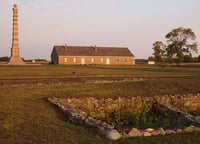
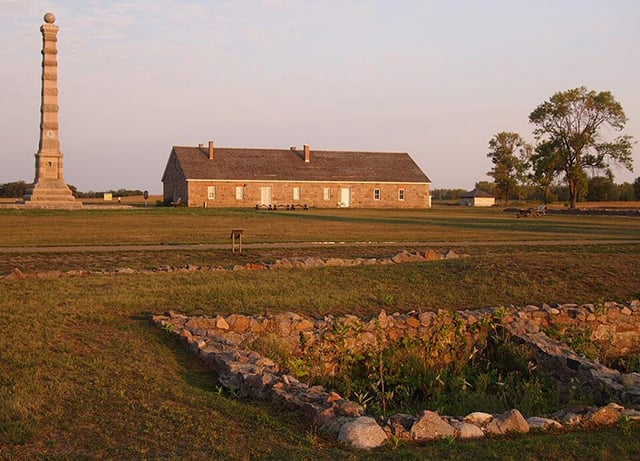
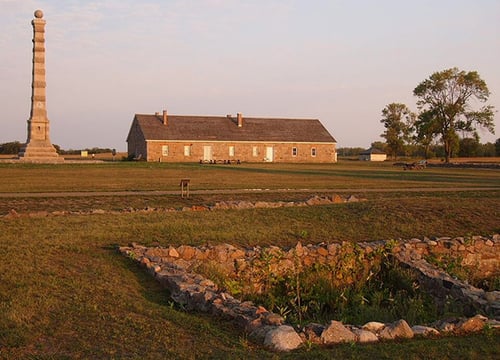
Landscape at sunset with foundation ruins in the foreground and a building and upright pillar in the background.
Fort Ridgely photographed by Wikimedia Commons user McGhiever, September 1, 2012. CC BY-SA 3.0

Fort Ridgely was a US military fort that operated between 1853 and 1867. It was located near the confluence of the Minnesota River and Fort Ridgely Creek, which was inside a Dakota reservation until 1862. To recognize the post’s role in the US–Dakota War of 1862, the state of Minnesota purchased the site in 1895 and established Fort Ridgely State Park in 1911.

Mnisota Wakpa (the Minnesota River) has sustained Dakota people for generations. Dakota relatives gathered at and built burial mounds near its banks for thousands of years. By the mid-nineteenth century, their descendants lived in villages throughout the river’s watershed.

The treaties of Traverse des Sioux and Mendota established a Dakota reservation along the Minnesota River in 1851. White settlers began flooding into the region even before the treaty was ratified, and in 1852, Henry Sibley requested that the US establish a fort on the Minnesota River to suppress potential violence between settlers and the Dakota.

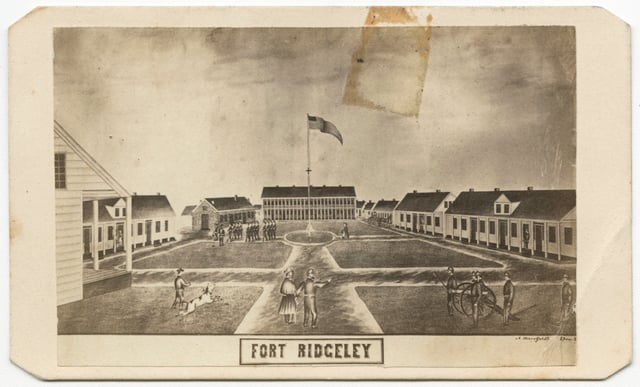
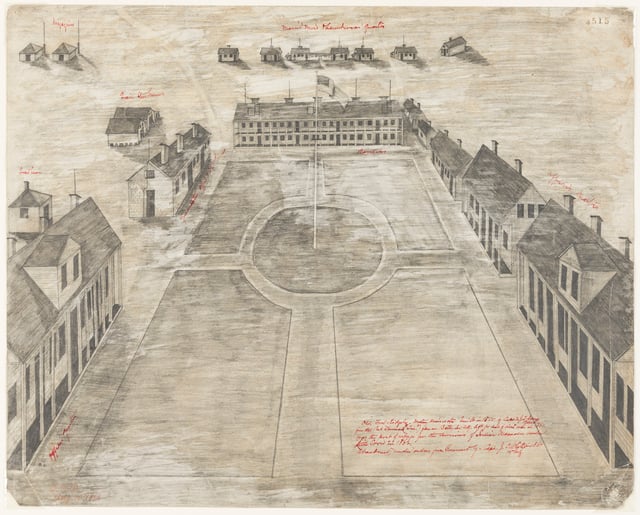
Fort Snelling soldiers began constructing the garrison in February 1853, creating an unwalled collection of buildings encircling a parade ground. Except for the granite barracks and commissary, the fort's structures were made of wood. On June 27, Secretary of War Jefferson Davis named the fort in honor of one of three army officers—all brothers—killed in the Mexican American War. By 1855, construction of the fort’s buildings was mostly complete.

Companies C, K, and E of the Sixth Infantry were the first units garrisoned at Fort Ridgely. Commanding officers and companies rotated frequently; two commanders and one officer  brought enslaved African Americans with them. As a result, at least eight enslaved people lived at the garrison during the 1850s. 

After the Civil War began, the US used the fort as a training site before sending the soldiers south to fight. By 1862, a company of Minnesota volunteers was garrisoned there. 

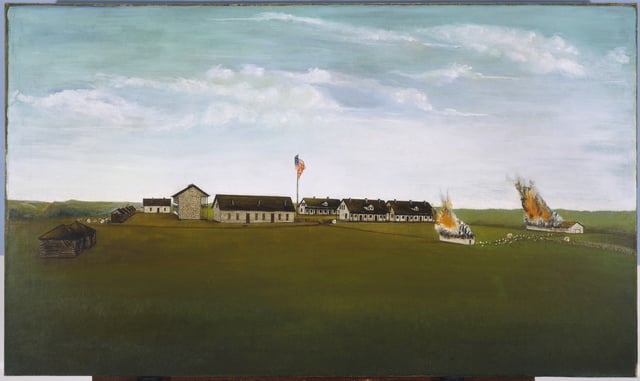
During the US–Dakota War of 1862, settlers and some Dakota people sought shelter at Fort Ridgely. On August 18, the fort’s commander, Captain John Marsh, attempted to retaliate against Dakota combatants with a force of forty-six of the fort’s seventy-six soldiers. He and many of his men were soon killed in a Dakota ambush.

As the region's main military outpost, Fort Ridgely was stocked with supplies, weapons, and undelivered annuity payments, and was thus a strategic target for Dakota warriors. The Dakota laid siege to the fort, attacking on August 20 and 22. Civilian volunteers, soldiers under the command of Lieut. Timothy Sheehan, and the Renville Rangers (mainly composed of men with Dakota ancestry) defended the fort. After the Dakota retreated, Sibley's militia of over 1,500 volunteers reached the fort on August 27 and 28.

After the war, the US imprisoned around 1,700 non-combatant Dakota people at Fort Snelling.  It also executed thirty-eight Dakota men; nullified all treaties and reservations with the Dakota; and exiled most of the Dakota—regardless of their role in the war.

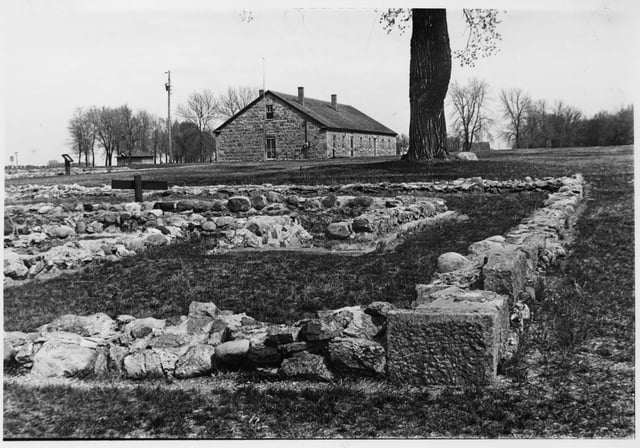
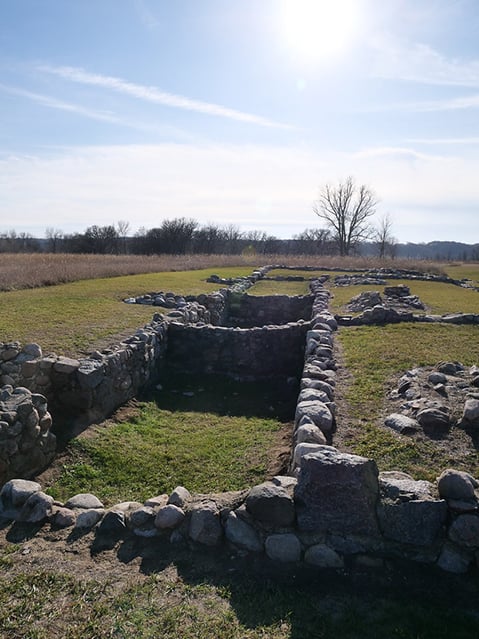
Without the Dakota reservation, the US Army abandoned the fort by 1867, and Congress permitted settlers to purchase lands within the former military reserve by 1870. Homesteaders  tore down most of the fort's original structures but left the south wall of the former commissary, which was converted into a stable.

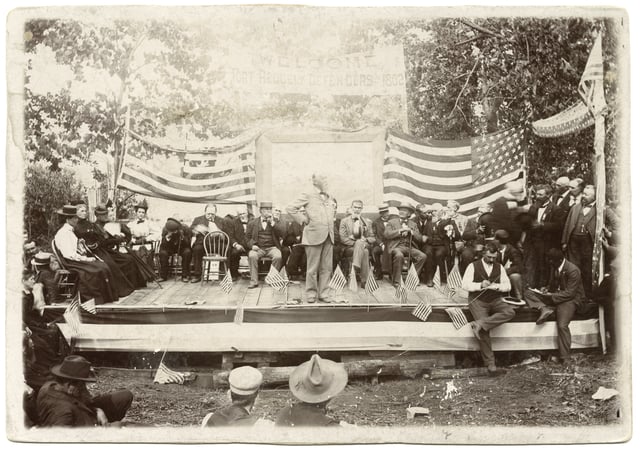
Minnesota began to commemorate the role of Fort Ridgely in the US–Dakota War in 1873, when the state legislature funded construction of a monument for Captain Marsh and his soldiers at the fort’s cemetery. The legislature apportioned additional funds to construct a monument for Eliza Müller, wife of the fort’s doctor (completed 1877), and those killed during the siege of Fort Ridgely (completed 1896).

To further preserve the Fort Ridgely grounds and monuments, in 1895 the legislature purchased five acres of land holding the commissary and building foundations. It directed the Minnesota Adjutant General to care for the neglected state property, and by 1910, the grounds had been cleared and the commissary rehabilitated as a tourist attraction.

The legislature designated Fort Ridgely as a state park in 1911. During the New Deal, the Civilian Conservation Corps (CCC) and Veterans Conservation Corps (VCC) labored there to control erosion and add amenities for visitors. After a 1936 archeological survey, the VCC also reconstructed the commissary to its original appearance.

In 1969, the Minnesota Historical Society (MNHS) took over the fort grounds, with the state retaining control of the wider park. After the National Registry of Historic Places listed the Fort Ridgely historic site in 1970, the commissary building was used as an interpretive center and museum. In the twenty-first century, MNHS partnered with Friends of Fort Ridgely, and later the Nicollet County Historical Society, to administer the park. The latter partnership concluded in 2020.

.
Cite
Nycklemoe, Karl. "Fort Ridgely." MNopedia, Minnesota Historical Society. https://www.mnhs.org/mnopedia/search/index/structure/fort-ridgely
Print This Page
First Published: January 13, 2026
Last Modified: January 13, 2026

Bibliography

109.K.19.8F
Fort Ridgely Monument files, 1895, 1907–1910
State Archives Collection, Minnesota Historical Society, St. Paul
Description: Correspondence, contracts, drawings, plats, and reports concerning the renovation of the Fort Ridgely Monument site between 1909 and 1910.

Anderson, Rolf T. “Fort Ridgely State Park CCC/Rustic Style Historic Resources.” National Register of Historic Places nomination form, September 9, 1988. State Historic Preservation Office, St. Paul.
https://npgallery.nps.gov/GetAsset/ece13fee-d0de-45db-bde9-9fb4a0c94c3b

Annual Report of the Commissioner of the Office of Indian Affairs for the Year 1852 . Government Printing Office, 1853. Arnott, Sigrid, and David L. Maki. “Forts on Burial Mounds: Interlocked Landscapes of Mourning and Colonialism at the Dakota-Settler Frontier, 1860–1876.” Historical Archaeology 53 (2019): 153–169.

Babcock, Willoughby M. “Up the Minnesota Valley to Fort Ridgely in 1853.” Minnesota History 11, no. 2 (June 1930): 161–184.
https://storage.googleapis.com/mnhs-org-support/mn_history_articles/11/v11i02p161-184.pdf

Beck, Paul. Soldiers, Settler, and Sioux: Fort Ridgely and the Minnesota River Valley 1853–1867 . Pine Hills Press, 2000. Printed for the Center for Western Studies, Augustana College.

Berthelette, Scott. Heirs of an Ambivalent Empire: French-Indigenous Relations and the Rise of the Métis in the Hudson Bay Watershed. McGill–Queen’s University Press, 2022. Breese, Samuel. Iowa and Wisconsin. Chiefly from the Map of N. J. Nicollet . No scale. Harper & Brothers, 1845. David Rumsey Map Collection.
https://www.davidrumsey.com/luna/servlet/s/ng0t37

Cross, John. “Ring of Fire.” Mankato Free Press, July 6, 2006.
https://www.mankatofreepress.com/news/local_news/ring-of-fire/article_952d2522-72a8-57af-88c3-5b449d526e31.html

Ellig, Tom. Conversation with the author, October 27, 2025.

Folwell, William Watts. A History of Minnesota. Vol. 1. Minnesota Historical Society, 1922. Fort Ridgely National Park and Historical Society. Articles of Incorporation and By-laws of the Fort Ridgely National Park and Historical Association. Sleepy Eye Dispatch, 1899.

Gibbon, Guy. Archaeology of Minnesota: The Prehistory of the Upper Mississippi River Region. University of Minnesota Press, 2012.

Gray, Maggie. “No Plans to Reopen Fort Ridgely Interpretive Center.” The Journal (Brown County), April 11, 2025.
https://www.nujournal.com/news/local-news/2025/04/11/no-plans-to-reopen-fort-ridgely-interpretative-center

Grossman, John. “Fort Ridgely.” National Register of Historic Places nomination form, March 24, 1970. State Historic Preservation Office, St. Paul.
https://npgallery.nps.gov/GetAsset/f755de7b-f20c-4d64-8fda-970ffcde0839

Journal of the Council of Minnesota During the Fourth Session of the Legislative Assembly . Joseph R. Brown, Territorial Printer, 1853.

Kappler, Charles Joseph, ed. Indian Affairs: Laws and Treaties. Vol. 2. Government Printing Office, 1904.

Leonard, Ben. Conversation with the author, October 23, 2025.

M359 Fort Ridgely documents, 1853–1867 Manuscript Microfilm, Minnesota Historical Society, St. Paul Description: Post-letters-sent books (1854–1860), order books (1856–1860, 1866–1867), morning reports (1856–1867), and a set of incoming correspondence, orders, reports, accounts, and inventories (1853–1859).

Minnesota Department of Natural Resources. Fort Ridgely State Park Management Plan Amendment: Boundary Expansion, Horse Campground and Trail Connections . January 2006.
https://files.dnr.state.mn.us/input/mgmtplans/parks/fort-ridgely/fort-ridgely-amend-2006.pdf

——— . Fort Ridgely State Park Management Plan Amendment . June 20, 2017.
https://files.dnr.state.mn.us/input/mgmtplans/parks/fort-ridgely/fort-ridgely-golf-course-repurposing-2017.pdf

Myles, Marlena. “Dakhóta Thamákhočhe: Mnísota Wakpá Makhósmaka.” No scale.
https://marlenamyl.es/project/dakota-land-map

P762 Fort Ridgely State Park and Historical Association papers, 1888–1956 Manuscripts Collection, Minnesota Historical Society, St. Paul Description: The correspondence, clippings, and other papers of the Fort Ridgely State Park and Historical Association officers Charles H. and Frank Hopkins, relating to the organization’s promotion of the creation and development of Fort Ridgely State Park (Nicollet County).

P2892 Fort Ridgely records, 1870–1880 Manuscript Collection, Minnesota Historical Society, St. Paul Description: Volume prepared in the office of the US Adjutant General from the archives of the War Department. Includes one map.

Pierpaoli, Paul G., Jr. “Fort Ridgely.” In American Civil War: A State-by-State Encyclopedia , Vol. 1, edited by Spencer C. Tucker and Paul G. Pierpaoli, Jr., 403–404. ABC-CLIO, 2015.

Prucha, Francis Paul. “The Settler and the Army in Frontier Minnesota.” Minnesota History 29, no. 3 (September 1948): 231–246.
https://storage.googleapis.com/mnhs-org-support/mn_history_articles/29/v29i03p231-246.pdf

Pope, John. Map of the Territory of Minnesota, Exhibiting the Route of the Expedition to the Red River of the North, in the Summer of 1849 . 1:1,267,200 scale. Minnesota Land Surveyors Association, 1849. David Rumsey Map Collection.
https://www.davidrumsey.com/luna/servlet/s/986j3s

Randall, Benjamin Hoyt. A Brief Sketch and History of Fort Ridgely . Fairfax Crescent Printing, 1896.

Renville, Mary Butler. Dispatches from the Dakota War: A Thrilling Narrative of Indian Captivity. Edited by Carrie Reber Zeman and Kathryn Zabelle Derounian-Stodola. University of Nebraska Press, 2012. Tanner, Henry S. “Iowa.” A New Universal Atlas Containing Maps of the Various Empires, Kingdoms, States and Republics Of The World . 1:1,340,000 scale. H. S. Tanner, 1842. David Rumsey Map Collection.
https://www.davidrumsey.com/luna/servlet/s/598iui

Westerman, Gwen, and Bruce White. Mni Sota Makoce: The Land of the Dakota. Minnesota Historical Society Press, 2012.

Wilson, Diane. “Dakota Homecoming.” American Indian Quarterly 28, no. 1/2 (Winter–Spring 2004): 340–348.

Wilson, Waziyatawin Angela, ed. In the Footsteps of Our Ancestors: The Dakota Commemorative Marches of the 21st Century. Living Justice Press, 2006.

Wingerd, Mary Letherd. North Country: The Making of Minnesota. University of Minnesota Press, 2010.

“Working Year-Round to Develop the Park: The New Deal and Fort Ridgely State Park.” Historical Marker Database.
https://www.hmdb.org/m.asp?m=71881

Young, J. H. “Map of Minnesota Territory.” Cowperthwait, Desilver & Butler, 1850. A New Universal Atlas Containing Maps of the Various Empires, Kingdoms, States and Republics of The World. 1855. 1:2,400,000 scale. David Rumsey Map Collection.
https://www.davidrumsey.com/luna/servlet/s/a6cg31

Young, Laurie, Carole Reamer Braun, and Peter Buesseler. A Summary of the Fort Ridgely State Park Management Plan. Minnesota Department of Natural Resources Office of Planning, 1983.
https://www.lrl.mn.gov/edocs/edocs?oclcnumber=10048536

Related Resources

Primary

Atlas and Farm Directory of Nicollet County Minnesota. The Farmer, a Journal of Agriculture, and Anderson Publishing, comps. Webb Publishing, 1913. 
https://collection.mndigital.org/catalog/nico:2317

Atlas of Nicollet County Minnesota. Anderson Publishing, 1927. 
https://collection.mndigital.org/catalog/nico:2488

Map of Nicollet County, Minnesota. No scale. Haynes & Woodward, 1885.
https://collection.mndigital.org/catalog/nico:2257 

Plat Book of Nicollet County, Minnesota. North West Publishing, 1899. 
https://collection.mndigital.org/catalog/nico:2012

Ratified treaty no. 258, “Documents relating to the negotiation of the treaty of July 23, 1851,with the Sisseton and Wahpeton Sioux Indians,” July 23, 1851. University of Wisconsin–Madison.
https://digital.library.wisc.edu/1711.dl/GRV42MJ2YMEFX8V

Ratified treaty no. 259, “Documents relating to the negotiation of the treaty of August 5,1851, with the Mdewakanton and Wahpahkoota Sioux Indians,” August 5, 2851. University of Wisconsin–Madison.
https://digital.library.wisc.edu/1711.dl/SSVGUDDK5OIDH8O

Stuart, Alex H. H. “Report of the Secretary of the Interior, in answer to a resolution of the Senate relative to the allegations of fraud, by Alexander Ramsey, superintendent of Indian affairs, in the disbursement of money appropriated for the fulfilment of treaties with the Sioux Indians.” January 27, 1853. Senate Ex. Doc. No. 29, 32nd Congress, 2nd Session.

White, Jonathan W., and Reagan Connelly, eds. From Dakota to Dixie: George Bushwell’s Civil War. University of Virginia Press, 2025.

Secondary

Bachman, Walt. North Slave, Black Dakota: The Life and Times of Joseph Godfrey. Pond Dakota Press, 2013.

Beck, Paul N. Columns of Vengeance: Soldiers, Sioux, and the Punitive Expeditions, 1863–1864. University of Oklahoma Press, 2013.

Carley, Kenneth. “As Red Men Viewed It: Three Indian Accounts of the Uprising.” Minnesota History 38, no. 3 (September 1962): 126–149.
https://storage.googleapis.com/mnhs-org-support/mn_history_articles/38/v38i03p126-149.pdf

Mann, Rob. “An Archaeology of Fear and Loathing: Building, Remembering, and Commemorating the Civilian and Military Fortifications of the Dakota–US War of 1862 in Minnesota.” In Conflict Archaeology, Historical Memory, and the Experience of War: Beyond the Battlefield, edited by Mark Axel Tveskov and Ashley Ann Bissonnette, 144–172. University Press of Florida, 2023.

Martínez, David. “Remembering the Thirty-Eight: Abraham Lincoln, the Dakota, and the US Dakota War on Barbarism.” Wicazo Ṡa Review 28, no. 2 (Fall 2013): 5–29.

Minnesota Department of Natural Resources. Fort Ridgely State Park Nature Guide: All Seasons.
https://files.dnr.state.mn.us/destinations/state_parks/fort_ridgely/fort_ridgely_state_park_nature_guide.pdf

Sandberg, Thomas, and Gordon A. Lothson. Fort Ridgely. 1973.

Smith, G. Hubert. “Excavating the Site of Old Fort Ridgely.” Minnesota History 20, no. 2 (June 1939): 146–155.
https://storage.googleapis.com/mnhs-org-support/mn_history_articles/20/v20i02p146-155.pdf

Twin Cities Public Television. The Past Is Alive Within Us: The US–Dakota Conflict. December 26, 2013.
https://www.pbs.org/video/tpt-documentaries-past-alive-within-us-us-dakota-conflict

Walsh, Kenneth Lee. A Biography of a Frontier Outpost: Fort Ridgely. 1957.

Web

Fort Ridgely. Minnesota Historical Society. 
https://www.mnhs.org/fortridgely 

Fort Ridgely State Park. Minnesota Department of Natural Resources.
https://www.dnr.state.mn.us/state_parks/park.html?id=spk00151#homepage 

The US–Dakota War of 1862. Minnesota Historical Society. 
https://www.mnhs.org/usdakotawar

Related Images

Landscape at sunset with foundation ruins in the foreground and a building and upright pillar in the background.
Fort Ridgely photographed by Wikimedia Commons user McGhiever, September 1, 2012. CC BY-SA 3.0
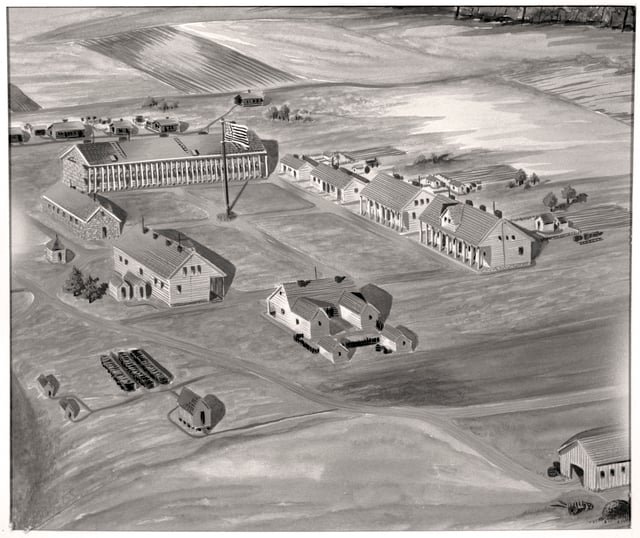
Bird's-eye view of a fort complex, with most buildings clustered around a central parade ground.
Drawing of Fort Ridgely as it appeared ca. 1862. Created by Paul Waller in 1973.
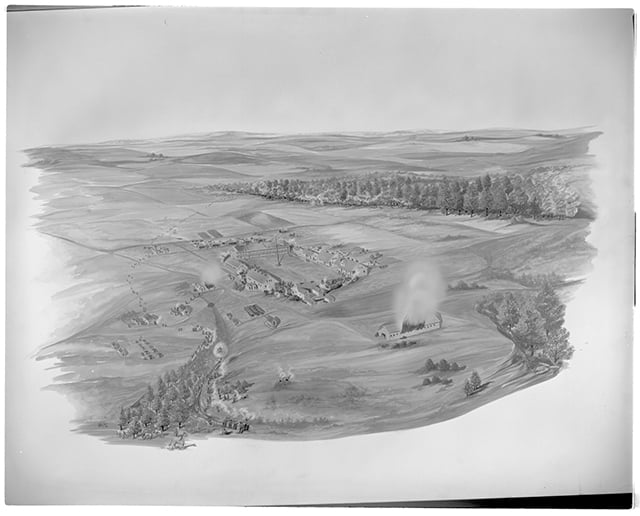
Black-and-white sketch of a military fort, seen from a bird's-eye view, with trees and hills in the background.
Black-and-white reproduction of a watercolor painting of the second Battle of Fort Ridgely (1862). Created by Paul Waller in 1972.
Green land and blue sky with cloudy skies above it. Buildings, two of them on fire, sit where the land meets the sky.
Painting showing Fort Ridgely on fire during the US–Dakota War of 1862. Painted by James McGrew, 1890.
Sketch of a parade ground, facing a flag pole and a building behind it.
Sketch of Fort Ridgely by Corporal August Harfeldt, December 8, 1864.
Bird's-eye view of a fort parade ground, with a flag flying from a flag pole at center.
Drawing of Fort Ridgely, 1866. Drawn by J. Chester White.
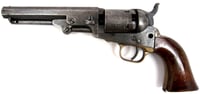
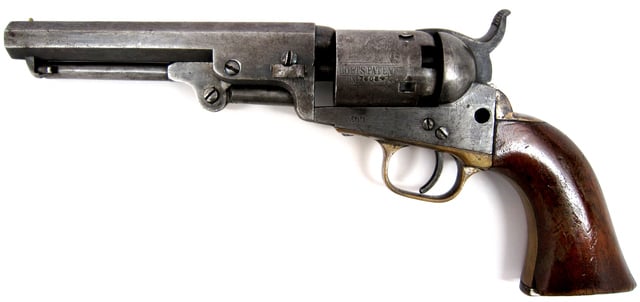
Close-up image of a revolver showing the details of its metal barrel, trigger, and wooden handle.
Colt 1849 Pocket Model 0.31 caliber revolver used by Sergeant John Jones, who was stationed at Fort Ridgely during the the US–Dakota War of 1862.
Stage platform with observers in front and people sitting in chairs in front of them, with a speaker standing front and center.
Judge Charles E. Flandrau delivers an address at the dedication ceremony of the Fort Ridgely state monument, August 1896.
Stone foundation ruins in the foreground of a black-and-white image, with a tree and building in the background.
Ruins of the powder magazine at Fort Ridgely, with the reconstructed commissary in the background. Photograph by Alan Ominsky, ca. 1975.
Path in a grassy field leading to a building at left, a flag pole at center right, and a pillar in the background.
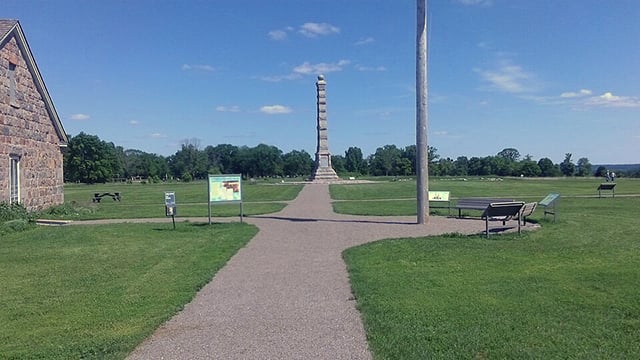
Fort Ridgely Historic Site, with the state monument in the background and the visitors’ center at the left. Photo by Wikimedia Commons user Lou Clarcen, June 13, 2013. CC0 1.0 Universal
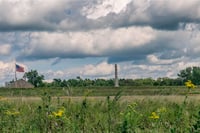
Grassy foreground with yellow flowers below a blue but cloud-filled sky, with a flag at left and a pillar at center.
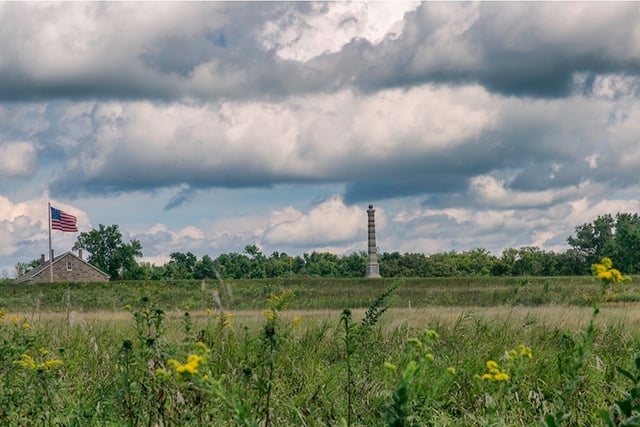
Panorama of Fort Ridgely historic site with the reconstructed commissary (left) and the state monument (center) visible in the background. Photo by Flickr user Lori Shaull, August 28, 2017. CC BY 2.0
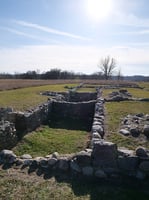
Stone foundation ruins in a grassy field, with trees and sky in the background.
Ruins of the barracks at Fort Ridgely. Photo by Flickr user Sank63, November 19, 2023. CC BY 2.0
Landscape at sunset with foundation ruins in the foreground and a building and upright pillar in the background.

Fort Ridgely, 2012

Fort Ridgely photographed by Wikimedia Commons user McGhiever, September 1, 2012. CC BY-SA 3.0
Bird's-eye view of a fort complex, with most buildings clustered around a central parade ground.

Fort Ridgely, ca. 1862

Drawing of Fort Ridgely as it appeared ca. 1862. Created by Paul Waller in 1973.
Black-and-white sketch of a military fort, seen from a bird's-eye view, with trees and hills in the background.

Second Battle of Fort Ridgely

Black-and-white reproduction of a watercolor painting of the second Battle of Fort Ridgely (1862). Created by Paul Waller in 1972.
Green land and blue sky with cloudy skies above it. Buildings, two of them on fire, sit where the land meets the sky.

Fort Ridgely on fire

Painting showing Fort Ridgely on fire during the US–Dakota War of 1862. Painted by James McGrew, 1890.
Sketch of a parade ground, facing a flag pole and a building behind it.

Sketch of Fort Ridgely, 1864

Sketch of Fort Ridgely by Corporal August Harfeldt, December 8, 1864.
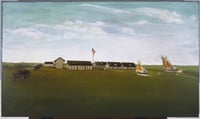
Bird's-eye view of a fort parade ground, with a flag flying from a flag pole at center.

Drawing of Fort Ridgely, 1866

Drawing of Fort Ridgely, 1866. Drawn by J. Chester White.
Close-up image of a revolver showing the details of its metal barrel, trigger, and wooden handle.

Revolver used by a soldier stationed at Fort Ridgely

Colt 1849 Pocket Model 0.31 caliber revolver used by Sergeant John Jones, who was stationed at Fort Ridgely during the the US–Dakota War of 1862.
© Minnesota Historical Society    

All rights reserved

Stage platform with observers in front and people sitting in chairs in front of them, with a speaker standing front and center.

Dedication of Fort Ridgely monument, 1896

Judge Charles E. Flandrau delivers an address at the dedication ceremony of the Fort Ridgely state monument, August 1896.
Stone foundation ruins in the foreground of a black-and-white image, with a tree and building in the background.

Ruins of the powder magazine at Fort Ridgely, ca. 1975

Ruins of the powder magazine at Fort Ridgely, with the reconstructed commissary in the background. Photograph by Alan Ominsky, ca. 1975.
Path in a grassy field leading to a building at left, a flag pole at center right, and a pillar in the background.

Fort Ridgely Historic Site, 2013

Fort Ridgely Historic Site, with the state monument in the background and the visitors’ center at the left. Photo by Wikimedia Commons user Lou Clarcen, June 13, 2013. CC0 1.0 Universal
Grassy foreground with yellow flowers below a blue but cloud-filled sky, with a flag at left and a pillar at center.

Panorama of Fort Ridgely historic site, 2017

Panorama of Fort Ridgely historic site with the reconstructed commissary (left) and the state monument (center) visible in the background. Photo by Flickr user Lori Shaull, August 28, 2017. CC BY 2.0
Stone foundation ruins in a grassy field, with trees and sky in the background.

Ruins of the barracks at Fort Ridgely, 2023

Ruins of the barracks at Fort Ridgely. Photo by Flickr user Sank63, November 19, 2023. CC BY 2.0

Turning Point

In April and May of 1853, the US Army begins building a military fort at the eastern edge of a Dakota reservation. Officials intend for the fort to secure white settlement in Mni Sota Makoce, the Dakota homeland.

Chronology

1852
On July 12, Minnesota Territorial Governor Henry Sibley tells Secretary of War C. M. Conrad and Major General Winfield Scott that the United States should construct a military outpost on the upper Minnesota River to secure white settlement.
March 30, 1853
The US Army orders Companies C, K (formerly from Fort Snelling), and E (formerly from Fort Dodge) to garrison the new fort.
June 27, 1853
Secretary of War Jefferson Davis names the structure Fort Ridgely to honor Henderson, Randolph, and/or Thomas Ridgely, all killed during the Mexican–American War.
July 11, 1853
Brevet Major Woods orders a survey of the Fort Ridgely military reserve lands, creating a border to supply the fort with necessary water, timber, and land to function. The officer submits the survey to the Department of War on February 13, 1854.
August 17, 1862
The US–Dakota War begins when four Dakota warriors kill a white settler.
August 20 and 22, 1862
A large group of Dakota warriors attacks Fort Ridgely but is repelled by the fort’s artillery and the combined force of Fort Ridgely soldiers, the Renville Rangers, and those seeking refuge at the fort.
August 27 and 28, 1863
US reinforcements march from St. Paul to Fort Ridgely, then continue westward. A Dakota peace party surrenders prisoners by September 26.
February 16, 1863
The US Congress abrogates and annuls all treaties, claims, and annuities with the Sisseton, Wahpeton, Mdewakanton, and Wahpekute Dakota, and extinguishes their title to the Minnesota reservation.
1867
The Department of War formally abandons Fort Ridgely on May 22.
1868
The Minnesota Legislature issues a joint resolution on March 6 permitting settlers to claim homesteads on the Fort Ridgely Military Reservation, “having been abandoned as a military post.”
1870
On July 1, Congress authorizes the sale and pre-emption of lands within the Fort Ridgely military reserve, requiring settlers to pay for the claimed lands, buildings, and other improvements.
1871
The US government acquires Fort Ridgely’s cemetery plot from Benjamin and Wilhemena Randall on December 4.
1873
On March 10, the Minnesota Legislature appropriates $500 to construct a monument for Captain Marsh’s company. Thomas P. Gere, William Pfaender, and M. D. Flower are appointed to coordinate construction, completing it later that year.
1895
On April 25, the Minnesota Legislature appropriates $3,000 to purchase the land that contains Fort Ridgely’s original buildings, and to construct a monument commemorating Fort Ridgely’s role in the US–Dakota War. Construction is completed by the next year.
1913
On April 28, the legislature appropriates funds to purchase additional acreage, improve the grounds, and construct a monument to Monzomanay and the Mille Lacs Ojibwe for their support during the US–Dakota War. Construction is completed by the next year.
1970
Fort Ridgely is added to the National Register of Historic Places on December 2.

Bibliography

109.K.19.8F
Fort Ridgely Monument files, 1895, 1907–1910
State Archives Collection, Minnesota Historical Society, St. Paul
Description: Correspondence, contracts, drawings, plats, and reports concerning the renovation of the Fort Ridgely Monument site between 1909 and 1910.

Anderson, Rolf T. “Fort Ridgely State Park CCC/Rustic Style Historic Resources.” National Register of Historic Places nomination form, September 9, 1988. State Historic Preservation Office, St. Paul.
https://npgallery.nps.gov/GetAsset/ece13fee-d0de-45db-bde9-9fb4a0c94c3b

Annual Report of the Commissioner of the Office of Indian Affairs for the Year 1852 . Government Printing Office, 1853. Arnott, Sigrid, and David L. Maki. “Forts on Burial Mounds: Interlocked Landscapes of Mourning and Colonialism at the Dakota-Settler Frontier, 1860–1876.” Historical Archaeology 53 (2019): 153–169.

Babcock, Willoughby M. “Up the Minnesota Valley to Fort Ridgely in 1853.” Minnesota History 11, no. 2 (June 1930): 161–184.
https://storage.googleapis.com/mnhs-org-support/mn_history_articles/11/v11i02p161-184.pdf

Beck, Paul. Soldiers, Settler, and Sioux: Fort Ridgely and the Minnesota River Valley 1853–1867 . Pine Hills Press, 2000. Printed for the Center for Western Studies, Augustana College.

Berthelette, Scott. Heirs of an Ambivalent Empire: French-Indigenous Relations and the Rise of the Métis in the Hudson Bay Watershed. McGill–Queen’s University Press, 2022. Breese, Samuel. Iowa and Wisconsin. Chiefly from the Map of N. J. Nicollet . No scale. Harper & Brothers, 1845. David Rumsey Map Collection.
https://www.davidrumsey.com/luna/servlet/s/ng0t37

Cross, John. “Ring of Fire.” Mankato Free Press, July 6, 2006.
https://www.mankatofreepress.com/news/local_news/ring-of-fire/article_952d2522-72a8-57af-88c3-5b449d526e31.html

Ellig, Tom. Conversation with the author, October 27, 2025.

Folwell, William Watts. A History of Minnesota. Vol. 1. Minnesota Historical Society, 1922. Fort Ridgely National Park and Historical Society. Articles of Incorporation and By-laws of the Fort Ridgely National Park and Historical Association. Sleepy Eye Dispatch, 1899.

Gibbon, Guy. Archaeology of Minnesota: The Prehistory of the Upper Mississippi River Region. University of Minnesota Press, 2012.

Gray, Maggie. “No Plans to Reopen Fort Ridgely Interpretive Center.” The Journal (Brown County), April 11, 2025.
https://www.nujournal.com/news/local-news/2025/04/11/no-plans-to-reopen-fort-ridgely-interpretative-center

Grossman, John. “Fort Ridgely.” National Register of Historic Places nomination form, March 24, 1970. State Historic Preservation Office, St. Paul.
https://npgallery.nps.gov/GetAsset/f755de7b-f20c-4d64-8fda-970ffcde0839

Journal of the Council of Minnesota During the Fourth Session of the Legislative Assembly . Joseph R. Brown, Territorial Printer, 1853.

Kappler, Charles Joseph, ed. Indian Affairs: Laws and Treaties. Vol. 2. Government Printing Office, 1904.

Leonard, Ben. Conversation with the author, October 23, 2025.

M359 Fort Ridgely documents, 1853–1867 Manuscript Microfilm, Minnesota Historical Society, St. Paul Description: Post-letters-sent books (1854–1860), order books (1856–1860, 1866–1867), morning reports (1856–1867), and a set of incoming correspondence, orders, reports, accounts, and inventories (1853–1859).

Minnesota Department of Natural Resources. Fort Ridgely State Park Management Plan Amendment: Boundary Expansion, Horse Campground and Trail Connections . January 2006.
https://files.dnr.state.mn.us/input/mgmtplans/parks/fort-ridgely/fort-ridgely-amend-2006.pdf

——— . Fort Ridgely State Park Management Plan Amendment . June 20, 2017.
https://files.dnr.state.mn.us/input/mgmtplans/parks/fort-ridgely/fort-ridgely-golf-course-repurposing-2017.pdf

Myles, Marlena. “Dakhóta Thamákhočhe: Mnísota Wakpá Makhósmaka.” No scale.
https://marlenamyl.es/project/dakota-land-map

P762 Fort Ridgely State Park and Historical Association papers, 1888–1956 Manuscripts Collection, Minnesota Historical Society, St. Paul Description: The correspondence, clippings, and other papers of the Fort Ridgely State Park and Historical Association officers Charles H. and Frank Hopkins, relating to the organization’s promotion of the creation and development of Fort Ridgely State Park (Nicollet County).

P2892 Fort Ridgely records, 1870–1880 Manuscript Collection, Minnesota Historical Society, St. Paul Description: Volume prepared in the office of the US Adjutant General from the archives of the War Department. Includes one map.

Pierpaoli, Paul G., Jr. “Fort Ridgely.” In American Civil War: A State-by-State Encyclopedia , Vol. 1, edited by Spencer C. Tucker and Paul G. Pierpaoli, Jr., 403–404. ABC-CLIO, 2015.

Prucha, Francis Paul. “The Settler and the Army in Frontier Minnesota.” Minnesota History 29, no. 3 (September 1948): 231–246.
https://storage.googleapis.com/mnhs-org-support/mn_history_articles/29/v29i03p231-246.pdf

Pope, John. Map of the Territory of Minnesota, Exhibiting the Route of the Expedition to the Red River of the North, in the Summer of 1849 . 1:1,267,200 scale. Minnesota Land Surveyors Association, 1849. David Rumsey Map Collection.
https://www.davidrumsey.com/luna/servlet/s/986j3s

Randall, Benjamin Hoyt. A Brief Sketch and History of Fort Ridgely . Fairfax Crescent Printing, 1896.

Renville, Mary Butler. Dispatches from the Dakota War: A Thrilling Narrative of Indian Captivity. Edited by Carrie Reber Zeman and Kathryn Zabelle Derounian-Stodola. University of Nebraska Press, 2012. Tanner, Henry S. “Iowa.” A New Universal Atlas Containing Maps of the Various Empires, Kingdoms, States and Republics Of The World . 1:1,340,000 scale. H. S. Tanner, 1842. David Rumsey Map Collection.
https://www.davidrumsey.com/luna/servlet/s/598iui

Westerman, Gwen, and Bruce White. Mni Sota Makoce: The Land of the Dakota. Minnesota Historical Society Press, 2012.

Wilson, Diane. “Dakota Homecoming.” American Indian Quarterly 28, no. 1/2 (Winter–Spring 2004): 340–348.

Wilson, Waziyatawin Angela, ed. In the Footsteps of Our Ancestors: The Dakota Commemorative Marches of the 21st Century. Living Justice Press, 2006.

Wingerd, Mary Letherd. North Country: The Making of Minnesota. University of Minnesota Press, 2010.

“Working Year-Round to Develop the Park: The New Deal and Fort Ridgely State Park.” Historical Marker Database.
https://www.hmdb.org/m.asp?m=71881

Young, J. H. “Map of Minnesota Territory.” Cowperthwait, Desilver & Butler, 1850. A New Universal Atlas Containing Maps of the Various Empires, Kingdoms, States and Republics of The World. 1855. 1:2,400,000 scale. David Rumsey Map Collection.
https://www.davidrumsey.com/luna/servlet/s/a6cg31

Young, Laurie, Carole Reamer Braun, and Peter Buesseler. A Summary of the Fort Ridgely State Park Management Plan. Minnesota Department of Natural Resources Office of Planning, 1983.
https://www.lrl.mn.gov/edocs/edocs?oclcnumber=10048536

Related Resources

Primary

Atlas and Farm Directory of Nicollet County Minnesota. The Farmer, a Journal of Agriculture, and Anderson Publishing, comps. Webb Publishing, 1913. 
https://collection.mndigital.org/catalog/nico:2317

Atlas of Nicollet County Minnesota. Anderson Publishing, 1927. 
https://collection.mndigital.org/catalog/nico:2488

Map of Nicollet County, Minnesota. No scale. Haynes & Woodward, 1885.
https://collection.mndigital.org/catalog/nico:2257 

Plat Book of Nicollet County, Minnesota. North West Publishing, 1899. 
https://collection.mndigital.org/catalog/nico:2012

Ratified treaty no. 258, “Documents relating to the negotiation of the treaty of July 23, 1851,with the Sisseton and Wahpeton Sioux Indians,” July 23, 1851. University of Wisconsin–Madison.
https://digital.library.wisc.edu/1711.dl/GRV42MJ2YMEFX8V

Ratified treaty no. 259, “Documents relating to the negotiation of the treaty of August 5,1851, with the Mdewakanton and Wahpahkoota Sioux Indians,” August 5, 2851. University of Wisconsin–Madison.
https://digital.library.wisc.edu/1711.dl/SSVGUDDK5OIDH8O

Stuart, Alex H. H. “Report of the Secretary of the Interior, in answer to a resolution of the Senate relative to the allegations of fraud, by Alexander Ramsey, superintendent of Indian affairs, in the disbursement of money appropriated for the fulfilment of treaties with the Sioux Indians.” January 27, 1853. Senate Ex. Doc. No. 29, 32nd Congress, 2nd Session.

White, Jonathan W., and Reagan Connelly, eds. From Dakota to Dixie: George Bushwell’s Civil War. University of Virginia Press, 2025.

Secondary

Bachman, Walt. North Slave, Black Dakota: The Life and Times of Joseph Godfrey. Pond Dakota Press, 2013.

Beck, Paul N. Columns of Vengeance: Soldiers, Sioux, and the Punitive Expeditions, 1863–1864. University of Oklahoma Press, 2013.

Carley, Kenneth. “As Red Men Viewed It: Three Indian Accounts of the Uprising.” Minnesota History 38, no. 3 (September 1962): 126–149.
https://storage.googleapis.com/mnhs-org-support/mn_history_articles/38/v38i03p126-149.pdf

Mann, Rob. “An Archaeology of Fear and Loathing: Building, Remembering, and Commemorating the Civilian and Military Fortifications of the Dakota–US War of 1862 in Minnesota.” In Conflict Archaeology, Historical Memory, and the Experience of War: Beyond the Battlefield, edited by Mark Axel Tveskov and Ashley Ann Bissonnette, 144–172. University Press of Florida, 2023.

Martínez, David. “Remembering the Thirty-Eight: Abraham Lincoln, the Dakota, and the US Dakota War on Barbarism.” Wicazo Ṡa Review 28, no. 2 (Fall 2013): 5–29.

Minnesota Department of Natural Resources. Fort Ridgely State Park Nature Guide: All Seasons.
https://files.dnr.state.mn.us/destinations/state_parks/fort_ridgely/fort_ridgely_state_park_nature_guide.pdf

Sandberg, Thomas, and Gordon A. Lothson. Fort Ridgely. 1973.

Smith, G. Hubert. “Excavating the Site of Old Fort Ridgely.” Minnesota History 20, no. 2 (June 1939): 146–155.
https://storage.googleapis.com/mnhs-org-support/mn_history_articles/20/v20i02p146-155.pdf

Twin Cities Public Television. The Past Is Alive Within Us: The US–Dakota Conflict. December 26, 2013.
https://www.pbs.org/video/tpt-documentaries-past-alive-within-us-us-dakota-conflict

Walsh, Kenneth Lee. A Biography of a Frontier Outpost: Fort Ridgely. 1957.

Web

Fort Ridgely. Minnesota Historical Society. 
https://www.mnhs.org/fortridgely 

Fort Ridgely State Park. Minnesota Department of Natural Resources.
https://www.dnr.state.mn.us/state_parks/park.html?id=spk00151#homepage 

The US–Dakota War of 1862. Minnesota Historical Society. 
https://www.mnhs.org/usdakotawar