Milford Mine Disaster, 1924

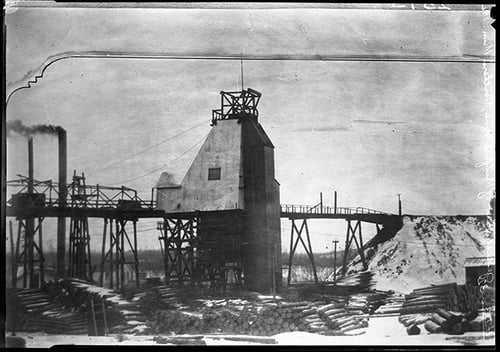
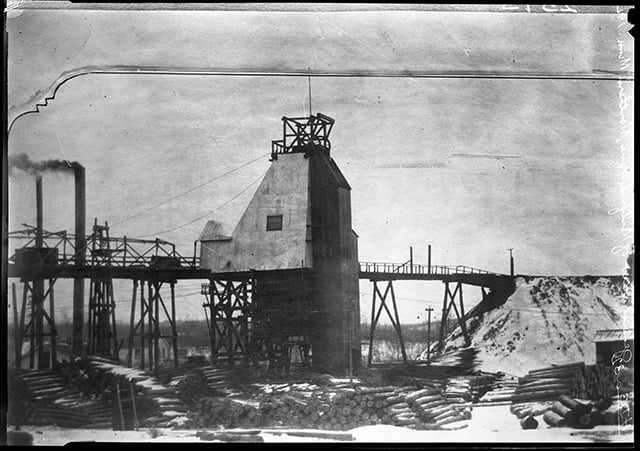
Black and white photograph of the Milford Mine, 1936.
The Milford Mine, 1936.

On February 5, 1924, water from Foley Lake flooded the Milford Mine, killing forty-one miners in Minnesota's worst mining disaster. Only seven miners climbed to safety.

First mined for iron ore in 1917, the Milford Mine reached depths of 200 feet by 1924 under its owner, George H. Crosby, and 70,000 tons of ore were mined and shipped that same year. Milford’s iron ore, particularly valuable due to its high manganese content, was shipped through Duluth to steel factories in cities including Detroit and Cleveland.

The disaster occurred when a surface cave-in at the mine's easternmost end tapped into mud that directly connected to Foley Lake. In less than twenty minutes the mineshaft flooded to within fifteen to twenty feet of the surface. Seven men made it to ground level, but forty-one miners were overcome by the water or trapped in mud. The last victim was recovered nine months after the disaster.

Fifteen-year-old Frank Hrvatin Jr., one of the survivors, worked in the mine alongside his father, Frank Hrvatin Sr. On February 5, Hrvatin Jr. was working with his senior partner, Harry Hosford. When they saw the floodwater, they ran for the ladder that ascended two hundred feet to the surface. Miner Matt Kangas was ahead of them on the ladder. As the water rose and Kangas slowed because of the effort to climb such a distance, Hrvatin Jr. climbed between Kangas' legs and propelled the man up the ladder. Hosford was waist-deep in water when Hrvatin Jr. reached down and pulled him out of the mine. They were the last three miners to make it out alive. Frank Hrvatin Sr. was deeper in the mine and did not survive.

Thirty-eight of the forty-one miners who drowned were married, leaving behind more than eighty children.

Recovery efforts were both delicate and dangerous. Since the mine was filled with mud and debris and workers worried about potential cave-ins, it took months to recover the men's bodies. The last body was removed on November 9, and the mine resumed operations soon after that.

To investigate the disaster, Governor Jacob Preus appointed a five-man committee, which held hearings in May and June of 1924. The committee lacked subpoena power, and even the few miners willing to testify gave identical and seemingly rehearsed answers. Local journalist Berger Aulie linked their reticence to criticize management to concerns over being blacklisted from the industry. Despite ongoing accusations of unsafe conditions in the mine, such as partially broken ladders and proximity to Foley Lake, the committee’s final report said, “No blame can be attached to the mining company for this unfortunate accident. The real cause of the disaster was the fact that imminence and danger from such a rush of mud was not recognized by anyone.” Aulie, alongside the grieving community, was left wondering, “Why not?” 

In 1932, the mine closed due to declining demand for steel during the Great Depression. 

In 2007, construction of a site memorializing the disaster was proposed to the Crow Wing County Board of Commissioners. Milford Mine Memorial Park opened to the public in 2010, and the Milford Mine was designated as a historic place by the National Park Service in August of 2011. By 2013, the county had developed a parking lot and a canoe launch, built on Milford Lake, as well as a picnic area close to the mine site. In October of 2016, a 450-foot boardwalk, 3,500 feet of interpretive trails, 3 kiosks, a memorial wall, and interpretive sign installations were added to the site. In 2017, a restroom facility, small picnic center, and a canoe-launching and fishing platform were completed.

© Minnesota Historical Society  80x15  Creative Commons Attribution-ShareAlike 3.0 Unported
First Published: October 31, 2013
Last Modified: June 26, 2026

Bibliography

Berger, Aulie. The Milford Mine Disaster: A Cuyuna Range Tragedy. W.A. Fisher, 1994.

Brown, Aaron J, "Milford Mine Site Now Open to the Public," Minnesota Brown: Modern Life in Northern Minnesota (blog), October 26, 2010.
http://minnesotabrown.com/2010/10/milford-mine-site-now-open-to-public.html

Crow Wing County Minnesota. Milford Mine Memorial Park.
https://www.crowwing.gov/294/Milford-Mine-Memorial-Park

Ehrlick, Daniel. It Happened in Minnesota: From the Great Dakota War to the Invention of Waterskiing, Thirty-one Events from North Star State History. Twodot, 2008.

Pettersen, Connie. "Failure to Learn? Destined to Repeat...", in 4 parts. NewsHopper, March 11, 2006.
http://crowwing.us/DocumentCenter/Home/View/117
http://crowwing.us/DocumentCenter/Home/View/118
http://crowwing.us/DocumentCenter/Home/View/119
http://crowwing.us/DocumentCenter/Home/View/116

Perkins, Chelsey. “Crow Wing County Board: Milford Mine achieves regional park status.” Brainerd Dispatch, September 13, 2016.

Richardson, Renee, "Milford Mine Disaster: It Started with Ill Wind and Left 41 Dead in '24 Tragedy." Brainerd Dispatch, January 5, 2006.

Stern, Laurie, and Barbara Wiener. "Iron Range: A People's History." Twin Cities PBS, 1994.
https://www.pbs.org/show/iron-range-peoples-history 

115.H.18.5
Strike and Labor Problems files, 1907–1924
Manuscripts Collection, Minnesota Historical Society, St. Paul
Description: Court documents, hearings, testimony, and blueprints regarding the Milford Mine Disaster.

Terrell, Michelle M. “Milford Mine Historic District.” National Register of Historic Places Registration Form, August 6, 2010. State Historic Preservation Office, St. Paul.
https://www.crowwing.gov/294/Milford-Mine-Memorial-Park#docaccess-00cb3c5639399b1457583b0a32e6f7fe045559817ba573d3ff15fc9503ec4ce0

Related Resources

Related Images

Black and white photograph of the Milford Mine, 1936.
The Milford Mine, 1936.
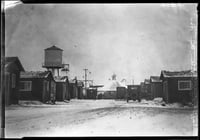
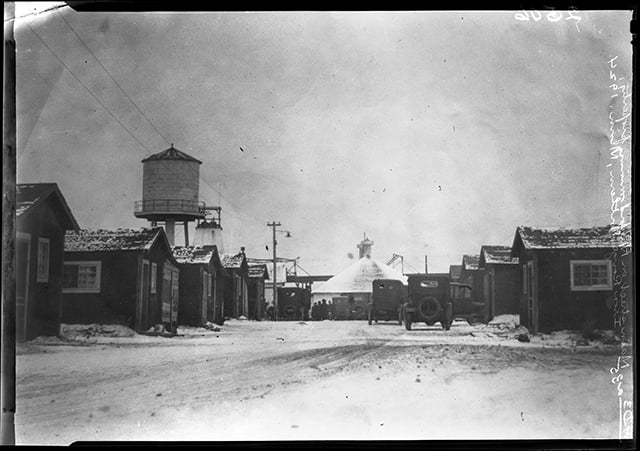
Black and white photograph of the main Street of the Milford Mining Company in Crosby, 1924.
Main Street of the Milford Mining Company in Crosby, 1924.
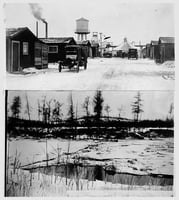
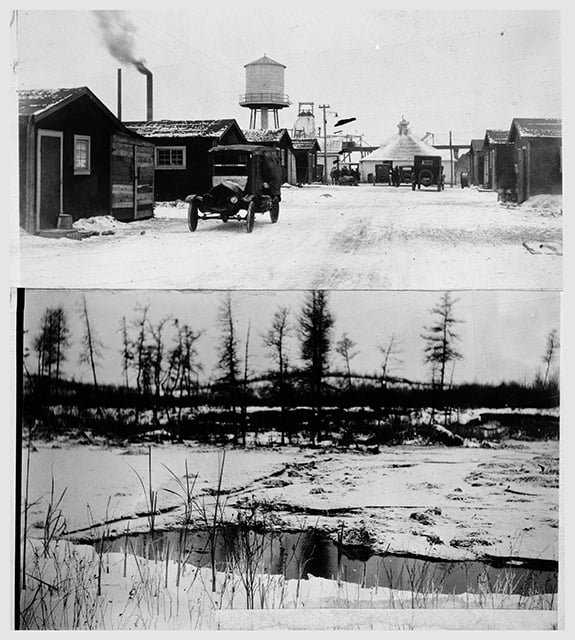
Black and white photographs of Main Street at Milford location and lake which flooded mine, 1924.
Main Street at the Milford Mine location, showing the lake that flooded the mine, 1924.
Black and white photograph of the Milford Mine, 1936.

Milford Mine

The Milford Mine, 1936.
Black and white photograph of the main Street of the Milford Mining Company in Crosby, 1924.

Main Street on Milford Mining property, Crosby.

Main Street of the Milford Mining Company in Crosby, 1924.

Holding Location

Minnesota Historical Society
Black and white photographs of Main Street at Milford location and lake which flooded mine, 1924.

Main Street at Milford location and lake which flooded mine.

Main Street at the Milford Mine location, showing the lake that flooded the mine, 1924.

Holding Location

Minnesota Historical Society

Turning Point

On February 5, 1924, boggy water from Foley Lake floods the Milford Mine, killing forty-one miners in Minnesota's worst mining disaster.

Chronology

1917
The first shaft of Milford Mine is sunk near Foley Lake to mine iron ore.
December 10, 1923
Milford Mine is inspected and pronounced safe.
February 5, 1924
Milford Mine is flooded by Foley Lake water; forty-one miners die.
May 9, 1924
A commission begins investigating the disaster, eventually finding no fault with the owners of Milford Mine.
November, 1924
The last body is recovered from Milford Mine.
1932
Milford Mine is closed due to declining demand for steel during the Great Depression.
2011
The disaster site is added to the National Register of Historic Places.
1976
Frank Hrvatin Jr., the last remaining survivor of the Milford Mine disaster, passes away at the age of sixty-seven.
2010
Milford Mine Memorial Park opens to the public.
2011
In August, Milford Mine is added to the National Register of Historic Places.
2016
Milford Mine Memorial Park is designated as a regional park.

Bibliography

Berger, Aulie. The Milford Mine Disaster: A Cuyuna Range Tragedy. W.A. Fisher, 1994.

Brown, Aaron J, "Milford Mine Site Now Open to the Public," Minnesota Brown: Modern Life in Northern Minnesota (blog), October 26, 2010.
http://minnesotabrown.com/2010/10/milford-mine-site-now-open-to-public.html

Crow Wing County Minnesota. Milford Mine Memorial Park.
https://www.crowwing.gov/294/Milford-Mine-Memorial-Park

Ehrlick, Daniel. It Happened in Minnesota: From the Great Dakota War to the Invention of Waterskiing, Thirty-one Events from North Star State History. Twodot, 2008.

Pettersen, Connie. "Failure to Learn? Destined to Repeat...", in 4 parts. NewsHopper, March 11, 2006.
http://crowwing.us/DocumentCenter/Home/View/117
http://crowwing.us/DocumentCenter/Home/View/118
http://crowwing.us/DocumentCenter/Home/View/119
http://crowwing.us/DocumentCenter/Home/View/116

Perkins, Chelsey. “Crow Wing County Board: Milford Mine achieves regional park status.” Brainerd Dispatch, September 13, 2016.

Richardson, Renee, "Milford Mine Disaster: It Started with Ill Wind and Left 41 Dead in '24 Tragedy." Brainerd Dispatch, January 5, 2006.

Stern, Laurie, and Barbara Wiener. "Iron Range: A People's History." Twin Cities PBS, 1994.
https://www.pbs.org/show/iron-range-peoples-history 

115.H.18.5
Strike and Labor Problems files, 1907–1924
Manuscripts Collection, Minnesota Historical Society, St. Paul
Description: Court documents, hearings, testimony, and blueprints regarding the Milford Mine Disaster.

Terrell, Michelle M. “Milford Mine Historic District.” National Register of Historic Places Registration Form, August 6, 2010. State Historic Preservation Office, St. Paul.
https://www.crowwing.gov/294/Milford-Mine-Memorial-Park#docaccess-00cb3c5639399b1457583b0a32e6f7fe045559817ba573d3ff15fc9503ec4ce0

Related Resources