Citizens Alliance, Minneapolis

Creator:
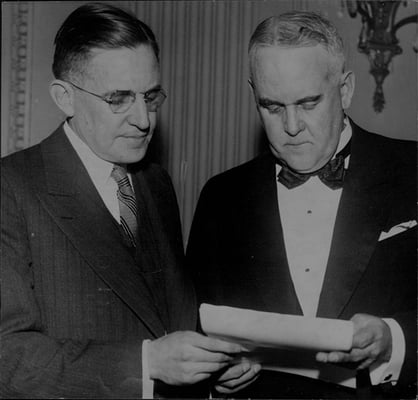
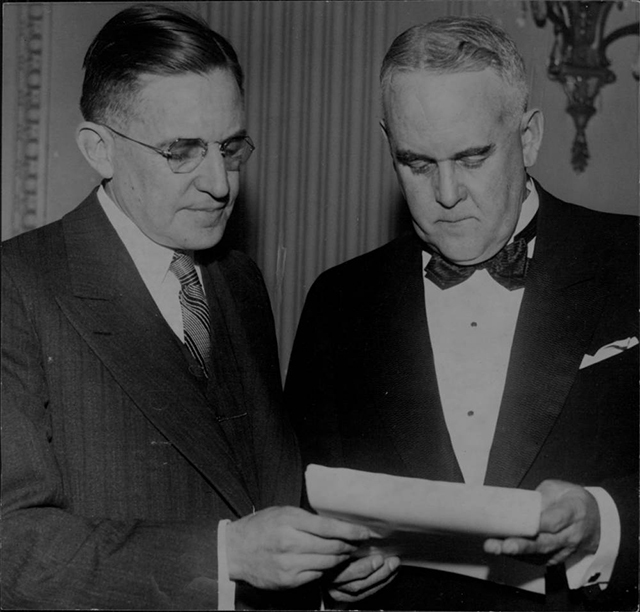
The torsos, heads, and hands of two men wearing ties. Both men are holding and looking at a piece of paper.
J. C. Buckbee (left), retiring chairman of the board of the Citizens Alliance, and Stewart Wells Utley, president of the Detroit Steel Castings Company, at a Citizens Alliance meeting at the Nicollet Hotel in Minneapolis, March 21, 1931.

From its founding in 1903 until the mid-1930s, the Citizens Alliance of Minneapolis fought organized labor with vigor, determination, imagination, and money. It scored victory after victory. But the Great Depression, the New Deal, and determined labor organizers eventually defeated the alliance and established labor unions as fixtures in the Minneapolis and Minnesota economy.

In 1901 organized machine shop owners decisively defeated a strike by unionized Minneapolis machinists. This event—militant unions with national backing fighting aggressive business owners with national backing, while the businesses held the upper hand—set a pattern for the next thirty years.

In 1903 the machine shop owners’ organization, fresh from its victory, expanded its reach across industries and reorganized as the Citizens Alliance. Its goal was what it called an “open shop,” that is, the banishment of unions from all city workplaces. It soon enlisted over 200 Minneapolis manufacturers, millers, and banks, controllers of most of the city’s economy.

Alliance leaders attacked the union movement in many ways. They produced anti-union publications aimed at workers and the public, maintained a workplace spy network, and blacklisted pro-union workers. They set up compliant “company unions.” The Dunwoody Institute, endowed by an alliance member, trained thousands of non-union workers in skilled trades, to replace fired union members. When strikes occurred, alliance members responded consistently: they dismissed all strikers; hired replacement workers to keep struck firms open; and refused all negotiations. Struck firms got financial help from Alliance members. Alliance lawyers got state courts to issue injunctions against picketing. Members’ wealth enabled the alliance to overwhelm and outlast nearly all unions. Their connectedness to politicians, newspapers, judges, and law enforcement, meanwhile, gave them political influence that union workers could not match.

Between 1903 and 1917 alliance members defeated every strike against them. The alliance was so successful that its organization and influence spread to St. Paul and Duluth, which established their own, less militant alliances. Alliance members participated in, influenced, and got support from national business groups like the National Association of Manufacturers.

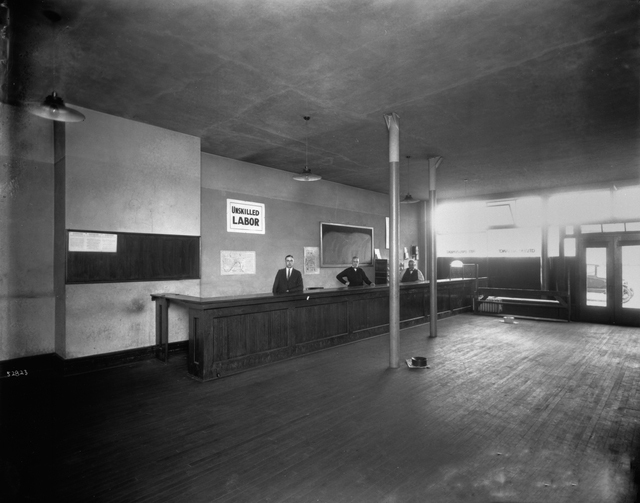
Despite all of the alliance’s strengths and victories, the growth of industry in Minnesota also fueled growth in the labor movement. Between 1918 and 1920, union membership in Minnesota grew by 70 percent. The alliance had grown to nearly 700 members and continued to expand its reach by creating new employers’ organizations in industries threatened by union activity. It created an employment agency that connected thousands of non-union workers with open-shop employers. It published regular newsletters informing employers of union activities and identifying union workers for blacklisting. The alliance maintained an extensive intelligence network in cooperation with the Minneapolis police, the Hennepin County sheriff, and private agencies. It also infiltrated most unions in the city with agents of its own. In 1925 the Alliance reported that “the open shop is more firmly established . . . than at any time in the history of the city.”

The coming of the Great Depression in 1930, followed by the election of Franklin Roosevelt in 1932 and the creation of the New Deal in 1933, weakened the alliance, as private enterprise lost prestige and the public looked to the government for help. The National Recovery Act (NRA) of 1933 made union organizing, the antithesis of the open shop, a right protected by law. In Minnesota the election of pro-labor governor Floyd Olson (1930) also weakened the alliance. And the effective organizing of Minneapolis teamsters, led by the Communist-dominated Local 574, presented the alliance with an implacable enemy. Union membership in Minneapolis exploded, leading to the climactic Minneapolis Teamsters strike and general strikes of 1934, partial union victories.

Two more bitter strikes followed in 1935, at Flour City Ornamental Iron Works and Strutwear Knitting Company. Though the alliance was able to claim victory in both, these victories were violent, costly, and limited; in these conflicts labor showed furious strength and achieved toeholds in both factories. The alliance was no longer invincible.

The alliance was rocked in 1936 and 1937 when, in succession, major employers General Mills, Washburn-Crosby, and Archer Daniels Midland, Minneapolis wholesale grocers, signed union contracts along with Strutwear and Northern States Power. In November of 1936, Alliance leader and founder Albert Strong suddenly died. In December the alliance changed its name to Associated Industries of Minneapolis. The organization’s new constitution recognized the right of workers to bargain collectively and to strike. Though successor organizations to the Alliance continued to fight unions, the long battle for the open shop in Minneapolis had been lost.


.
Cite
Nelson, Paul. "Citizens Alliance, Minneapolis." MNopedia, Minnesota Historical Society. https://www.mnhs.org/mnopedia/search/index/group/citizens-alliance-minneapolis
Print This Page
First Published: February 18, 2026
Last Modified: February 19, 2026

Bibliography

"Death Claims Manufacturer: A. W. Strong Dies." Minneapolis Star, November 26, 1936.

Millikan, William. A Union Against Unions: The Minneapolis Citizens Alliance and Its Fight Against Organized Labor, 1903–1947. Minnesota Historical Society Press, 2001.

“Socialist Worker Party Here is Raided By U.S.: Leadership Faces Federal Treason Charge.” Minneapolis Morning Tribune, June 28, 1941.

Related Resources

Primary

M465
Citizens Alliance records, 1903–1953
Manuscripts Collection, Minnesota Historical Society, St. Paul
Description: Microfilm reels of clippings, reports, bulletins, printed materials, and some correspondence kept by John W. Schroeder, executive director of the Citizens Alliance.

Secondary

Millikan, William. “Defenders of Business: The Minneapolis Civic and Commerce Association Versus Labor During W.W.I.” Minnesota History 50, no. 1 (Spring 1986): 2–17.
https://storage.googleapis.com/mnhs-org-support/mn_history_articles/50/v50i01p002-017.pdf

Quam, Lois, and Peter J. Rachleff. “Keeping Minneapolis An Open-Shop Town: The Citizens Alliance in the 1930s.” Minnesota History 50, no. 3 (Fall 1986): 105–117.
https://storage.googleapis.com/mnhs-org-support/mn_history_articles/50/v50i03p105-117.pdf

Wingerd, Mary Lethert. Claiming the City: Politics, Faith, and the Power of Place in St. Paul. Cornell University, 2001.

Related Images

The torsos, heads, and hands of two men wearing ties. Both men are holding and looking at a piece of paper.
J. C. Buckbee (left), retiring chairman of the board of the Citizens Alliance, and Stewart Wells Utley, president of the Detroit Steel Castings Company, at a Citizens Alliance meeting at the Nicollet Hotel in Minneapolis, March 21, 1931.
A mostly empty room with a wooden floor. Four men stand behind a countertop at the center.
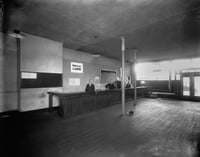
An employment office operated by the Citizens Alliance, 1924.
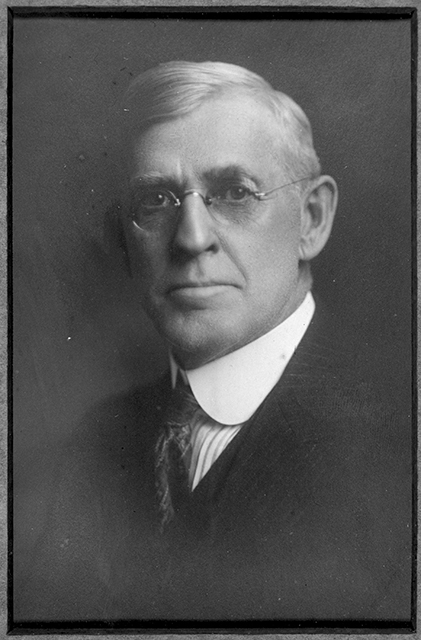
The head and shoulders of a man wearing a chin-height stiff collar, with white hair and glasses.
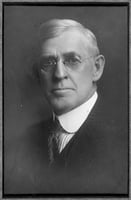
Owen Brooke Kinnard, president of Kinnard and Sons Manufacturing Company, ca. 1910. Kinnard was president of the Citizens alliance between 1904 and 1907, as well as in 1915.
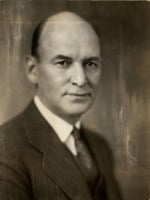
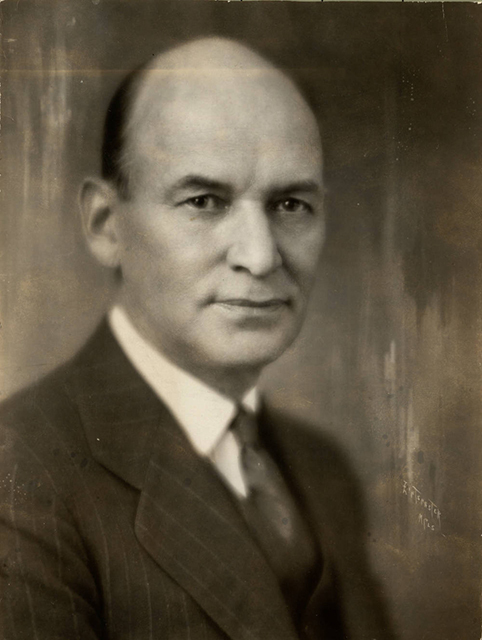
The head and shoulders of bald man wearing a collar, tie, and suit jacket.
Albert W. Strong, president of the Citizens Alliance, 1931. Photo by Zintsmaster Studio. Strong was president of the alliance between 1916 and 1917 and in the early 1930s.
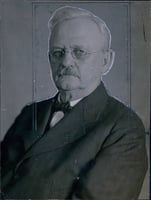
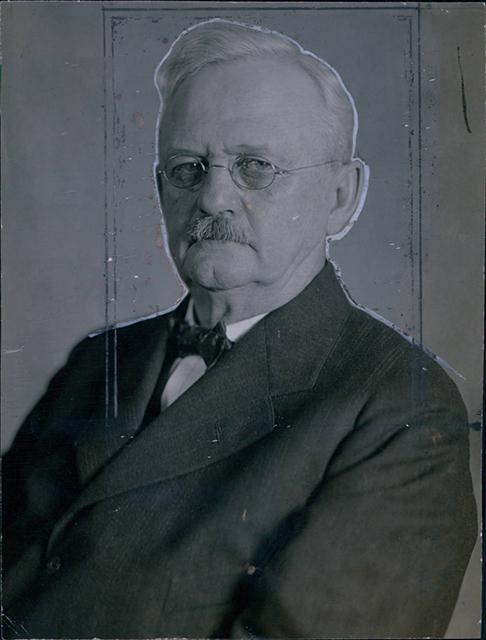
Head and shoulders of a man with a moustache, glasses, and bow tie.
Otis Pray Briggs, president of the Citizens Alliance, April 27, 1927. Briggs was president of the organization between 1918 and 1929.
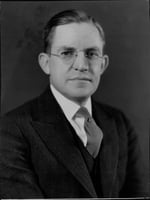
Head and shoulders of a man wearing a suit and tie with a collar and glasses.
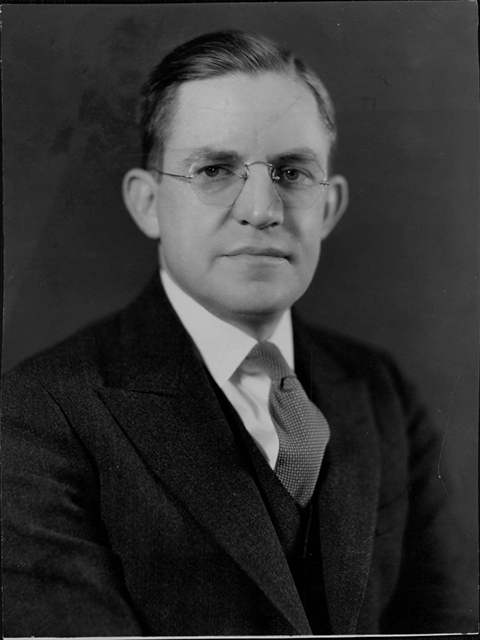
Citizens Alliance Board Chairman J. C. Buckbee, March 27, 1931.
The torsos, heads, and hands of two men wearing ties. Both men are holding and looking at a piece of paper.

J. C. Buckbee and Stewart Wells Utley

J. C. Buckbee (left), retiring chairman of the board of the Citizens Alliance, and Stewart Wells Utley, president of the Detroit Steel Castings Company, at a Citizens Alliance meeting at the Nicollet Hotel in Minneapolis, March 21, 1931.
A mostly empty room with a wooden floor. Four men stand behind a countertop at the center.

Citizens Alliance employment office

An employment office operated by the Citizens Alliance, 1924.
The head and shoulders of a man wearing a chin-height stiff collar, with white hair and glasses.

Owen Brooke Kinnard

Owen Brooke Kinnard, president of Kinnard and Sons Manufacturing Company, ca. 1910. Kinnard was president of the Citizens alliance between 1904 and 1907, as well as in 1915.
The head and shoulders of bald man wearing a collar, tie, and suit jacket.

Albert W. Strong

Albert W. Strong, president of the Citizens Alliance, 1931. Photo by Zintsmaster Studio. Strong was president of the alliance between 1916 and 1917 and in the early 1930s.
Head and shoulders of a man with a moustache, glasses, and bow tie.

Otis Pray Briggs

Otis Pray Briggs, president of the Citizens Alliance, April 27, 1927. Briggs was president of the organization between 1918 and 1929.
Head and shoulders of a man wearing a suit and tie with a collar and glasses.

J. C. Buckbee

Citizens Alliance Board Chairman J. C. Buckbee, March 27, 1931.

Turning Point

The National Recovery Act of 1933 and then the Wagner Act of 1935 create a federally protected right for workers to organize and bargain collectively.

Chronology

1901
Forty-two owners of Minneapolis machine shops organize the Twin Cities Association of Employers of Machinists to fight unionizing efforts. They defeat a strike organized by Local 91 of the International Association of Machinists.
1902
Union membership in Minneapolis grows to over 28,000, with twenty-four strikes in 1902 alone.
1903
Otis Briggs, Owen Kinnard, and Albert W. Strong organize the Citizens Alliance in Minneapolis.
1903
Minneapolis milling companies defeat a strike by flour workers.
1905
Minneapolis printing companies defeat a strike.
1907
Minneapolis machine shops defeat a strike.
1908
Business owners across the state form the Minnesota Employers Association to lobby the legislature for the open-shop system. The group is dominated by the Citizens Alliance.
1916
The alliance helps defeat strikes by machinists and teamsters.
1917
The anti-union Commission of Public Safety is given dictatorial power in Minnesota government. During a strike by Twin Cities Rapid Transit, the commission’s Order No. 16 forbids all union organizing on company property. The strike is defeated.
1921
The alliance uses an organized printers’ strike to turn the entire Minneapolis printing industry non-union.
1933
The National Recovery Act decrees the right of all Americans to collective bargaining. Ruled unconstitutional by the Supreme Court in 1934, it is replaced in 1935 by the Wagner Act, which recognizes the same right.
1934
Victory by Minneapolis Teamsters in the strikes of 1934 marks the first major defeat of the alliance and the beginning of the end of its dominance.
1935
The Flour City Ironworks strike turns violent, with two deaths and many injuries. It ends with most workers’ demands met, but without union recognition. Minneapolis Moline, one of the city’s major employers, recognizes the International Machinists’ union.
1936
The alliance helps Strutwear Knitting Company defeat a strike. A year later, however, the company agrees to union representation and a closed shop—a major alliance defeat.
1937
Milling companies, wholesale grocers, and other Minneapolis employers agree to union contracts. Alliance founder and leader Albert Strong dies. The Alliance changes its name to Associated Industries of Minneapolis. Several employers leave the organization.
1941
Teamsters Local 544, the alliance’s most effective antagonist, is decapitated by the conviction of its leaders for sedition under the Alien Registration Act of 1940. It disbands.

Bibliography

"Death Claims Manufacturer: A. W. Strong Dies." Minneapolis Star, November 26, 1936.

Millikan, William. A Union Against Unions: The Minneapolis Citizens Alliance and Its Fight Against Organized Labor, 1903–1947. Minnesota Historical Society Press, 2001.

“Socialist Worker Party Here is Raided By U.S.: Leadership Faces Federal Treason Charge.” Minneapolis Morning Tribune, June 28, 1941.

Related Resources

Primary

M465
Citizens Alliance records, 1903–1953
Manuscripts Collection, Minnesota Historical Society, St. Paul
Description: Microfilm reels of clippings, reports, bulletins, printed materials, and some correspondence kept by John W. Schroeder, executive director of the Citizens Alliance.

Secondary

Millikan, William. “Defenders of Business: The Minneapolis Civic and Commerce Association Versus Labor During W.W.I.” Minnesota History 50, no. 1 (Spring 1986): 2–17.
https://storage.googleapis.com/mnhs-org-support/mn_history_articles/50/v50i01p002-017.pdf

Quam, Lois, and Peter J. Rachleff. “Keeping Minneapolis An Open-Shop Town: The Citizens Alliance in the 1930s.” Minnesota History 50, no. 3 (Fall 1986): 105–117.
https://storage.googleapis.com/mnhs-org-support/mn_history_articles/50/v50i03p105-117.pdf

Wingerd, Mary Lethert. Claiming the City: Politics, Faith, and the Power of Place in St. Paul. Cornell University, 2001.