
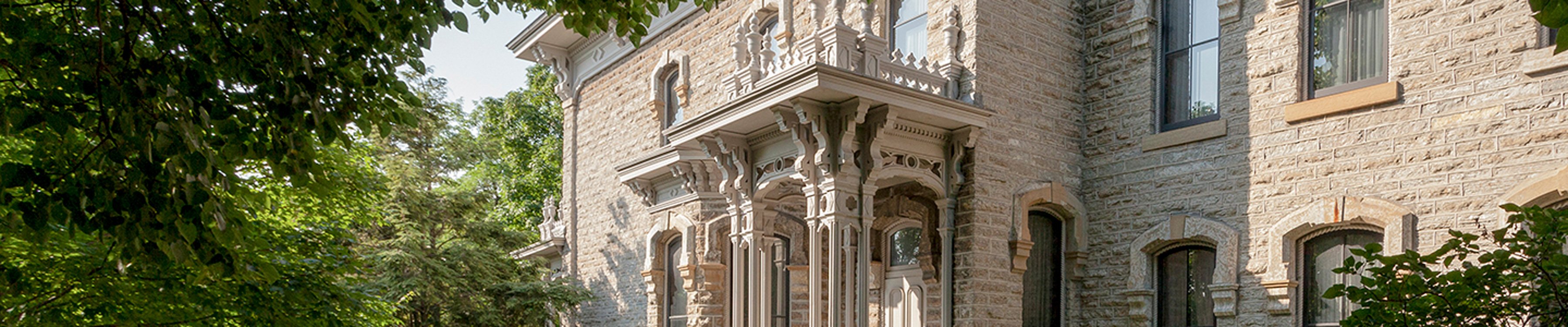

The Ramsey Family
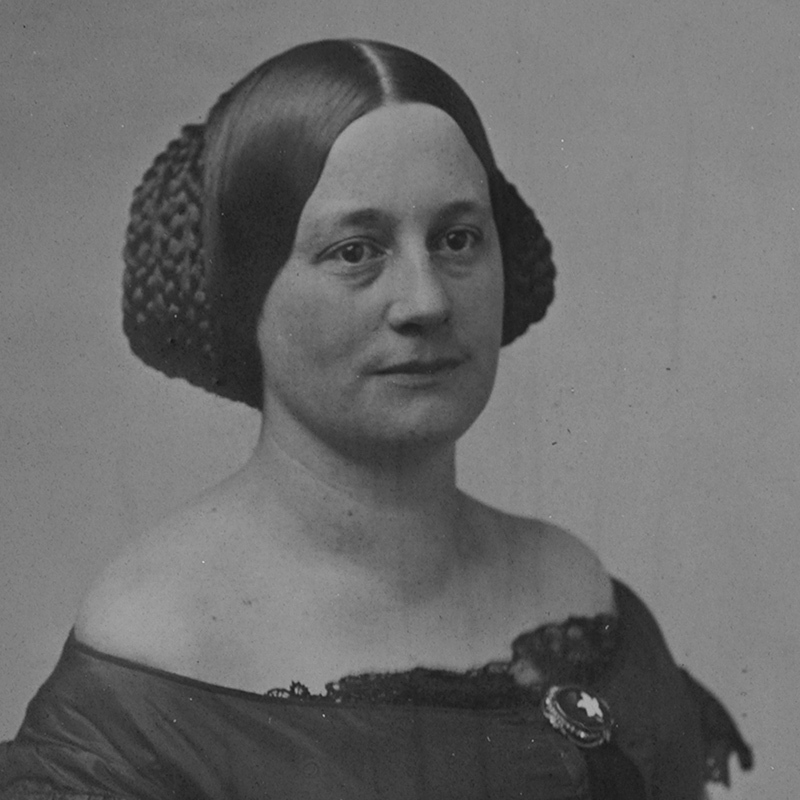
Anna Jenks Ramsey
Anna Ramsey was born Anna Earl Jenks on June 17, 1826 in Newtown, Pennsylvania. She was the daughter of Mary Ridgeway Earl Jenks and Michael Hutchinson Jenks, a judge and congressman representing Pennsylvania in the U.S. House of Representatives. One of nine children, Anna was well-educated and raised in the Quaker faith.
It was through her father that Anna first met Alexander Ramsey, himself a congressman at the time. The couple was married in 1845. The Ramseys had three children: sons Alexander Jenks and William Henry and daughter Marion. Their son Alexander passed away in 1850 at age 4, and his younger brother William would follow in 1851 at only 17 months old. Marion was born in 1853 and was their only child to survive into adulthood.
Alexander’s career in politics would bring the family to Minnesota in 1849, when President Zachary Taylor appointed him governor of the newly formed territory. This proved to be a dramatic change for Anna, who was “accustomed to the refinement of social luxury” due to her fine upbringing and education. When told of her husband’s new post, Anna apparently exclaimed: "Minnesota! Where upon earth is it? In Denmark?" A rough/chilly first impression followed; Alexander had to travel for work for the family’s first Christmas in Minnesota, and on the day Anna wrote that if he “kn[e]w how we suffer with cold thee would never want to winter again in St. Paul.” Despite this rocky start, Anna would spend much of the rest of her life in St. Paul, eventually settling in to the family home at 265 Exchange Street once completed in 1872.
Anna was a consummate socialite, dividing her time between St. Paul and Washington, D.C. as her husband’s political career progressed. While Alexander served as a U.S. senator, Anna would often winter with her husband in the capitol. In letters written to her daughter during this time, Anna describes dining at the White House and attending the theatre and the opera.
In St. Paul, Anna was often given credit for her social influence and refinement. The Pioneer Press wrote that "to [Anna and her peers] is due that purity and culture that has so markedly distinguished the social circles of St. Paul from those of other towns from the earliest days. To them is due the city's religious and charitable as well as social development."
Anna was deeply involved with her religious community in St. Paul, having left the Quaker faith upon her marriage. She worshiped at the House of Hope Presbyterian Church and regularly taught Sunday school at the Fort Street Mission. Notably, she served as president of the Board of Managers for the Home of the Friendless (later the Protestant Home), offering shelter and support for destitute women and children.
Upon her death in 1884, the Pioneer Press wrote that "[h]er virtues will long live in the memory of the people of St. Paul and of Minnesota—they form a part of the history and of the poetry of its early life which embellishes its history."
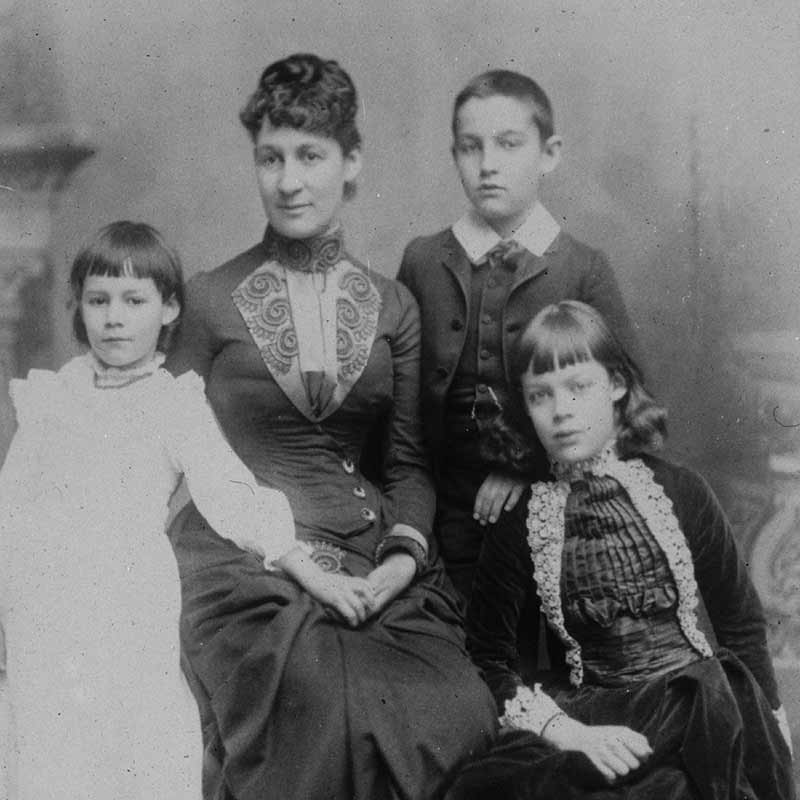
Marion Ramsey Furness
Marion was the only one of the three Ramsey children who survived to adulthood. While Ramsey served in the Senate, Marion attended boarding school in Philadelphia.
In 1875 Marion wed Charles E. Furness of Philadelphia. The young couple moved to Philadelphia and had four children — Anita, Ramsey, Charles Jr., who died in infancy, and Laura.
After her husband was hospitalized indefinitely due to mental illness, Marion and the children moved back to St. Paul to live with her parents. Taking up her mother’s role as one of Saint Paul’s leading socialites and public citizens, Marion lived in the mansion until her death in 1935.
Ramsey grandchildren
Anita, Ramsey, and Laura Furness grew up largely in their grandparents' home. The busy household also included several domestic servants who lived and worked at the home.
Grandson Ramsey Furness eventually married and moved to Missouri, where he owned and managed a syrup manufacturing business. He and his wife Berenice had no children. Anita and Laura Furness stayed in Saint Paul, where the two were very active in various political and cultural organizations, including serving as founding members of the Minnesota League of Women Voters. Neither Laura nor Anita married, and they remained in the home throughout their lives.
In their wills, the sisters left the property to the Minnesota Historical Society, along with family letters, numerous photographs and more than 14,000 original furnishings.

