
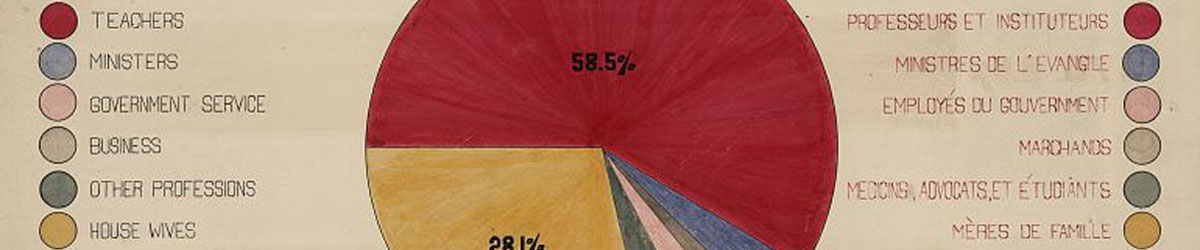
.jpg?width=700&height=470&name=du-bois-population-cover-sheet_0%20(1).jpg)
A series of statistical charts illustrating the conditions of the descendants of former African slaves now in residence in the United States of America
Date: 1900
Creator: W.E.B. DuBois
Type: Chart
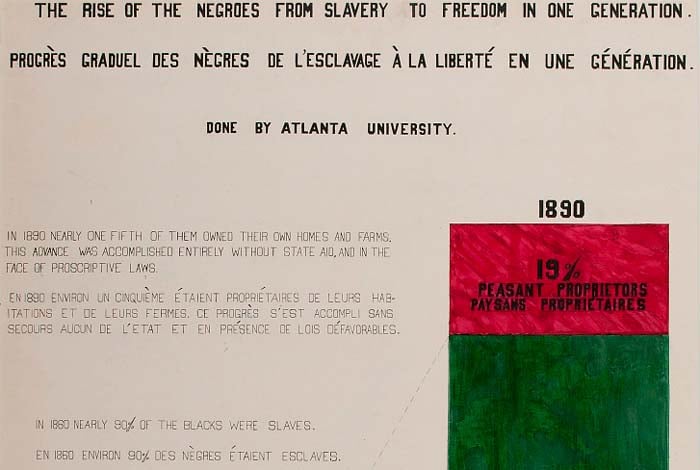
The rise of the Negroes from slavery to freedom in one generation
Date: 1900
Creator: W.E.B. DuBois
Type: Chart
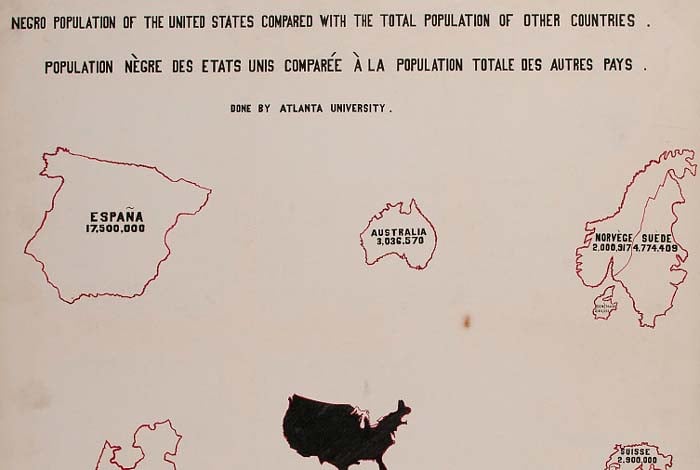
Negro population of the United States compared with the total population of other countries
Date: 1900
Creator: W.E.B. DuBois
Type: Chart
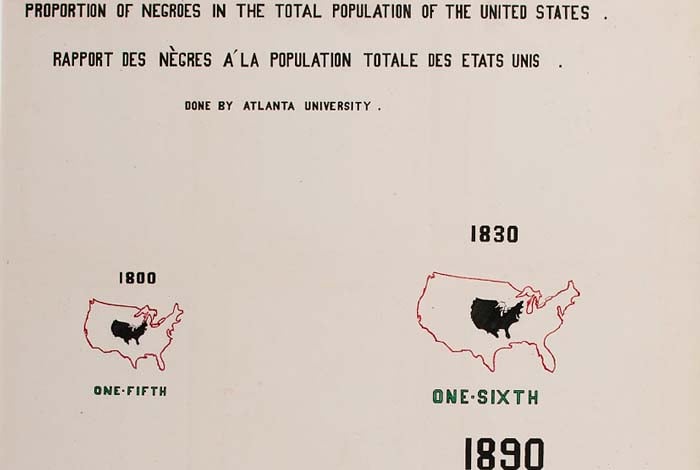
Proportion of Negroes in the total population of the United States
Date: 1900
Creator: W.E.B. DuBois
Type: Chart
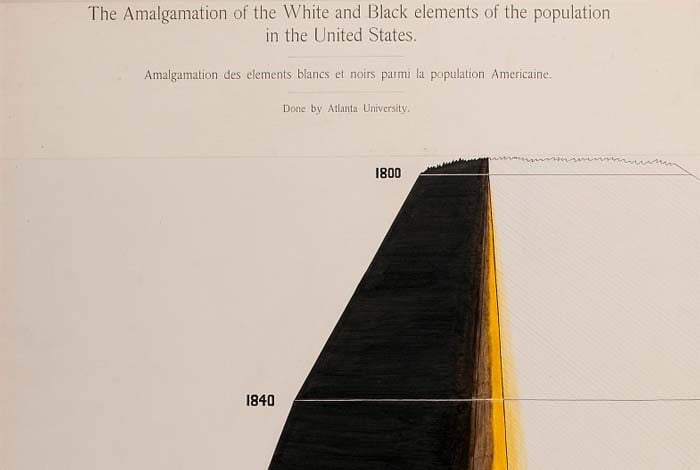
The amalgamation of the white and black elements of the population in the United States
Date: 1900
Creator: W.E.B. DuBois
Type: Chart
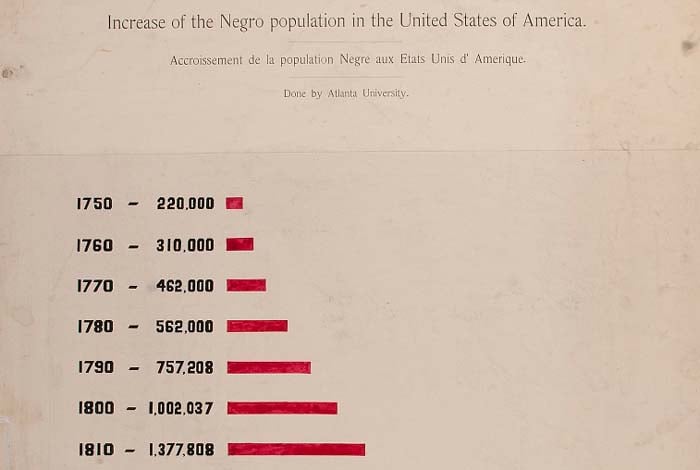
Increase of the Negro population of the United States of America
Date: 1900
Creator: W.E.B. DuBois
Type: Chart
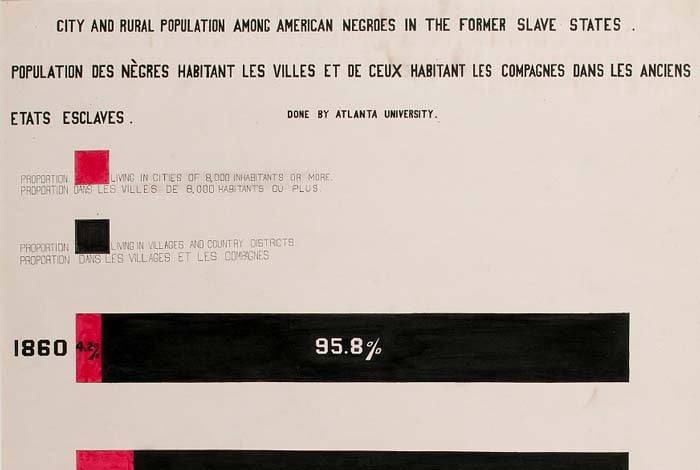
City and rural population among American Negroes in the former slave states
Date: 1900
Creator: W.E.B. DuBois
Type: Chart
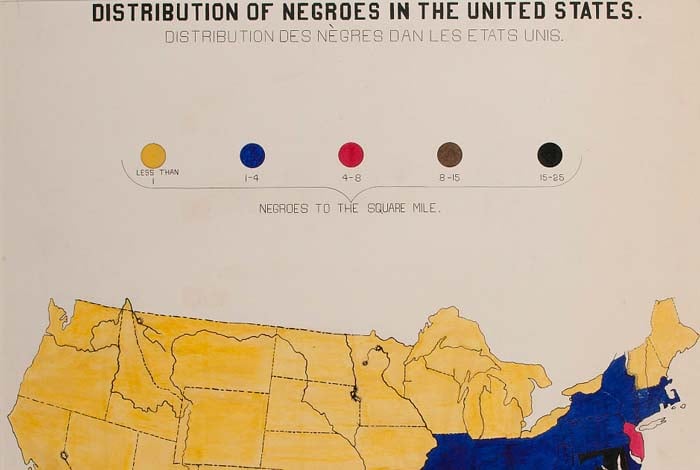
Distribution of Negroes in the United States
Date: 1900
Creator: W.E.B. DuBois
Type: Chart
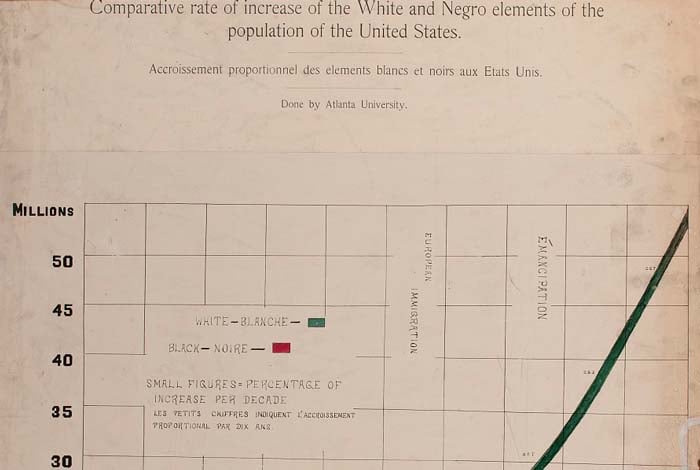
Comparative rate of increase of the white and Negro elements of the population of the United States
Date: 1900
Creator: W.E.B. DuBois
Type: Chart
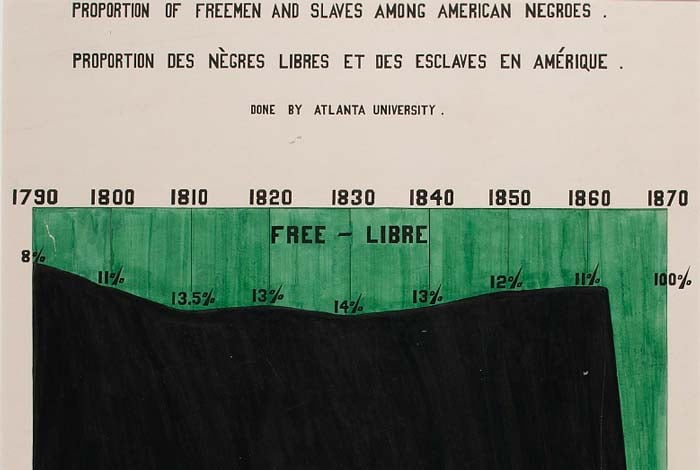
Proportion of freeman and slaves among American Negroes
Date: 1900
Creator: W.E.B. DuBois
Type: Chart