
Minnesota Historical Society Announces 2026 Native American Artist-in-Residence Cohort
Two encouragement grants also awarded to support artists with cultural research and arts
For immediate release
Dated: March 3, 2026
Contacts: Jack Bernstein, 651-259-3058, jack.bernstein@mnhs.org or Allison Ortiz, 651-259-3051, allison.ortiz@mnhs.org
Location: Minnesota History Center
ST. PAUL, Minn (March 3, 2026) – The Minnesota Historical Society (MNHS) is welcoming three Native American artists to the Native American Artist-in-Residence (NAAIR) program in 2026. Established in 2014, the NAAIR program allows Native artists an opportunity to expand their understanding of traditional art through a six-week paid residency. Through this program, artists are able to study the Native American collections at MNHS as well as other institutions.
NAAIR is grounded in collections access and community engagement, creating a partnership of shared expertise and experiences through items of cultural patrimony stewarded in MNHS collections. By supporting access to these resources, MNHS collections will also benefit from the expertise and knowledge shared by the artists regarding the construction, style, utility, and meaning of the objects they examine.
An essential element of these residencies involves artists developing community-based programming in their home communities and for the public at large. These 2026 artists were selected based on the recommendations of a panel of experts in the field of Native arts, culture, and education.
The 2026 NAAIR awardees are:
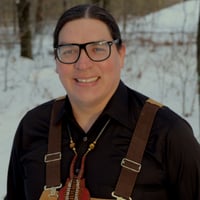
Daniel Augustin Grignon, an enrolled member of the Menominee Nation (wolf clan), graduated with his Bachelor of Fine Arts degree from the Institute of American Indian Art in 2012. Since then, he was selected as a Menominee language immersion trainee to learn and revitalize the Omāēqnomenēweqnaesen (Menominee Language). Language has served as a pathway, guiding his art and way of life. He and his family follow the seasons creating new art from natural materials as they become available in the forest. The language leads them to honor their Menominee ancestors and rich material culture. Through the NAAIR program, Grignon intends to deepen his understanding of Great Lakes region tool making. He is focusing on incorporating quillwork, leatherwork, metalwork, beadwork, bone and wood carving. Grignon will be sharing his experience and knowledge through a series of workshops that will incorporate the Omāēqnomenēweqnaesen and help foster a deeper understanding of art and Menominee culture to his community later this year.

Jennifer Adams, a citizen of the Ho-Chunk Nation and Muskogee Creek, began her artistic journey during the Covid-19 pandemic, turning to paaxge beadwork as a form of escape and healing. Since then, Adams has had the opportunity to work under Dyani White Hawk-Polk, assisting with beading for her studio practice. Adams has also participated in several exhibitions and opportunities across the nation. These experiences continue to inspire her to highlight how paaxge contributes to the diversity and richness of Native American art.
Adams intends to utilize the support of MNHS and the NAAIR program to deepen her knowledge of this beadwork style. Her focus is on the dissection and identification of paaxge patterns by Tribal origin, as well as historical construction methods. The core goal of Adam’s residency will be preserving and studying paaxge patterns. She plans to share this research through a series of hands-on workshops and through the creation of a pattern book.
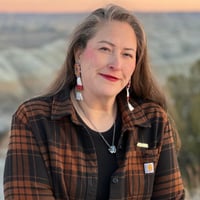
Molina Two Bulls, an Oglala Lakota artist from the Pine Ridge Reservation, draws strength and inspiration from her culture and the incredible women who raised her: her Ina (mother), Unci (grandmother), and Inala (auntie/mother). Their lessons in patience, creativity, determination, and gendered Lakota kinship practices have shaped Two Bulls into who she is today.
With the support from MNHS and the NAAIR program, Two Bulls plans to research and study traditional doll making as well as deepen her knowledge of clothing, beadwork, and quillwork. Within the next year, Two Bulls is planning to host a two-part program at Racing Magpie in Rapid City, SD, during their annual Winter Camp Series.
Encouragement Grants
In addition to the residencies, two encouragement grants were awarded to support artists to continue with their cultural arts and research. These grants consist of a stipend and a paid research visit to MNHS collections. The 2026 Encouragement Grant awardees are:
- Nipinet Landsem, Descendant of the Turtle Mountain Band of Ojibwe, who plans to research Azhaasowin, a traditional tattooing practice of the Ojibwe and Cree peoples. Ladnsem will focus on tattooing tools and material culture as well as traditional and contemporary design elements.
- Alexandera Houchin, Fond Du Lac Band of Lake Superior Chippewa, who will focus on Ojibwe quillwork, connecting the practice to artistry and identity. Houchin’s research will explore the reasons why their ancestors adorned items and how they did so in such a masterful way using porcupine quills and leather materials.
NAAIR is made possible in part by a grant from Margaret A. Cargill Philanthropies.
About the Minnesota Historical Society
The Minnesota Historical Society is a non-profit educational and cultural institution established in 1849. MNHS collects, preserves, and tells the story of Minnesota’s past through museum exhibits, libraries and collections, historic sites, educational programs, and book publishing. Using the power of history to transform lives, MNHS preserves our past, shares our state’s stories, and connects people with history.