

Split Rock’s Beacon
Split Rock’s Beacon
Perched high above Lake Superior, the beacon at Split Rock Lighthouse served as a critical guide to mariners from 1910 to 1969. Each night, its light cast a steady rhythm—a single white flash every 10 seconds—visible across more than 20 miles of navigable waters. Though United States Coast Guard regulations no longer allow its use for active navigation, the beacon still shines on special occasions and during maintenance, offering a glimpse into its historic role.
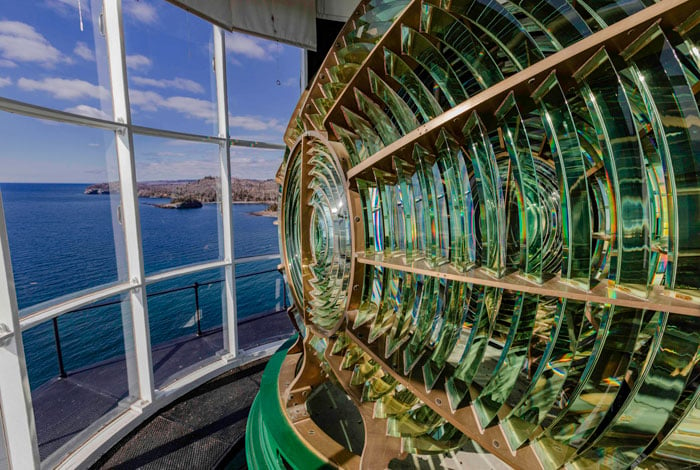
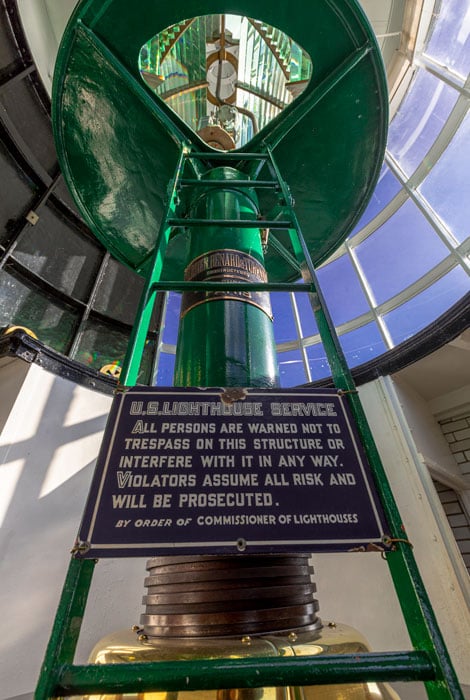
At the heart of the lighthouse is a third-order bi-valve Fresnel lens, an engineering marvel composed of 252 precisely cut glass prisms set within brass frames. Crafted by Barbier, Bernard et Turenne in Paris, France, the lens was shipped in sections and carefully assembled on-site. Weighing approximately 1,500 pounds, it remains one of the most iconic features of the station.
Originally, the beacon was powered by an Incandescent Oil Vapor (IOV) lamp, which burned pressurized kerosene. Lighthouse keepers maintained the light nightly, consuming between 1.5 and 2 gallons of fuel each evening to keep the beacon shining.
In the 1940s, the station transitioned to electricity, replacing the original lamp with a 1,000-watt bulb. This modernization ensured consistent performance while preserving the lighthouse’s distinctive character.
With an official range of 22 miles—and reports of visibility extending even farther—Split Rock’s beacon stood as a reassuring presence for those navigating the often unpredictable waters below.
Beacon lightings
Historically the beacon has been lit around Memorial Day weekend, around July 31, which is the anniversary of when the beacon was first lit, and on November 10, the anniversary of the sinking of the SS Edmund Fitzgerald. Typically these lightings occur in conjunction with a public event at the site, check our calendar of events to see if one has been scheduled.

Split Rock Lighthouse
3713 Split Rock Lighthouse Rd. Two Harbors, MN 55616

